The Seville issue
Where to Eat and Drink Around Seville's Bienal Nights
Booked dinners, standing tapas bars, tablaos and late rooms: how to feed an evening in Seville when the flamenco festival sets the clock.
By Bruno SalgadoSeville after dark, planned for a crowd
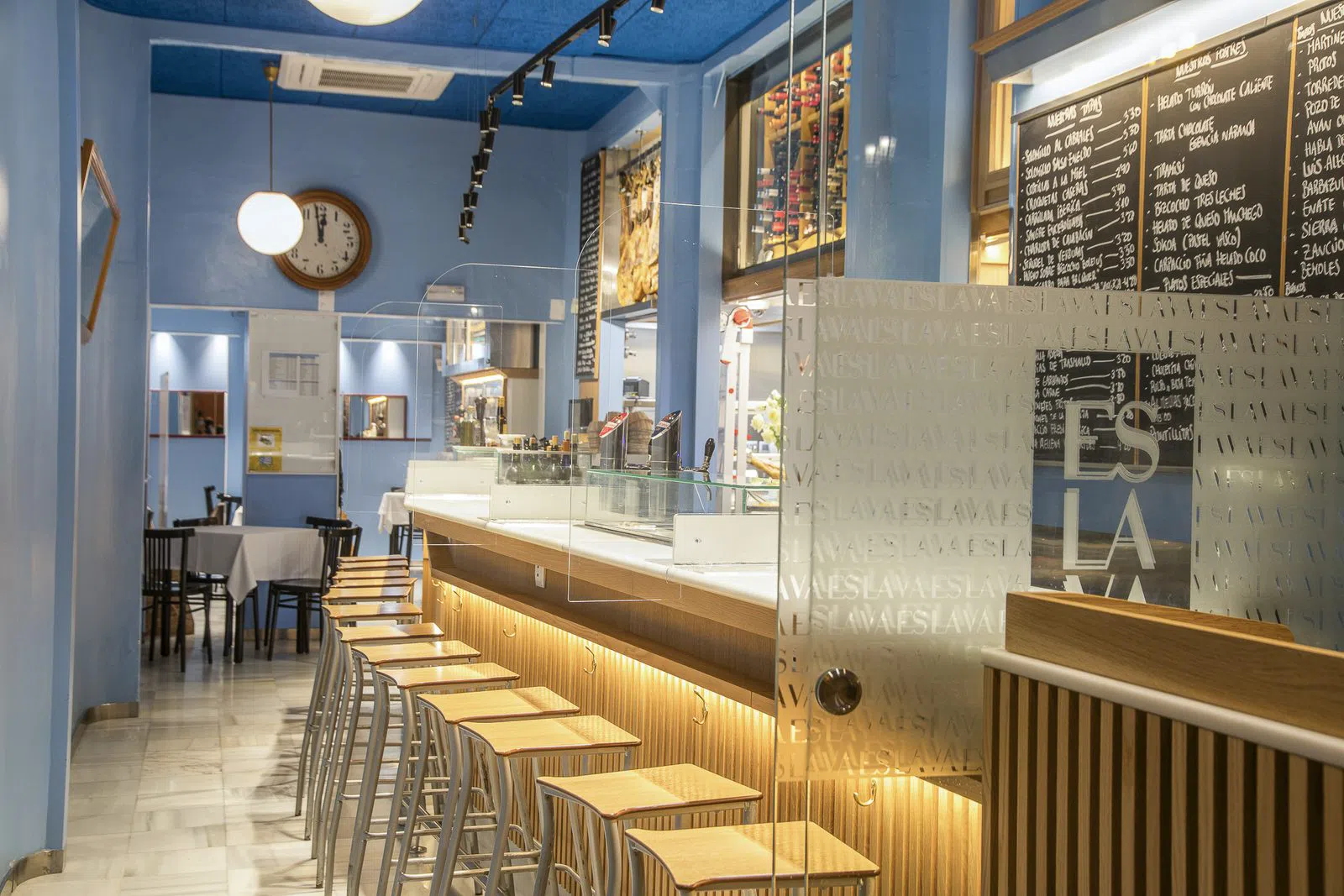
The Bienal empties a theatre at eleven at night and puts several hundred people onto the same three streets, all of them hungry at the same moment. Seville handles that better than most cities its size, but only if you know which kitchens are still taking orders at that hour and which doors will never let six of you through together. Plan the eating around the ticket, not the other way round.
Book the sit-down dinner before you book the ticket
Two kitchens here are worth building an evening around, and both of them fill weeks out during a festival month.
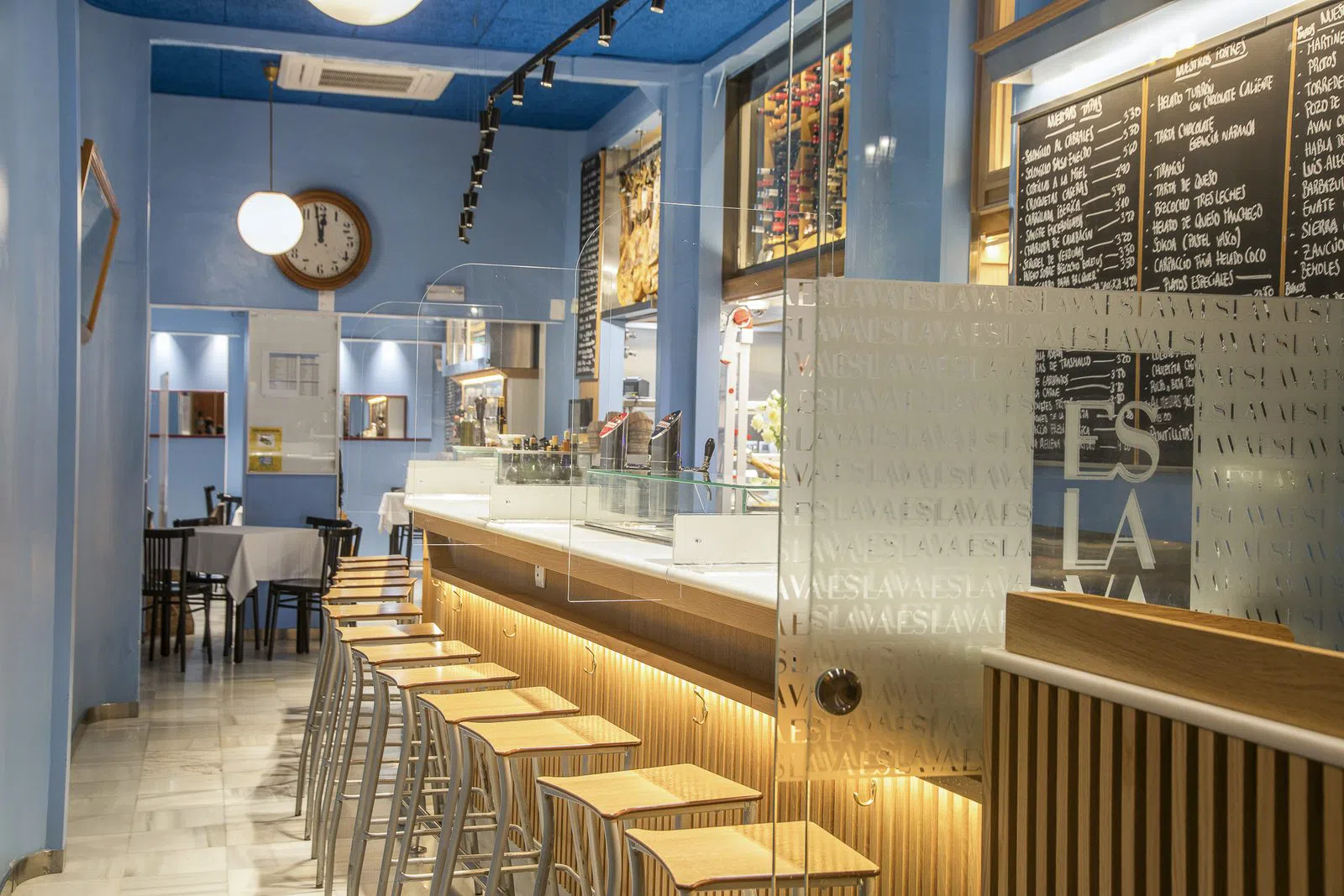
Espacio Eslava (San Lorenzo, five minutes from the Alameda) is the one to hold for a proper pre-show dinner. The dining room takes reservations and you need one. Treat that as essential, not optional. The bar and the high tables outside are first-come, first-served, which works for two people with an hour to spare and for nobody else; if there are more than four of you, book the interior or don't come. Tapas run roughly €4-7 and a full sit-down meal lands at €30-40 a head. Its real advantage during the Bienal is geography. You are a short walk from the Alameda and its taxi ranks, which means an 8pm table is compatible with a 10pm curtain without a sprint at the end.
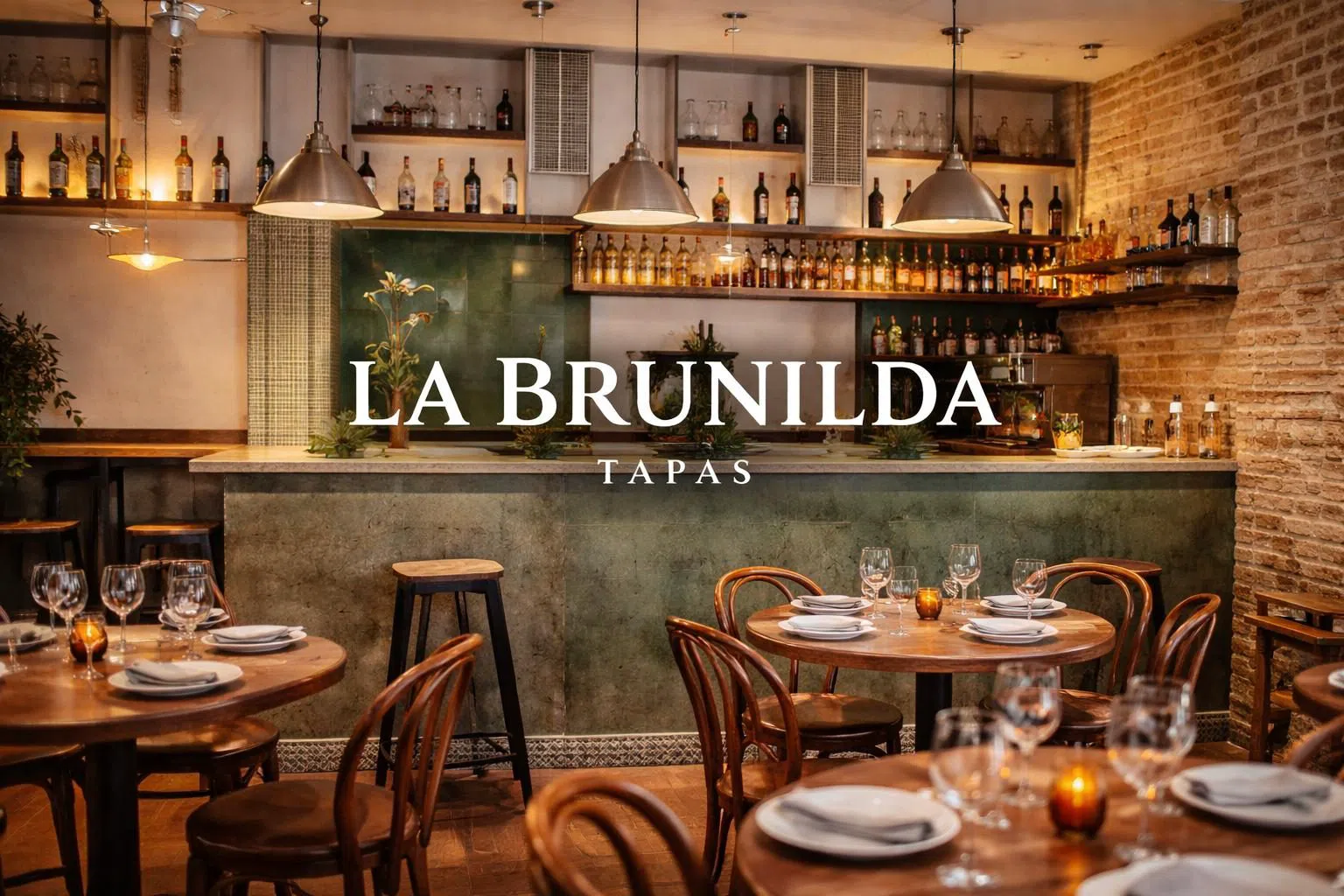
La Brunilda (Arenal) is the other one, and it is harder work. Two fixed seatings per service, a handful of tables, and a room small enough that a party of six becomes a problem for everyone else in it. Reserve well ahead and take whichever seating you are offered. The early one is the safer choice if you are holding tickets. Tapas are around €5-9 and the value is real; this is one of the best creative kitchens in the city per euro spent. Do not treat it as a drop-in. Walking up at 9.30 on a Friday in festival season gets you nothing but a look.
The rule for both rooms is the same. If the show starts at 9 or 10, eat at 8. Sevillian kitchens are perfectly happy to serve you at 11, but not on a schedule you control, and a first course arriving at 9.40 has ended more evenings than any door policy.
Plan your Seville trip
Live prices from our booking partners.
Free cancellation on many rooms. We may earn a commission when you book.
The old bars that will take a crowd standing
A reservation solves dinner for four. It does not solve nine people leaving a performance together and wanting food in the next twenty minutes. For that you want bars built to absorb bodies.
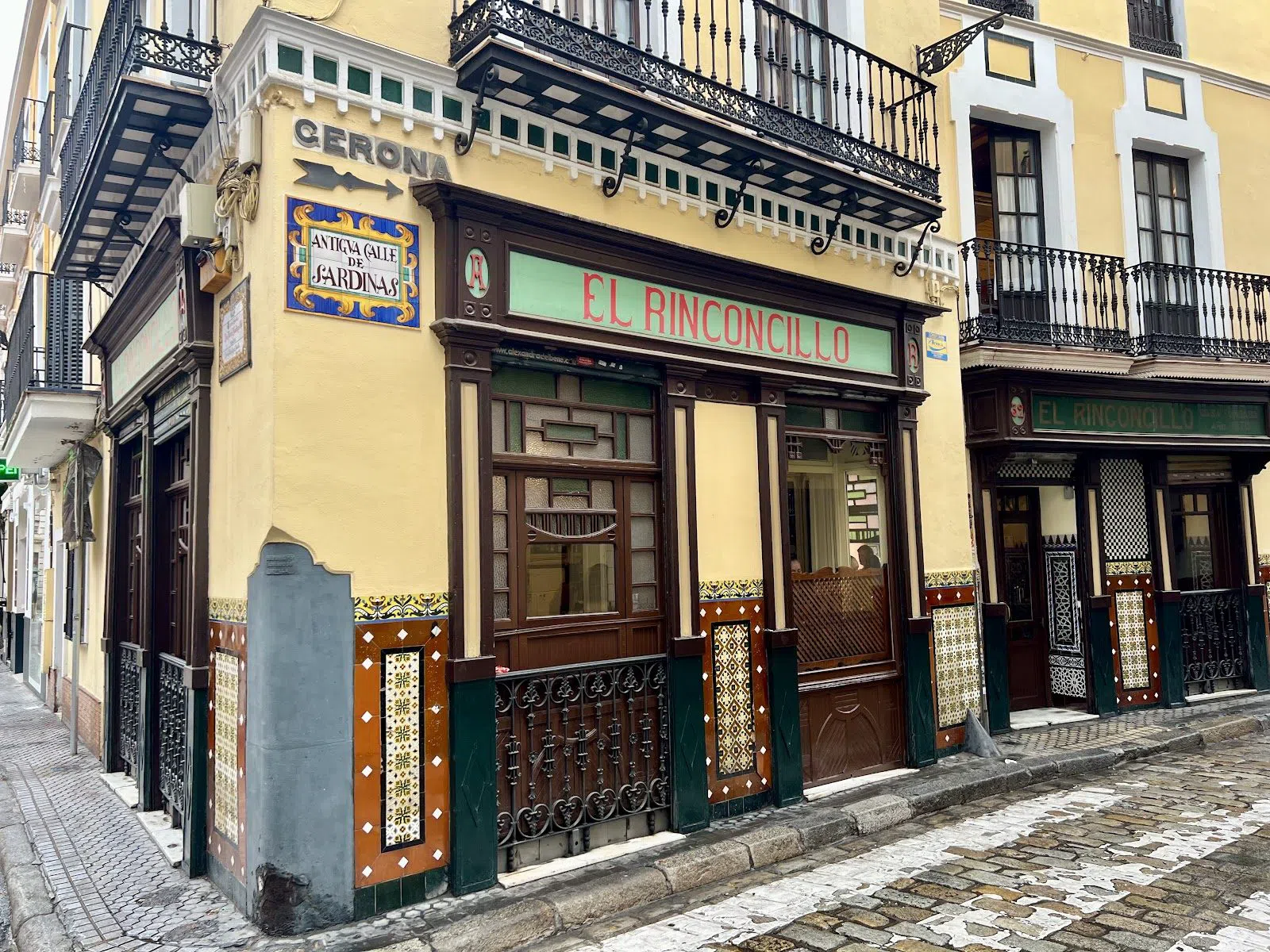
El Rinconcillo (Santa Catalina) is the oldest bar in the city and still works as a neighbourhood tavern rather than a museum piece. Standing at the bar absorbs any size of group. People compress, the barman chalks your tab on the wood in front of you, and nobody minds how many of you there are. The upstairs dining rooms take bookings if you want everyone seated, which is the sensible move for a group that has been on its feet since the interval. Tapas are about €3.50-6. Order the spinach with chickpeas, standing up.
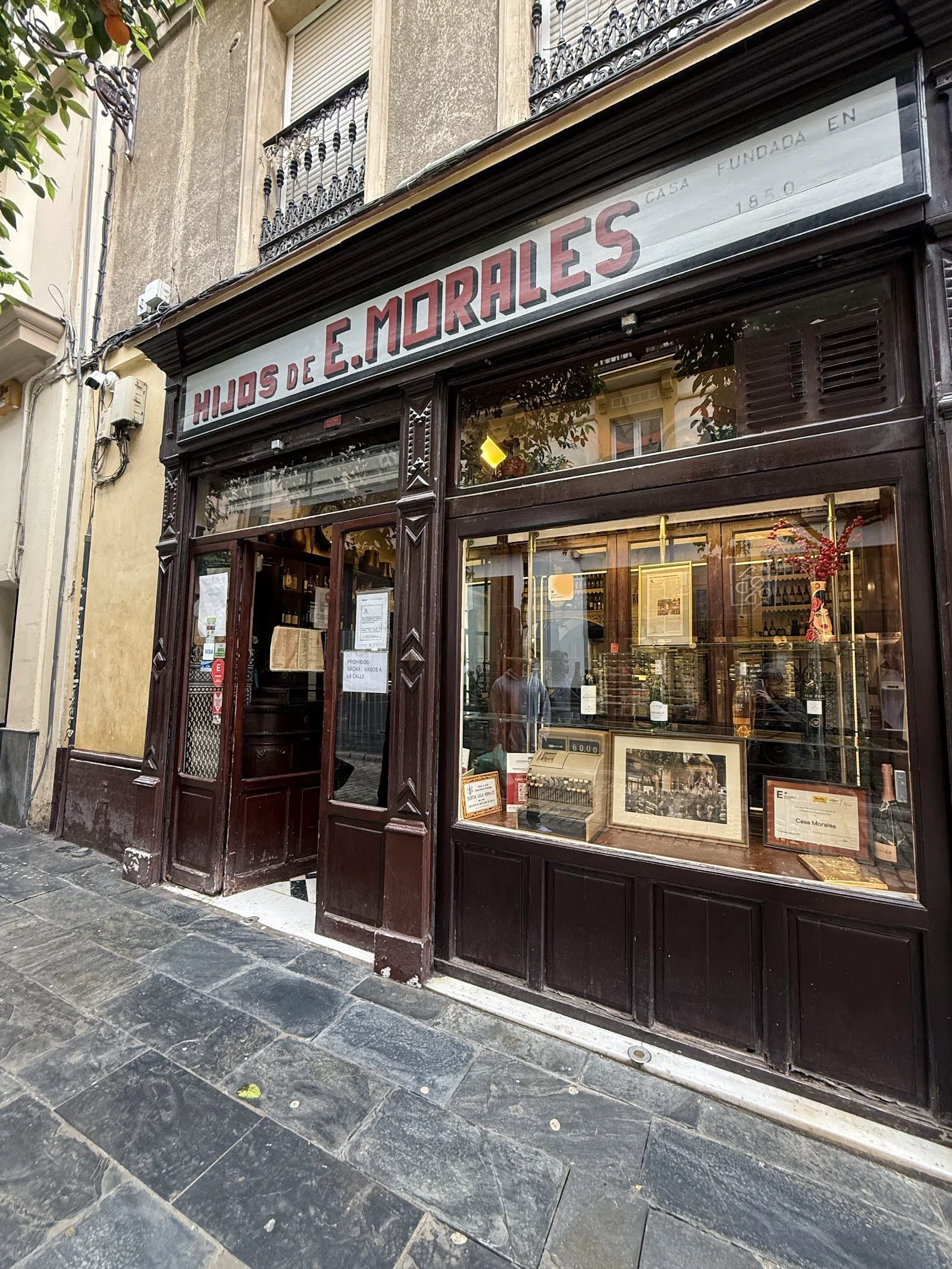
Casa Morales (Arenal) is the second-oldest, now past its 175th year, and takes no bookings at all. Small groups fit around the clay tinajas at the back. Anything larger should arrive at opening, take the space and hold it. Pringá and a glass of house wine, plates €3-6. It is a bodega, not a restaurant, so don't expect a modern menu or table service in any hurry, and don't send anyone there who needs either.
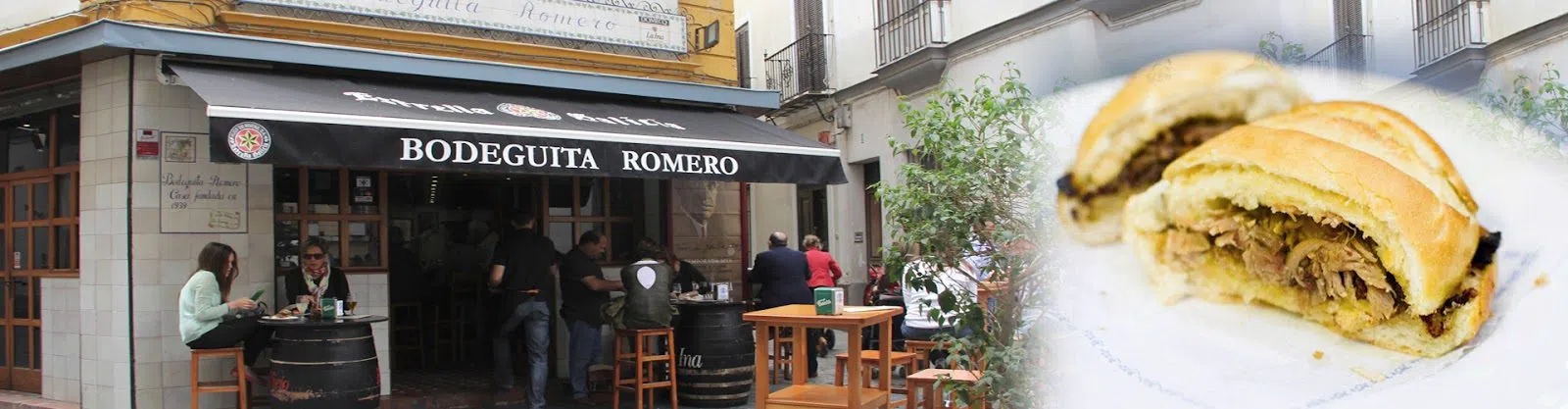
Bodeguita Romero (Arenal) also refuses reservations and is worth the wait for one thing in particular: the pringá montadito, widely reckoned the best in Seville. At €3-6 for montaditos and tapas it is cheap enough to be the first stop of a long night rather than the whole of it. With a large group, split along the bar instead of trying to hold a table you are not going to get.
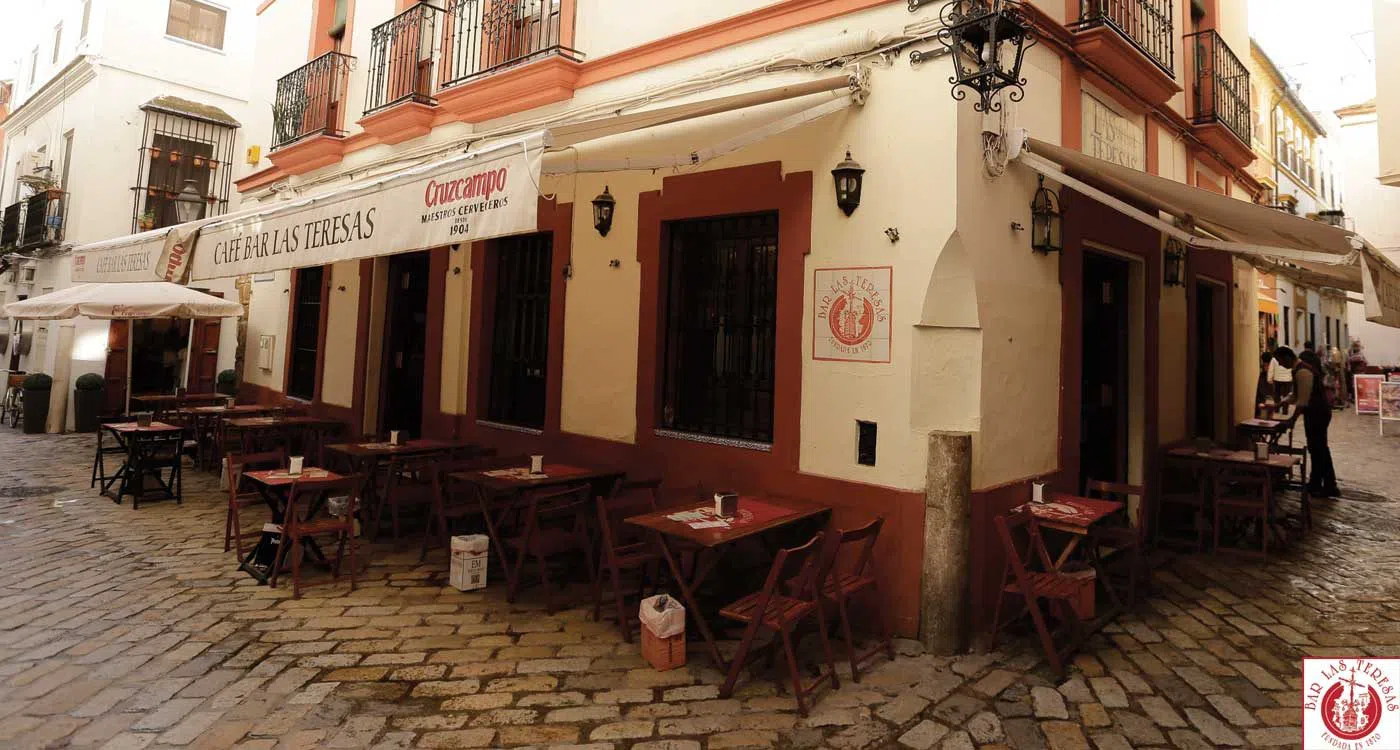
Café Bar Las Teresas (Santa Cruz) is the exception in a barrio that mostly sells to people who will never come back. Open 10am to 1am daily, which makes it one of very few honest options in the old quarter after a late finish. Standing room only at peak, so a group does better mid-afternoon or at the outside tables in the lane. Tapas €4-8, with the ibérico ham noticeably dearer. A plate of ham and a cold manzanilla at midnight is a reasonable way to close an evening.
Triana, on the way to or from the river
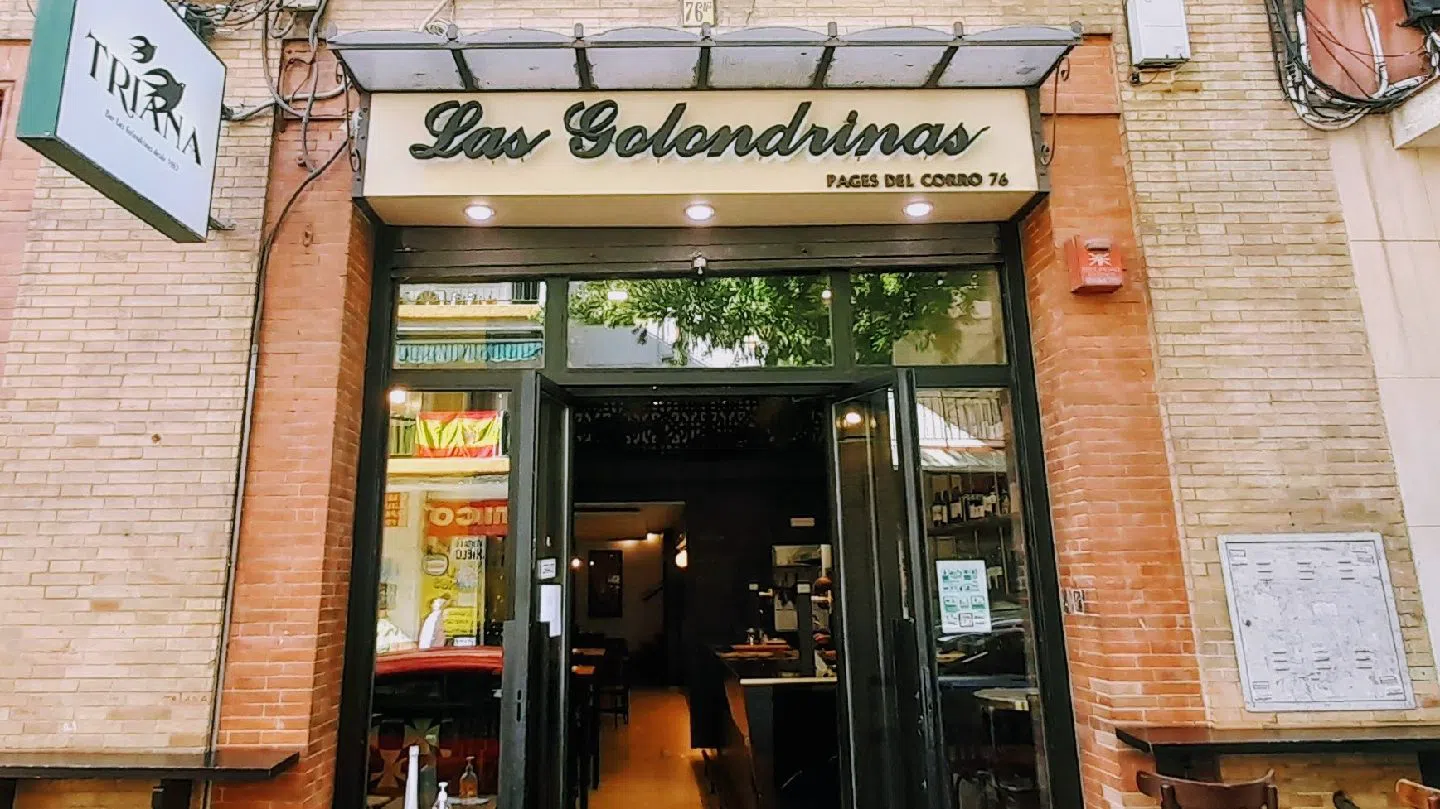
Bar Las Golondrinas (Triana) is the Arcas family's tiled institution and there are two of them. The original on Antillano Campos is small. The one on Pagés del Corro has more room. Send any group above four to Pagés del Corro and save yourself the negotiation at the door. Punta de solomillo and grilled mushrooms are the standards, tapas €3-5, and it is walking distance from the Bienal's Triana venues.
That last point matters more than it sounds. Crossing the river twice in an evening is the most common way to miss a curtain. If your ticket is on the Triana side, eat on the Triana side. The bridges are quick on foot and slow in a taxi the moment a performance lets out.
Fast, cheap food between shows
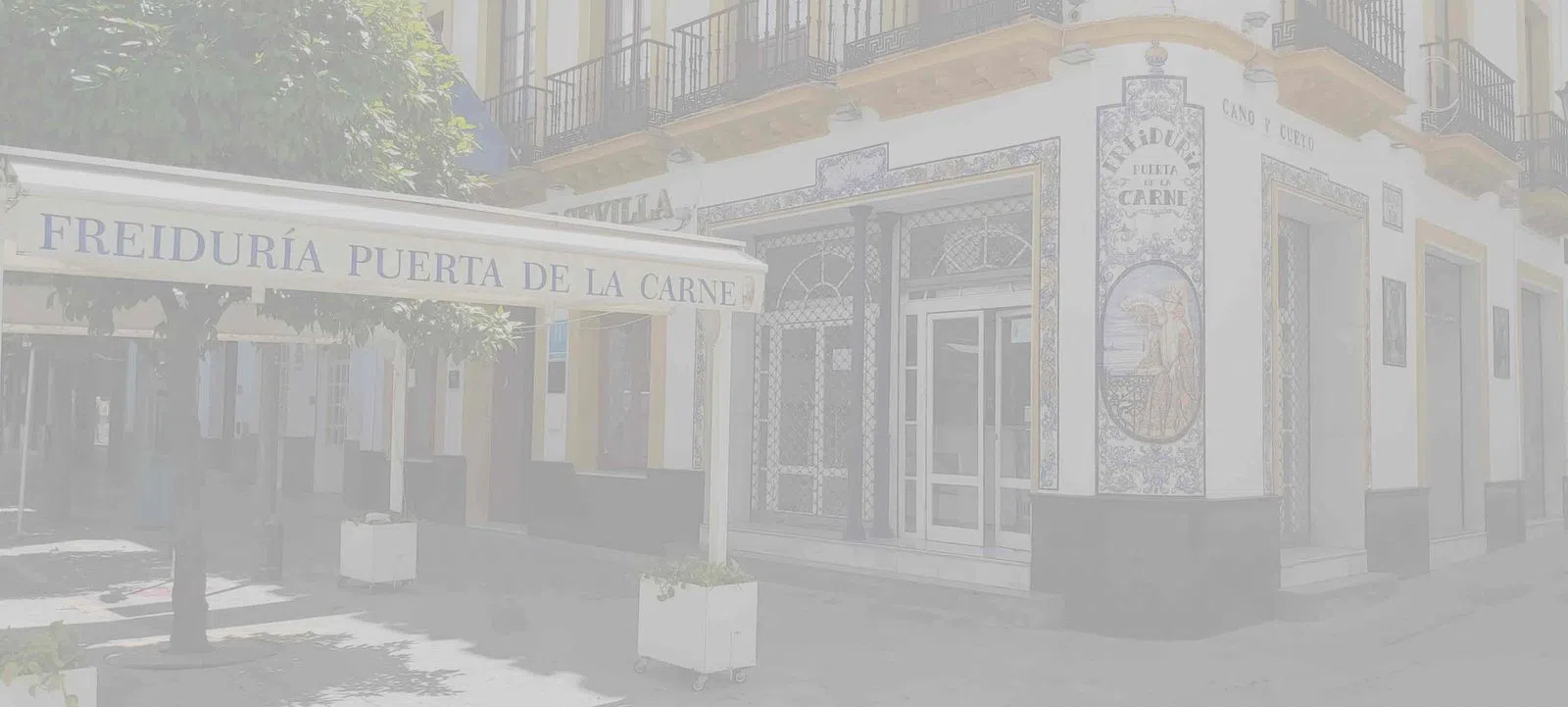
Freiduría Puerta de la Carne (Puerta de la Carne, east of Santa Cruz) is the oldest fried-fish shop in the city and the cheapest good dinner in the old town. Open daily, lunch and evening. A cartucho of mixed fried fish is roughly €10-15, and takeaway cones scale to any group size. There is a terrace if you want to sit, but a bench in the gardens works better when there are eight of you. Eat it immediately. Fried fish does not improve on the walk.
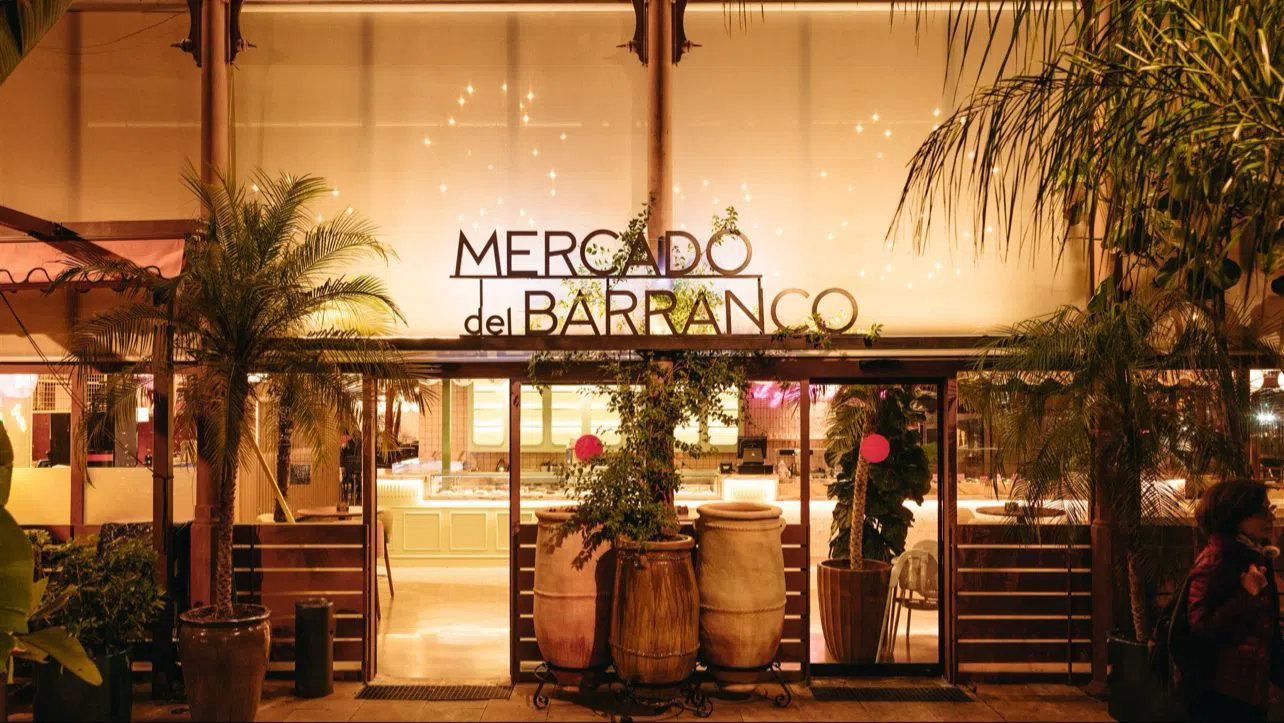
Mercado Lonja del Barranco (Arenal, on the river) is the answer when a group cannot agree, which in a festival week is most groups. Twenty-odd kitchens, everyone orders separately and pays separately, plates roughly €6-15. It runs to midnight, and to 2am on Friday and Saturday, and that second number is the one that matters. It is one of the few places that will still feed a dozen people after a late finish. It is not a purist tapas crawl and nobody should pretend it is. It is the easy answer, and some nights the easy answer is the correct one.
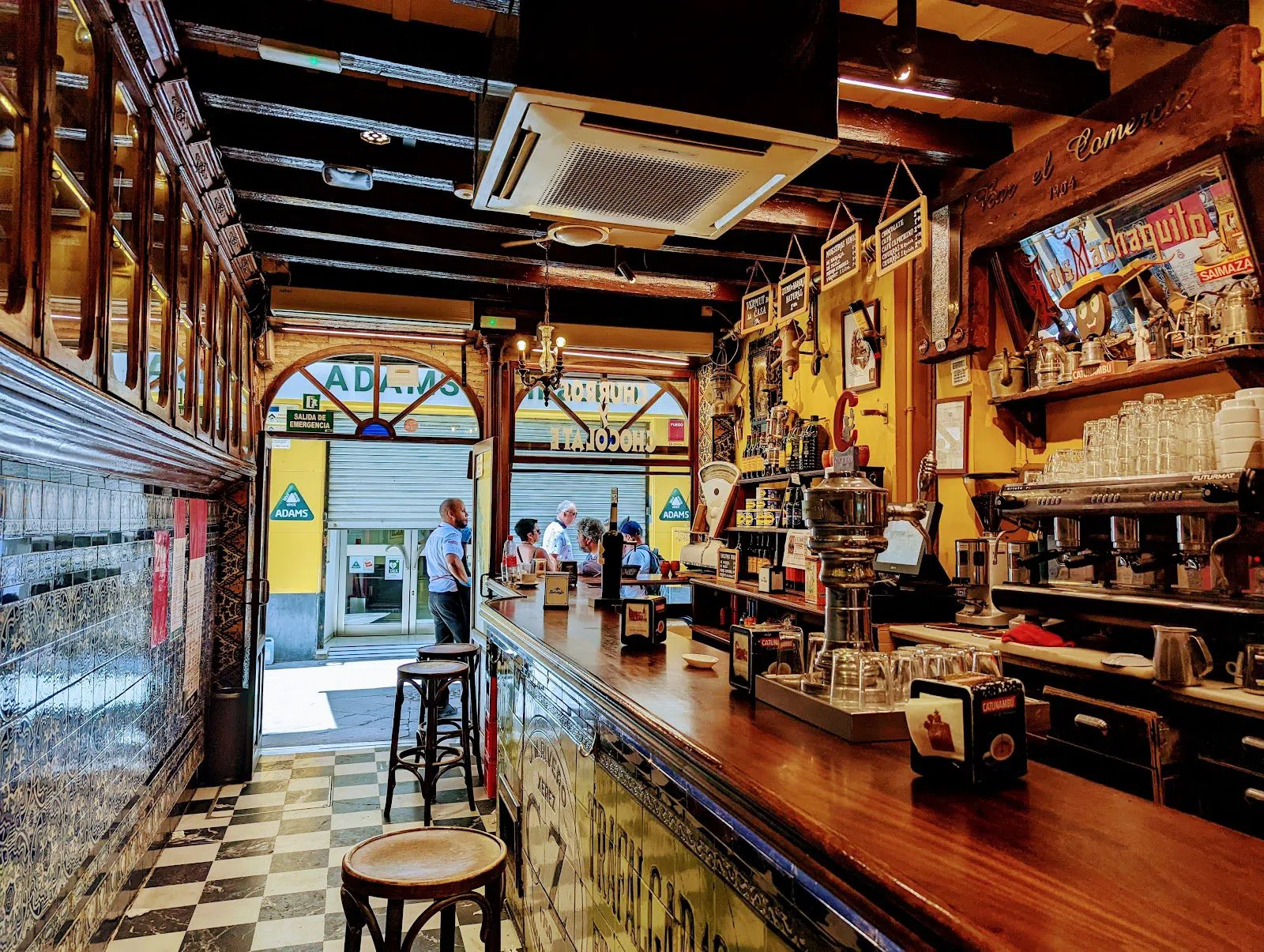
Bar El Comercio (Alfalfa) covers the other end of the day. Same family since 1904, churros with chocolate at €3-4, and the benchmark in the centre. Check the hours before you build a plan on it: Monday to Saturday, roughly 7.30am to 9pm, closed Sunday. That makes it a breakfast or late-afternoon stop and never a post-show one. Small tables inside, a few outside, best for four or fewer. If your evenings are running to 2am, this is the fixture that gets the next morning started.
Flamenco that is not on the Bienal bill
The festival programme is why you came, but tickets sell out and there are nights with nothing you want on. The tablaos and the bars fill those gaps, and they are three different products.
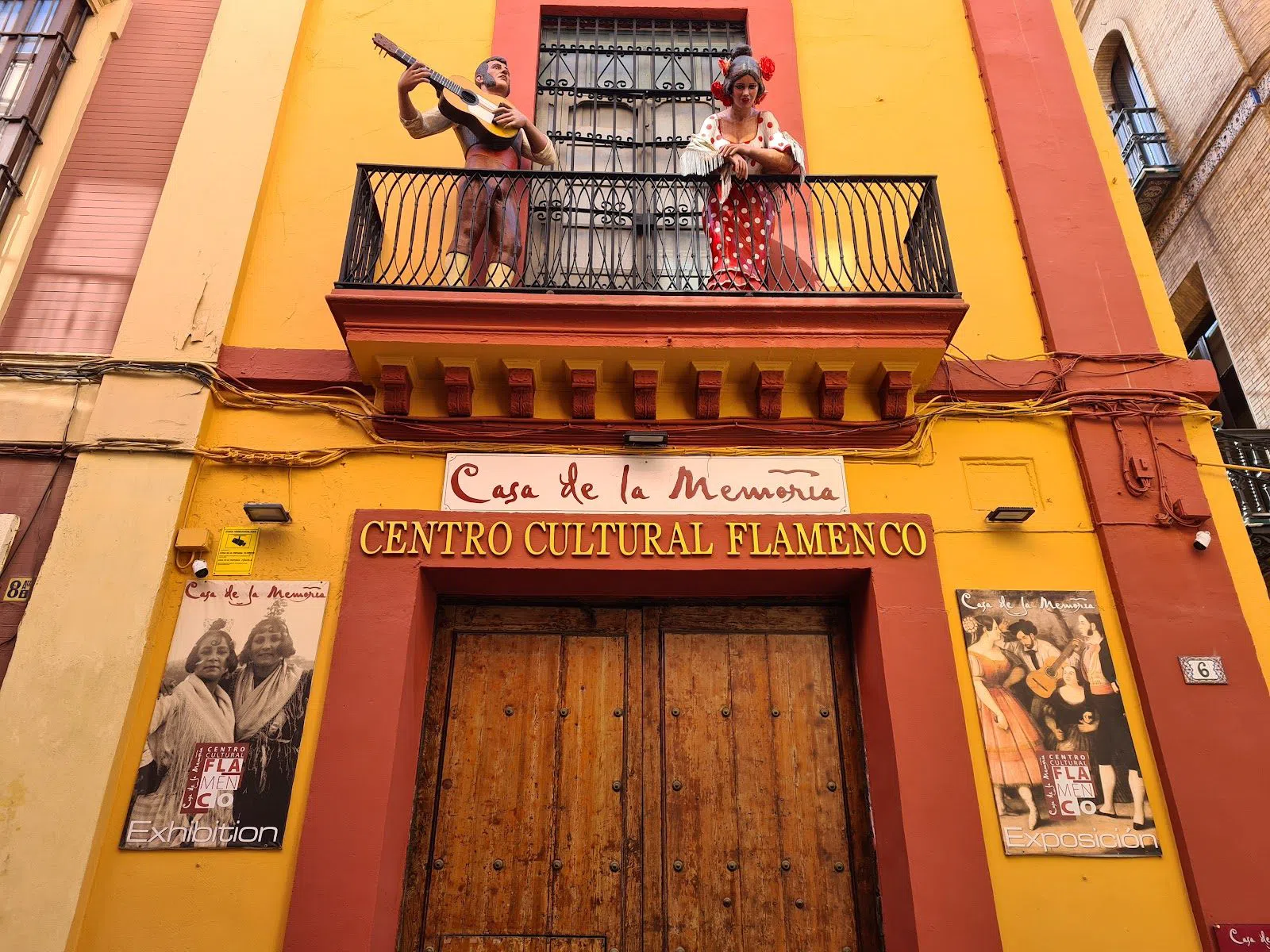
Casa de la Memoria (Cuna, in the centre) runs two shows nightly, 19:30 and 21:00, in a room of 80 seats. Book days ahead, more in a festival month. No dinner is served, which is the point: four artists, unamplified, nothing else on the table. Around €28 a head. If someone in your party has never seen flamenco live, take them here first and to the Bienal second. The 19:30 show also sits neatly before a late dinner.
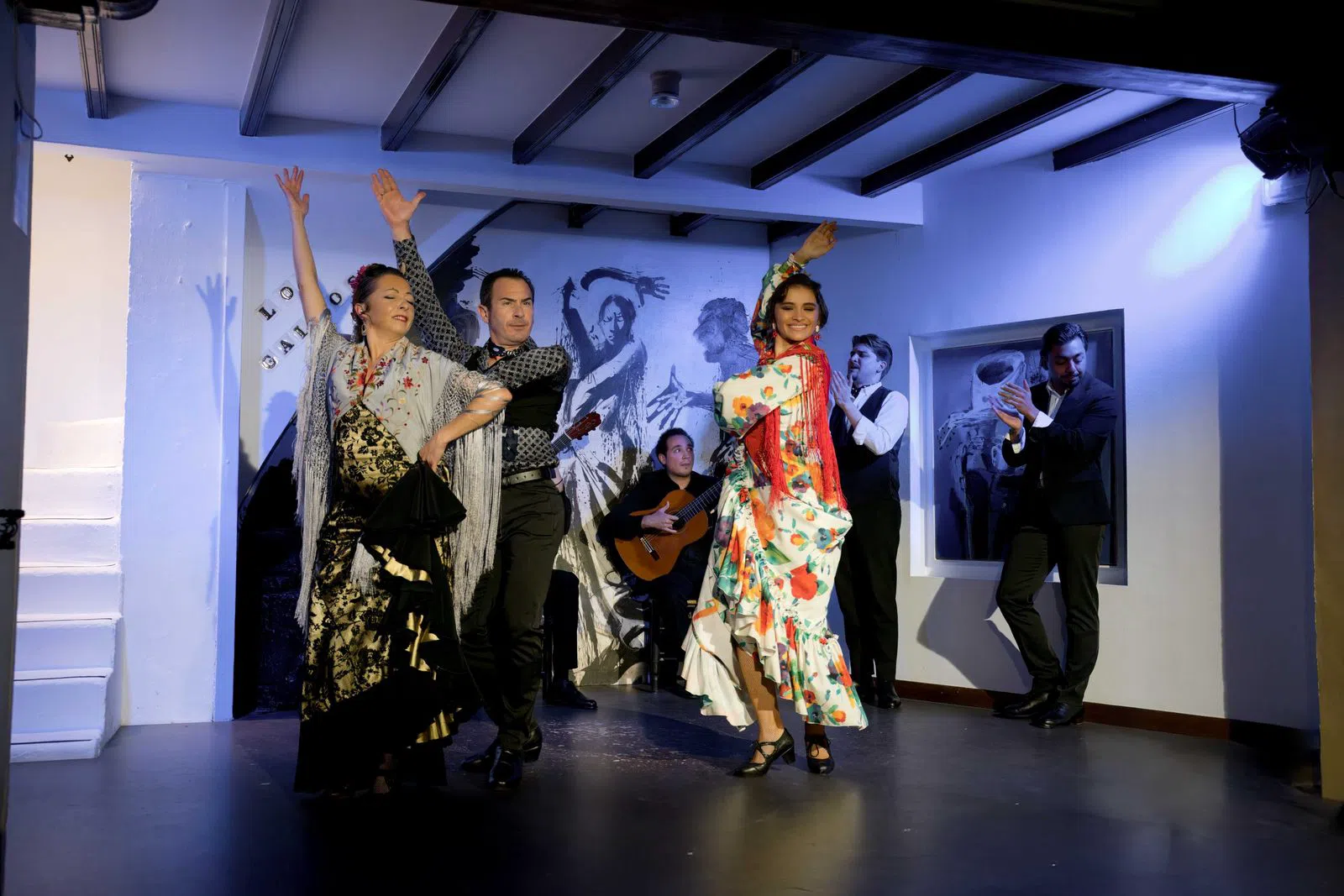
Tablao Flamenco Los Gallos (Santa Cruz) is the city's oldest tablao, still entirely unamplified, with shows most nights at 20:00 and 22:00 and one drink included. €35-40. The room is tiered and seats more than most tablaos, and they take group bookings, which makes it the practical choice for eight people who want to sit together and still see faces. Treat it as a complement to the big theatre programmes, not a substitute for them.
Casa Anselma (Triana) is neither of those things. Free entry with an obligatory drink at roughly €5-10, no reservations, no fixed hours, and packed from about midnight Monday to Saturday. Nothing is programmed and there is no set list. Go late, expect to stand, and accept that a big group is not getting in together, so arrive in twos and threes or don't bother. It is the opposite of a ticketed show, and it only works if you turn up with no expectations at all.
The first drink and the last one
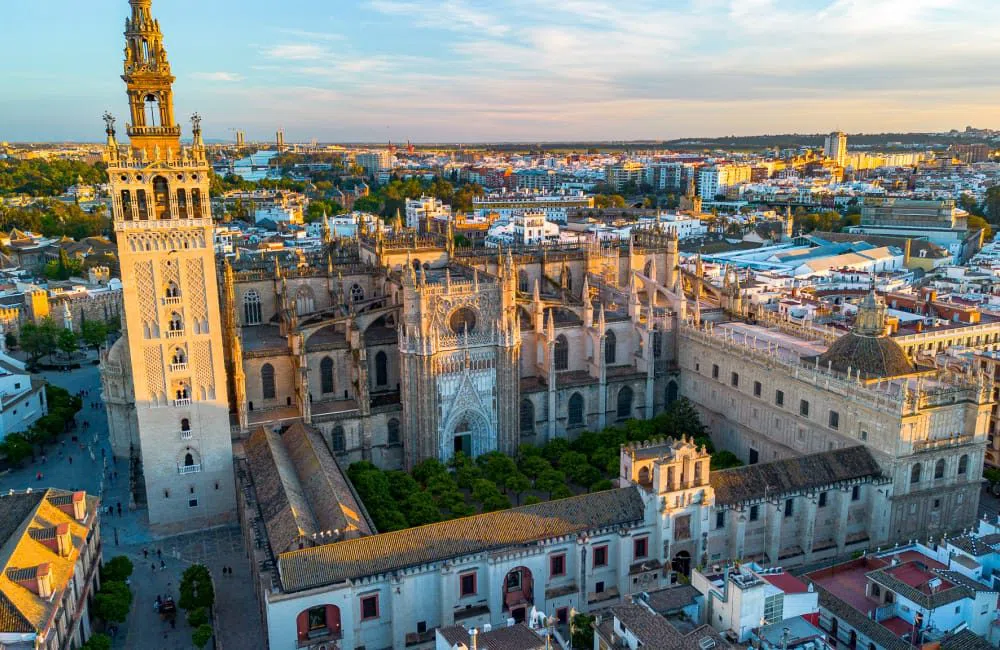
La Terraza del EME (facing the cathedral) is for the first drink of the evening, at sunset, when the Giralda is close enough to feel oversized. Terrace tables can be reserved and a larger group is far easier to place early than at 10pm. Smart-casual on the door. Cocktails are €14-18 and the food is not the reason to be there. Have one drink, look at the tower, then go and eat somewhere cheaper.
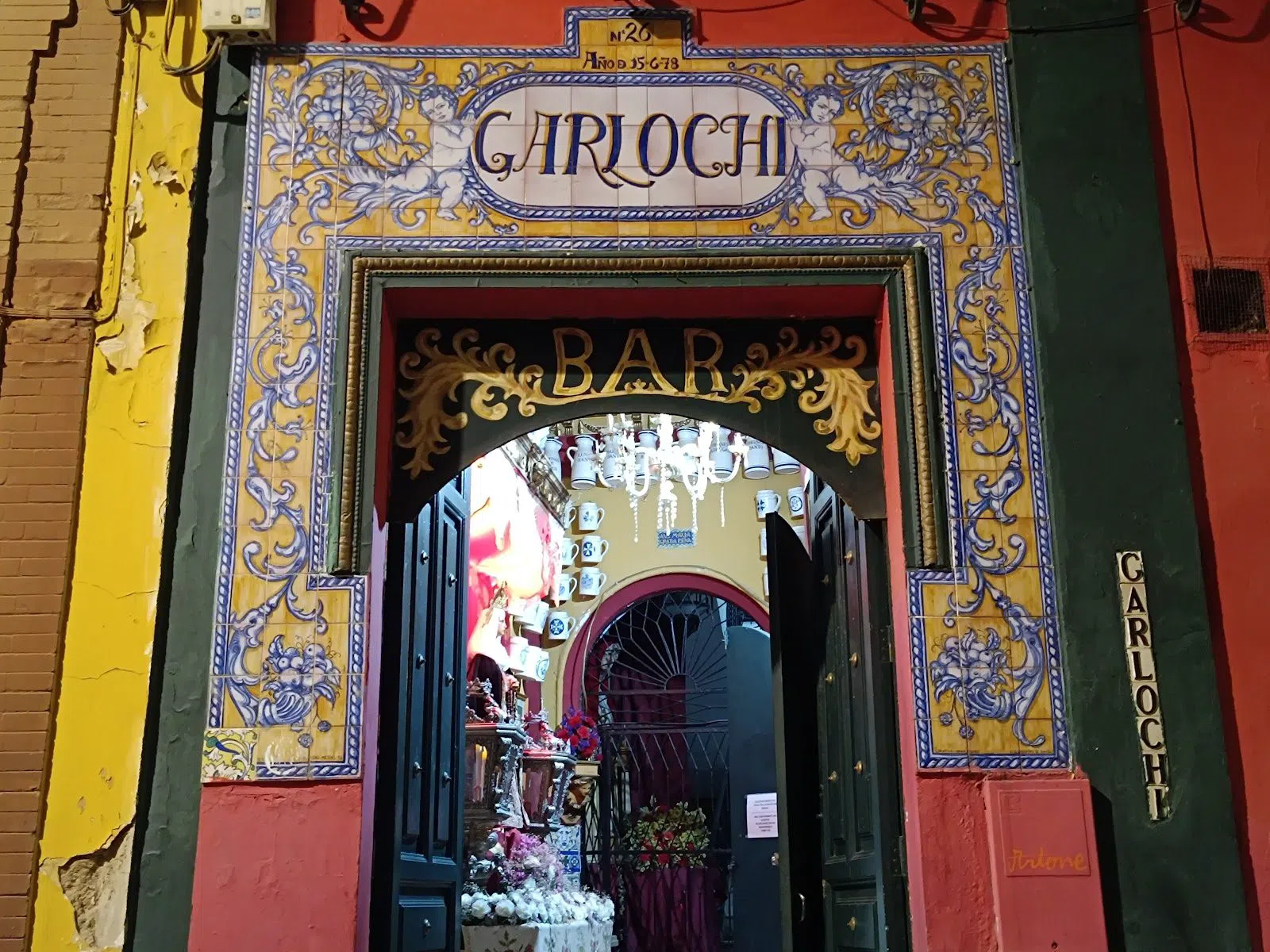
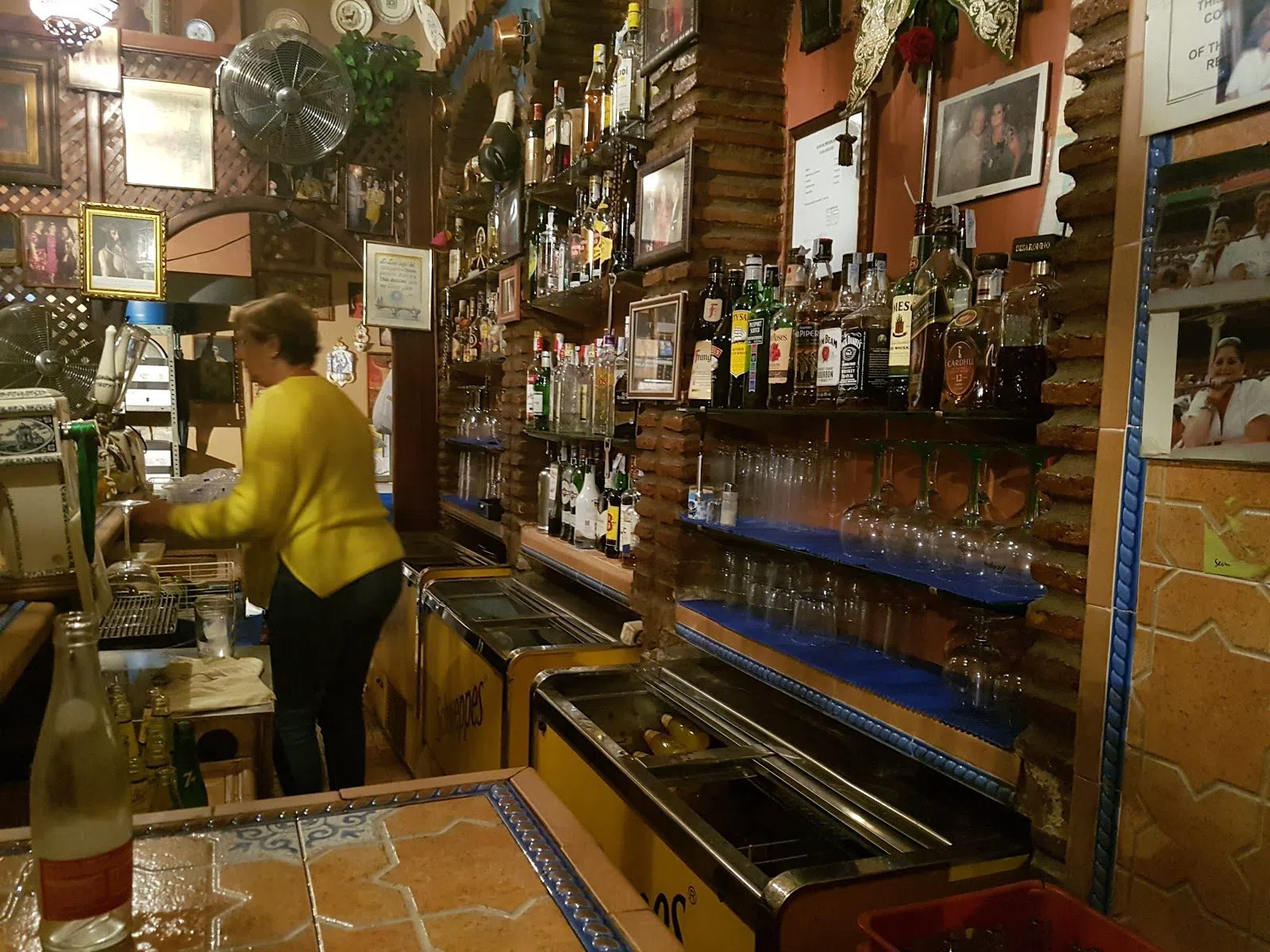
Bar Garlochí (Alfalfa) is the opposite in every respect. Roughly 10pm to 4am daily, no bookings, small, standing. Order the Sangre de Cristo, the cava-and-grenadine house cocktail, once, for the room rather than the drink. Drinks €5-8. A group that doesn't mind squeezing in will be fine; a group that wants a table will not.
Sala Malandar (Torneo, north of the Alameda) is the honest late option once the theatres empty. Ticketed gigs, then a club night until dawn, standing throughout, so group size stops being a problem. Tickets run €10-25 and drinks about €6; buy in advance for anything with a name attached. It was named best concert hall in the country by the independent labels' union, and it still books flamenco alongside rock and electronic, which during the Bienal makes it the most sensible place to end up.

Practical notes
Distances. The centre is walkable end to end in about half an hour, and on foot is usually faster than a taxi in the ten minutes after a performance lets out. Triana is one bridge away. Stay inside the ring (Santa Cruz, Alfalfa, Arenal, the Alameda or Triana) and you will not need transport after dark at all; start with a Seville hotel search and only widen the map if festival-week prices force you to.
Cash. The old bars still run on it. El Rinconcillo, Casa Morales and Bodeguita Romero are card-friendly enough at the till, but €40 in notes in your pocket removes every argument, and the freiduría queue moves faster for it.
Timing. Kitchens serve late; doors do not always follow. Casa de la Memoria and Los Gallos start early enough to pair with a late dinner. Bar El Comercio is shut by 9pm and all day Sunday. Casa Anselma barely begins before midnight. Sala Malandar goes until it stops.
Budget. A standing tapas evening across the old bars comes in around €20-25 a head with drinks. A tablao adds €28-40 on top. A booked dinner at Espacio Eslava or La Brunilda is €30-40 before wine. A rooftop cocktail is €14-18 on its own, so treat that as a decision rather than a habit.
Groups. Four is the number this city is built around. Above six, either book a room that seats you (Eslava's interior, El Rinconcillo upstairs, Los Gallos) or accept standing at a bar and stop trying to sit down. For everything else worth eating, drinking or walking to while you are here, the Seville guide covers the rest of the year as well as the festival weeks.
Before you go
Which restaurants should I book in advance for a Bienal trip?
Espacio Eslava's dining room and La Brunilda are the two to book early. Both take reservations, both fill weeks ahead in a festival month, and neither works as a walk-in on a busy night. Take the earlier seating if you have a ticket, and count on €30-40 a head. Everything else here is walk-in or standing, so those two are the only ones that need planning.
Where can I eat after a late show finishes?
Café Bar Las Teresas in Santa Cruz runs to 1am daily. Mercado Lonja del Barranco is open to midnight, and to 2am on Friday and Saturday, the only realistic option for a large group after a late curtain. Bar Garlochí serves drinks from about 10pm to 4am, and Sala Malandar keeps going until dawn on gig nights.
What works for a group of eight or more?
Standing bars work better than restaurants here. El Rinconcillo absorbs any size at the bar and takes bookings upstairs; Mercado Lonja del Barranco lets everyone order separately; Sala Malandar is standing throughout. Bar Las Golondrinas has two sites in Triana, and the Pagés del Corro one is roomier. Avoid La Brunilda and Casa Anselma entirely with that many people.
Do I need to book flamenco separately from Bienal tickets?
Yes, and it is worth doing. Casa de la Memoria has only 80 seats across two shows at 19:30 and 21:00, around €28, so book days ahead. Tablao Flamenco Los Gallos runs at 20:00 and 22:00 for €35-40 with a drink and takes group bookings. Casa Anselma takes no reservations at all and does not get going until roughly midnight.
How much should I budget per evening?
A standing tapas night across the old bars is about €20-25 a head including drinks; tapas at El Rinconcillo, Casa Morales and Bodeguita Romero run €3-6. Add €28-40 for a tablao, or €30-40 for a booked dinner before wine. A cone of fried fish from Freiduría Puerta de la Carne is €10-15 and feeds two at a push.