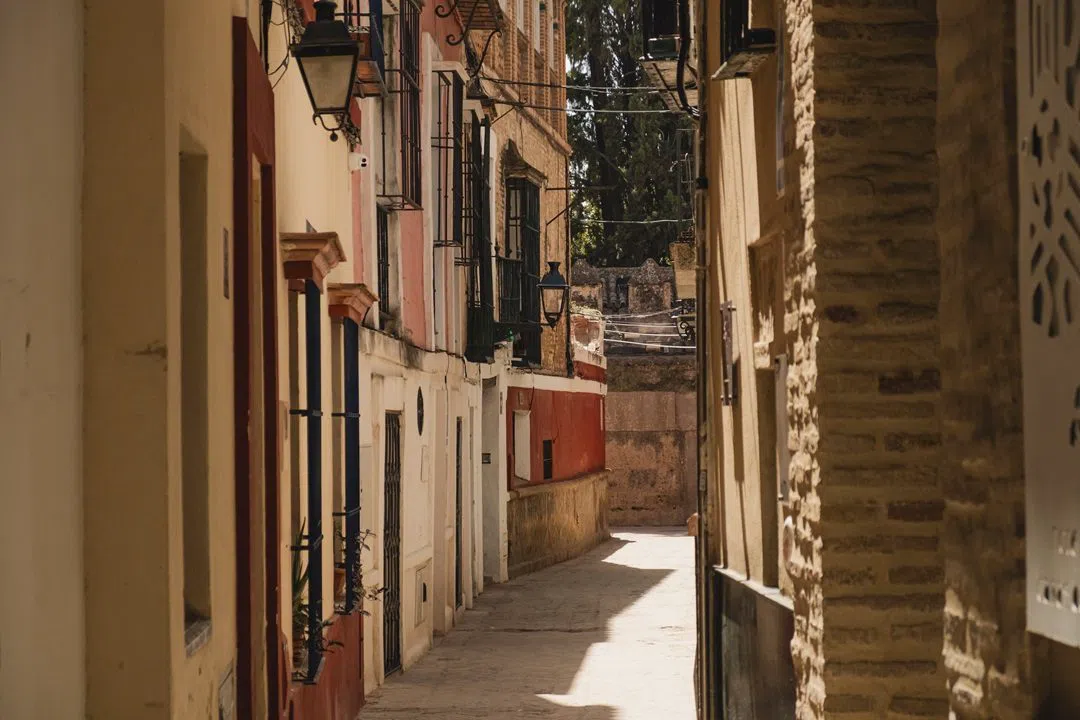

At half past nine in the morning the lanes behind the Cathedral smell of wet stone, bitter orange leaves and the day's first coffee, and you can hear a shutter rattling up two corners away. By two in the afternoon that same alley is a slow river of shoulders and raised phones, and by ten at night it has drained out again into something close to silence. Eating your way through Santa Cruz is mostly a matter of learning that clock and standing at the right counter at the right hour.
What eating through the old judería really involves
Nobody sells a ticket for Barrio de Santa Cruz (the old judería, directly east of the Cathedral), because it is a set of public streets with no entrance to queue at. This was the medieval Jewish quarter, rebuilt and prettified over centuries into the whitewashed, geranium-heavy version you walk today, and its two set pieces (Plaza de Doña Elvira and the Callejón del Agua, which runs along the outside of the Alcázar wall) cost nothing and stay open at every hour. What turns it into a food itinerary rather than a sightseeing one is density. Inside a ten-minute walk you have a bar that has been carving ham since 1870, a wine counter held by one family for a century, a tapas room built inside a 12th-century bathhouse, and a convent that still sells sweets through a wooden drum by hands you never see.
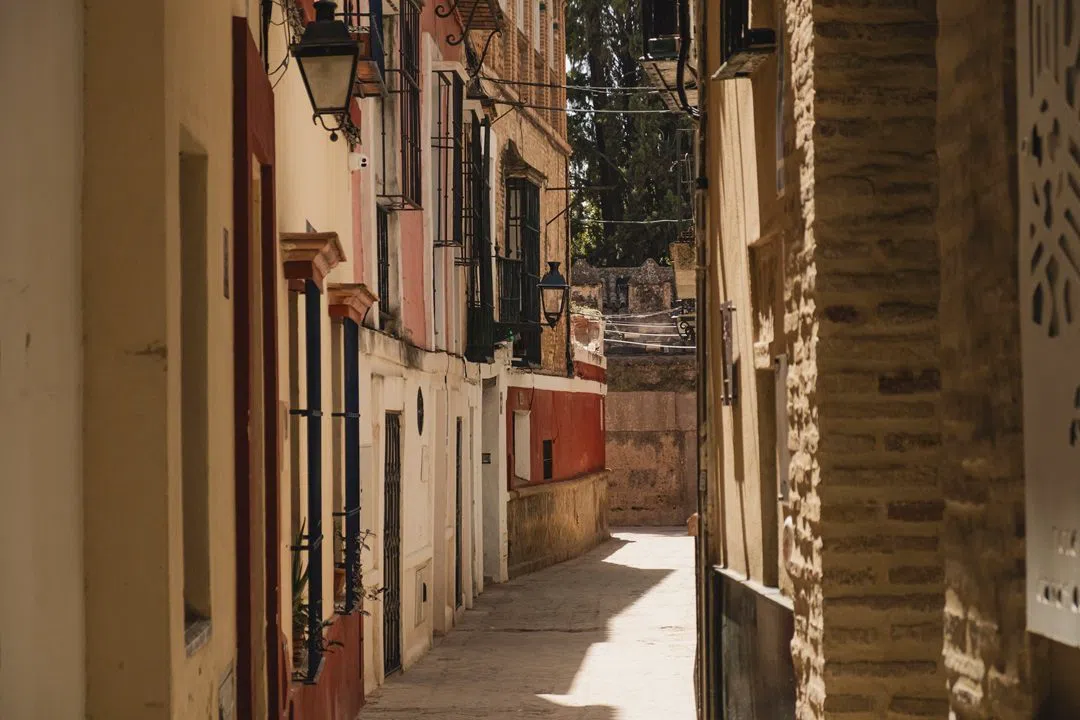
The practical shape of a crawl is four or five stops, one tapa and one drink at each, on your feet, moving on before you get comfortable. The rooms enforce that: most of them have no tables worth the name, and the ones that do have very few. It is also why guided groups here stay small in practice, since Calle Vida and the Callejón del Agua are barely shoulder-width and a party of twenty cannot physically exist in them. The rest of the city (the Alcázar, the river, the weeks when Holy Week and the Feria take the whole place over) belongs to the Seville guide, which is the better starting point for all of that. This piece is about the eating.
The standing bars where the barrio still eats
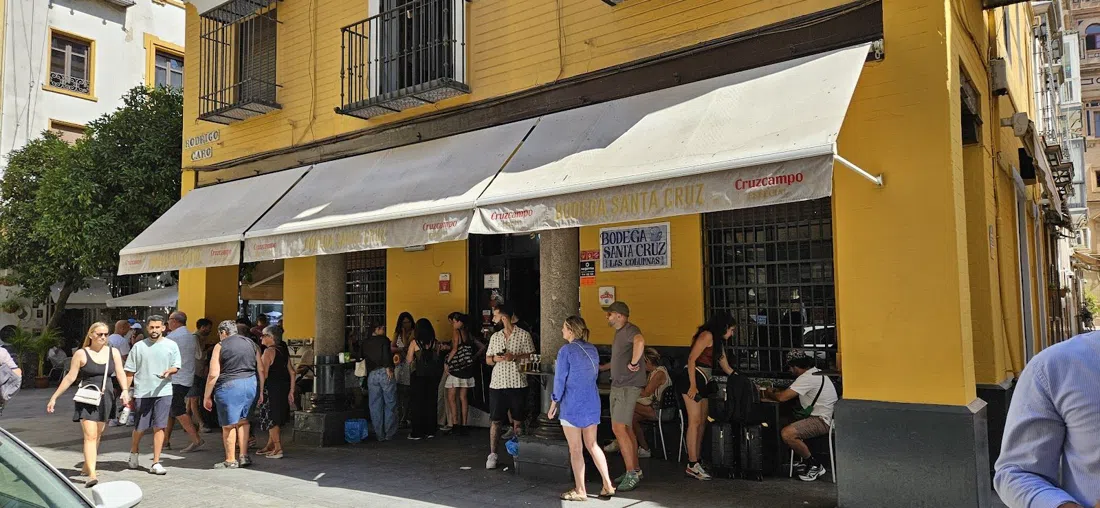
Begin where the locals bail out of the crowd. Bodega Santa Cruz (everyone calls it Las Columnas, on the Cathedral side of the quarter) is chalk-on-the-bar, three-deep and still local despite standing yards from the world's largest Gothic church. There are no reservations and no tables at all, so a group simply becomes part of the scrum spilling onto the street corner, which means it works for any number as long as everyone is happy standing. Order one montadito de pringá and a caña, pay around €3.10 for the tapa and €2 for the beer, give it fifteen minutes and leave. Search for a Bodega Santa Cruz Las Columnas official website and you will not find much of one, which is consistent with how the place is run.
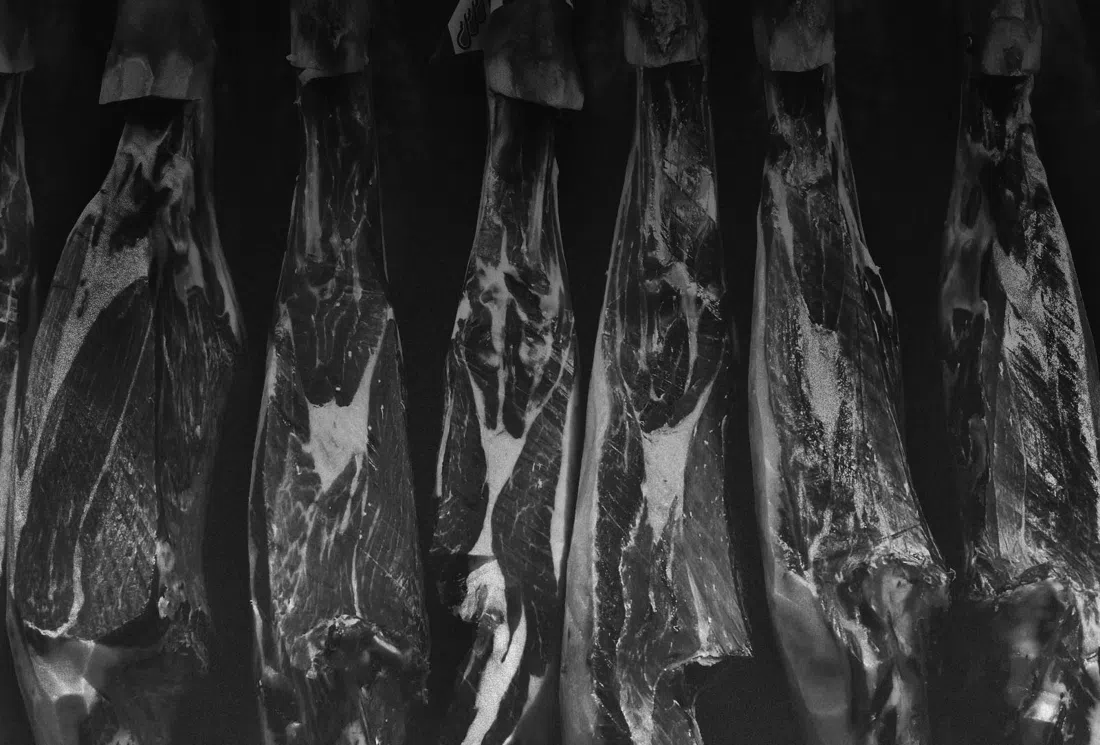
Two minutes away, Las Teresas (Calle Santa Teresa, in the heart of the barrio) has been open since 1870, and the owner still goes out to the mountain curing villages to pick the hams in person. Order the hand-carved ibérico and the espinacas con garbanzos and skip the sit-down menu entirely; tapas run €3.50–7 and a ham plate €18–25. It is standing room at the bar plus a handful of very small tables, which makes it comfortable for four to six people and awkward beyond that, so walking groups tend to take it in shifts rather than all at once.
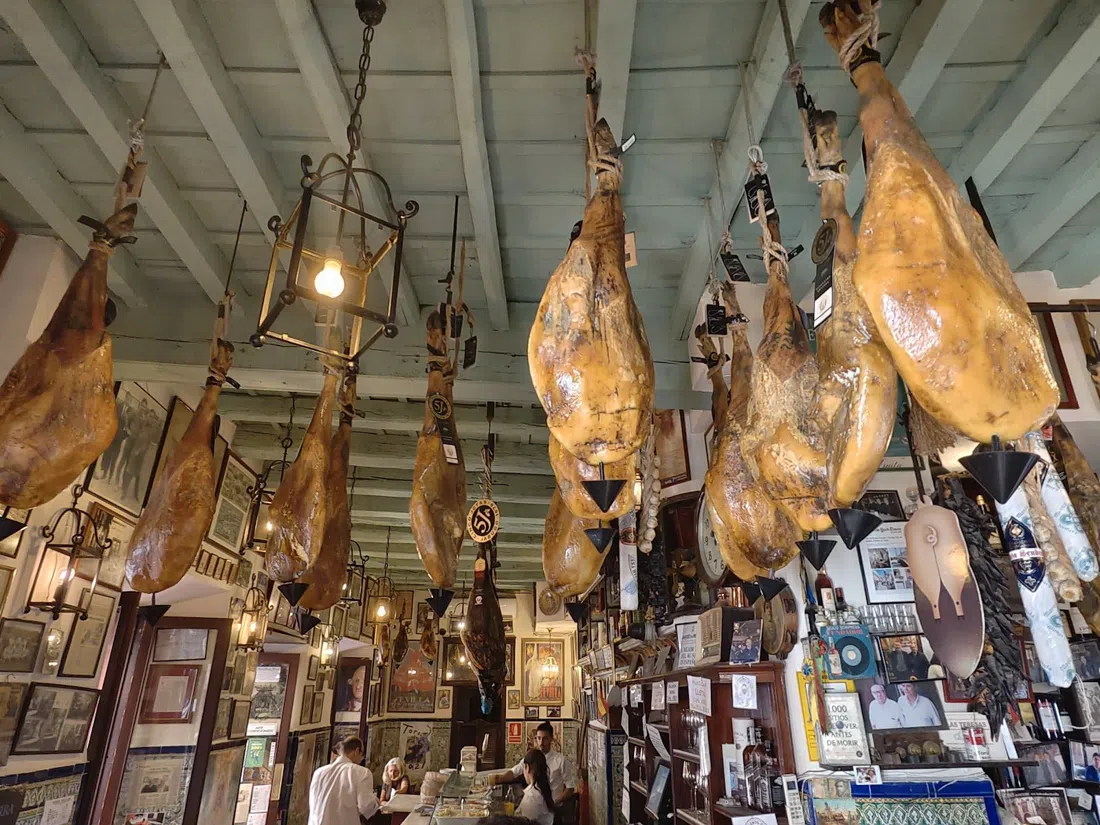
Taberna Álvaro Peregil (Calle Mateos Gago) is a hole in the wall with room for perhaps eight bodies inside, a century in the same family, and one reason to come: vino de naranja, the sweet Andalusian orange wine that most visitors never hear about, at €2–3 a glass with montaditos at €2.50–4. Everyone else drinks on the street outside, which is the local custom rather than an overflow problem. A few doors along, La Fresquita (Calle Mateos Gago) is not a meal at all. It is a working Holy Week shrine that happens to pull beer, with brotherhood photographs, candles and a counter, and it explains this city better than any museum caption. Six people is a crowd, there is no food to speak of, and a beer costs €2–2.50 with sherry at €2.50.
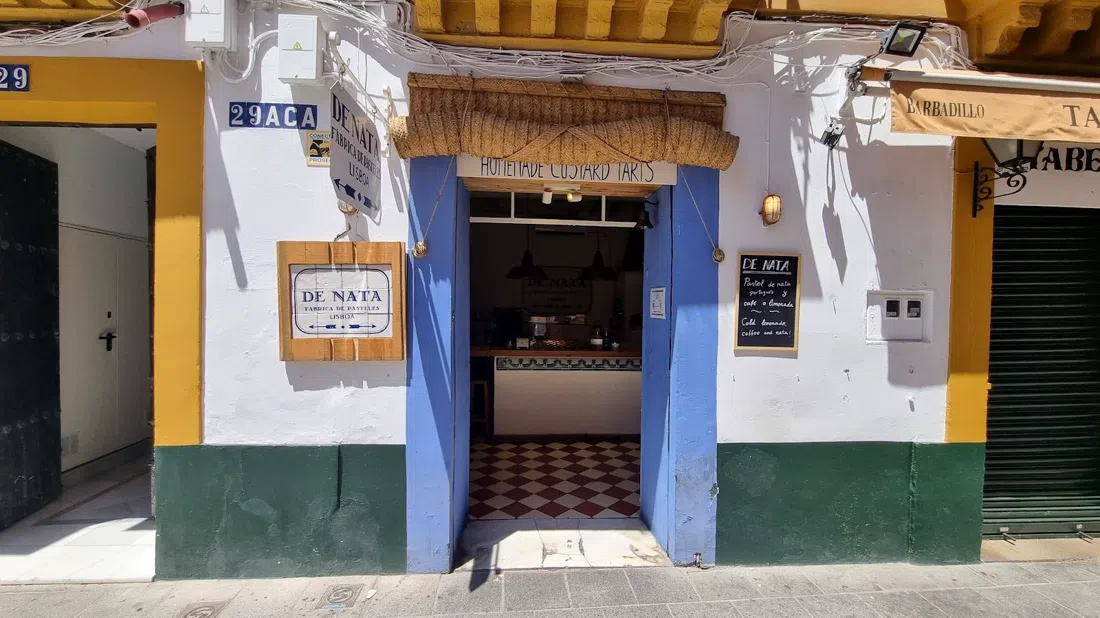
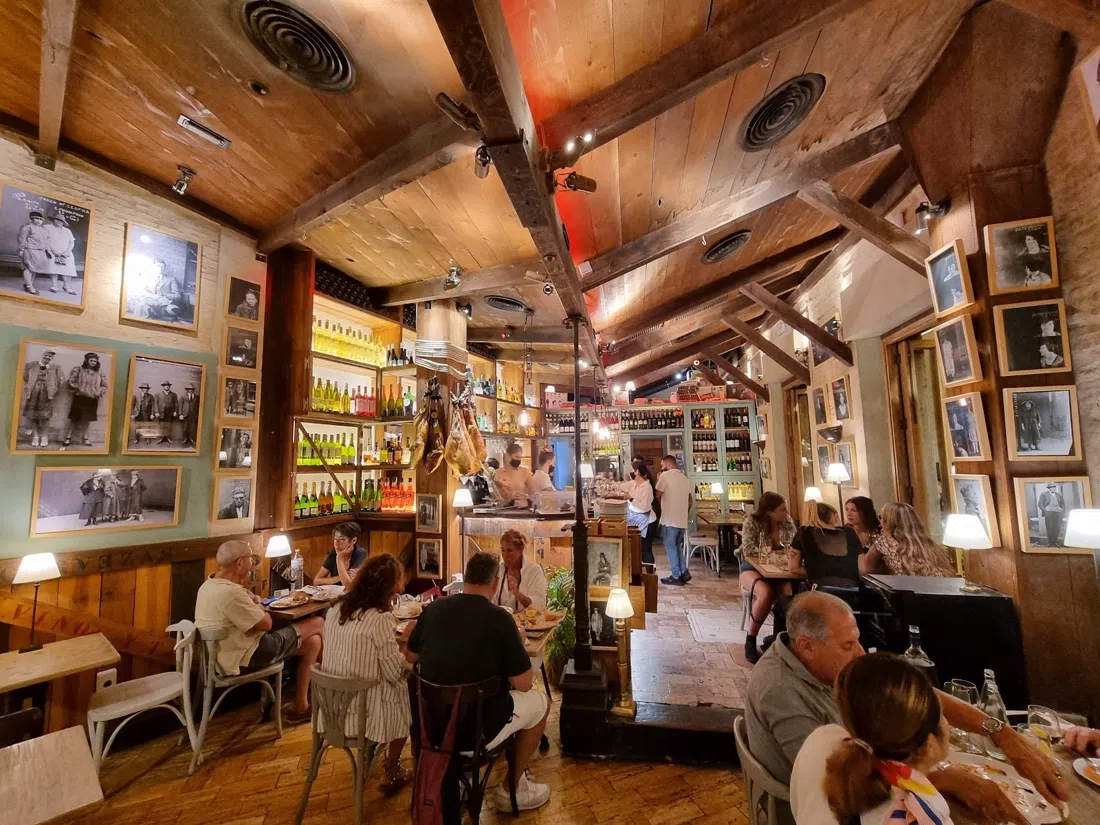
When legs give out, Casa Román (Plaza de los Venerables) is the honest sit-down. A 1934 grocery that slid gradually into being a ham tavern, it has a small bar and a terrace on the plaza, one of the very few places in Santa Cruz where you can take a chair without paying a surcharge for the view. Tapas are €4–8 and a full stop lands at €20–30 a head; six to ten people can sit outside, but book ahead in spring.
Rooms where you can actually sit down
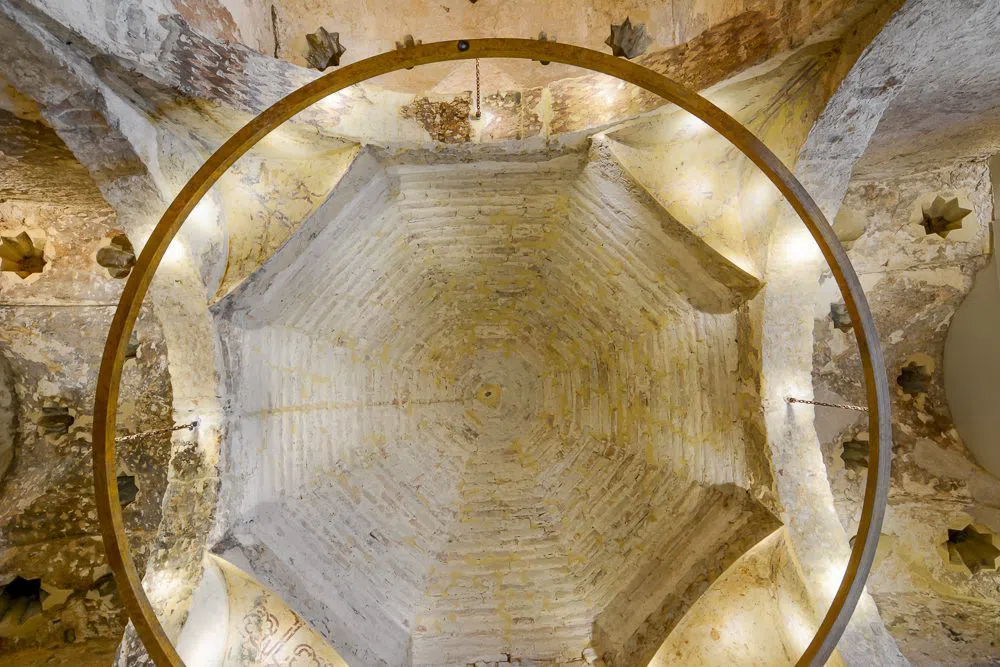
Cervecería Giralda (Calle Mateos Gago) is the one stop where the building outranks the food, and it still cooks well. The best-preserved Almohad bathhouse remains on the peninsula sit directly above the beer taps, brick vaulting and star-shaped skylights included, and because the bar runs four separate rooms plus a large terrace it is also the most group-friendly historic bar in the quarter. Reserve for anything over six. Tapas are €3–6 and a proper session is €15–25 a head.
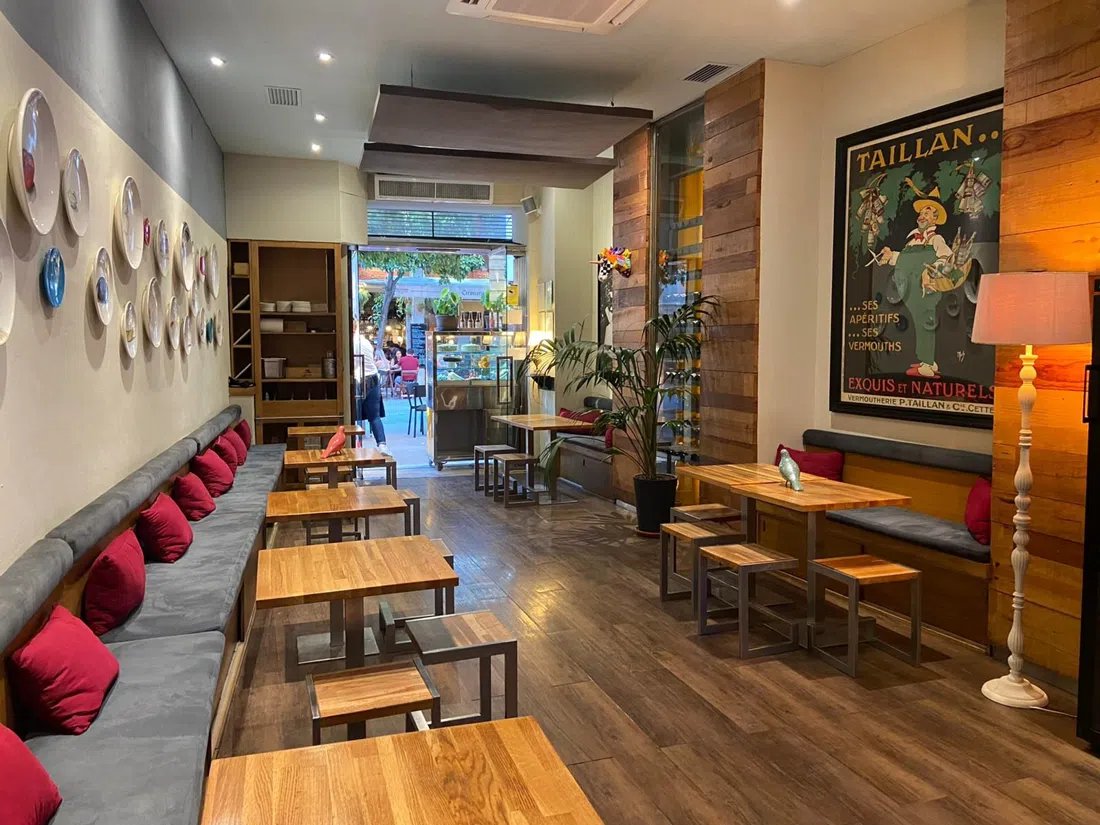
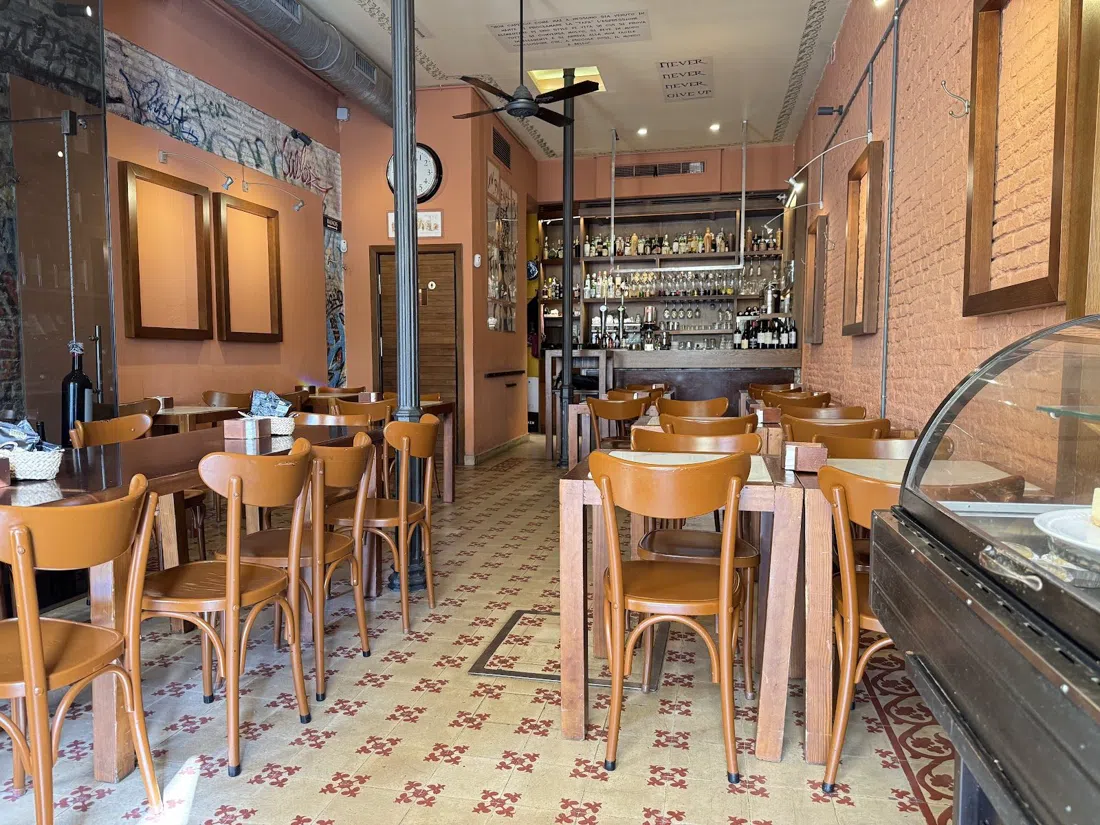
On the quarter's southern edge, Vinería San Telmo (by the Murillo gardens) opened in 2004 and effectively started the barrio's modern-tapas turn. The towers, which are stacked, layered plates, are the signature; plates run €8–16 and dinner lands at €30–40 a head. Its cellar takes eight to twelve people, the only address on this walk that comfortably seats a whole tour party, and you should book, because walk-ins rarely get in at 21:00. Back on the main tapas street, La Azotea (Mateos Gago) took over the site after the group's Capital project closed there, and cooks seasonal market food rather than the fried standards the street is known for. It takes reservations and gives you full table service, which makes it the most reliable sit-down for six to ten; plates are €9–18, €30–45 a head.
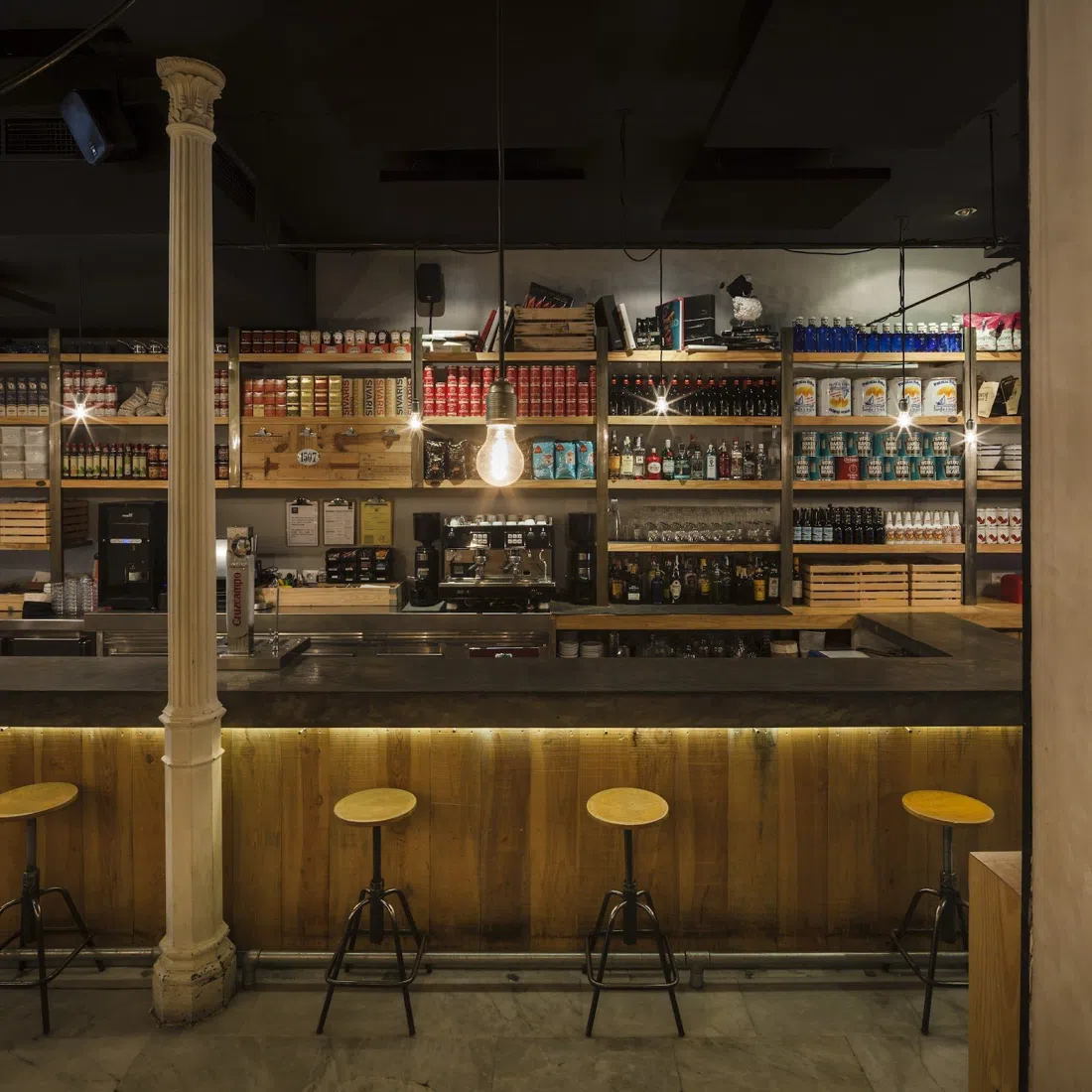
The best cooking nearest the Cathedral exit is Ovejas Negras (Calle Hernando Colón), where Andalusian ingredients get pushed through non-Spanish techniques. The catch is firm: no reservations at all, and closed Mondays. Turn up early or split a large group in two. Plates are €5–12, dinner €25–35 a head.
Convent sugar and the pastry walk north
The sweet half of this quarter is monastic, and it is easier to reach than most people realise. El Torno Pastelería de Conventos de Clausura (under the arcade on Plaza del Cabildo, five minutes from the Cathedral) sells the output of the city's enclosed convents in one small room, so you can taste cloister baking without chasing individual doorbells. It is counter service only, groups queue outside under the arches, and each person is in and out in two minutes with a box at €4–12.
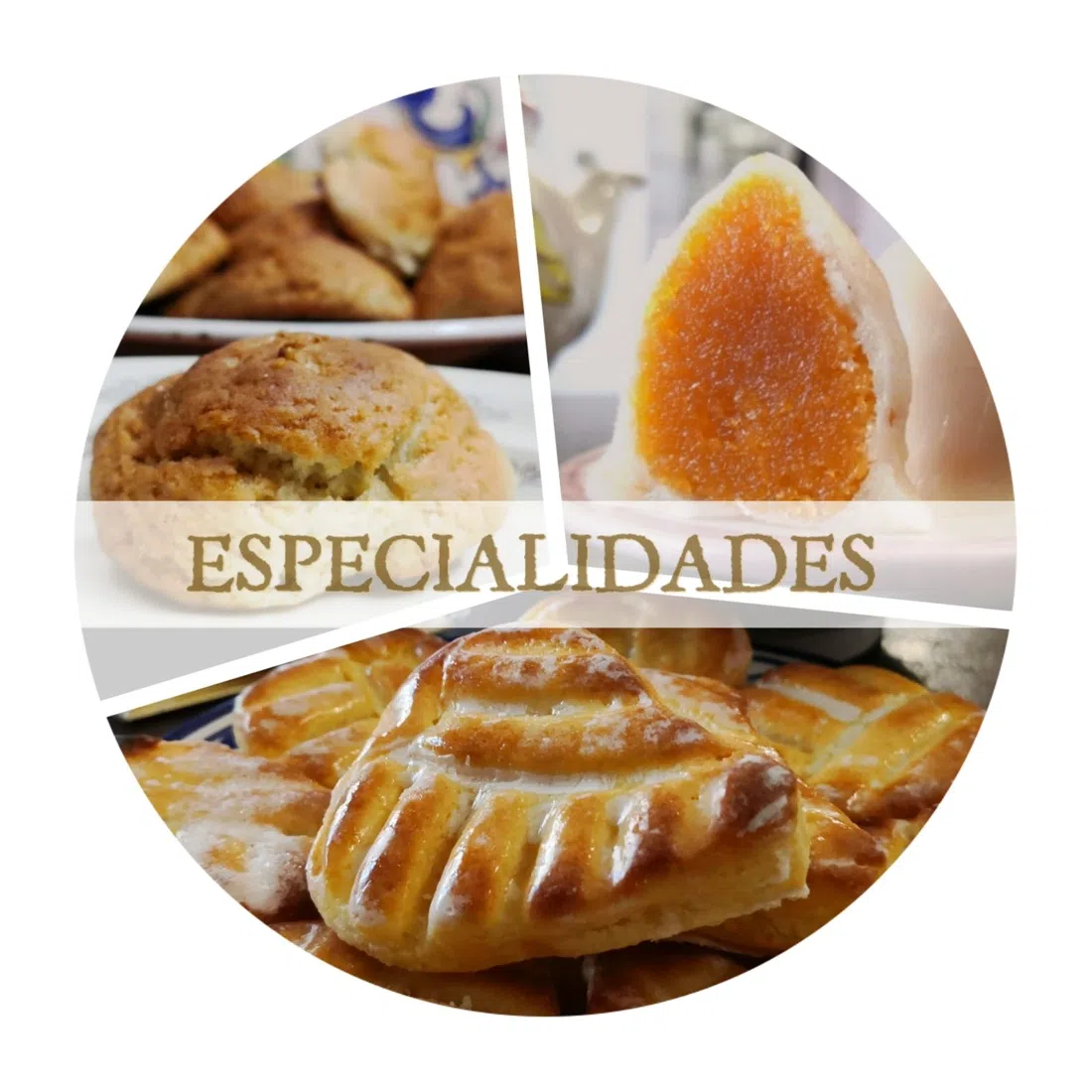
For the real ritual, walk ten minutes northeast to Convento de San Leandro (Plaza de San Ildefonso), where yemas de San Leandro have been made to the same recipe since the 1500s and are sold through a turning wooden drum by nuns you never see. It is strictly one buyer at a time, the church opens afternoons only, a box is €8–14, and production pauses in the hottest months, so this is a stop to attempt rather than one to promise a group. Anything larger than a handful of people waits in the lane.

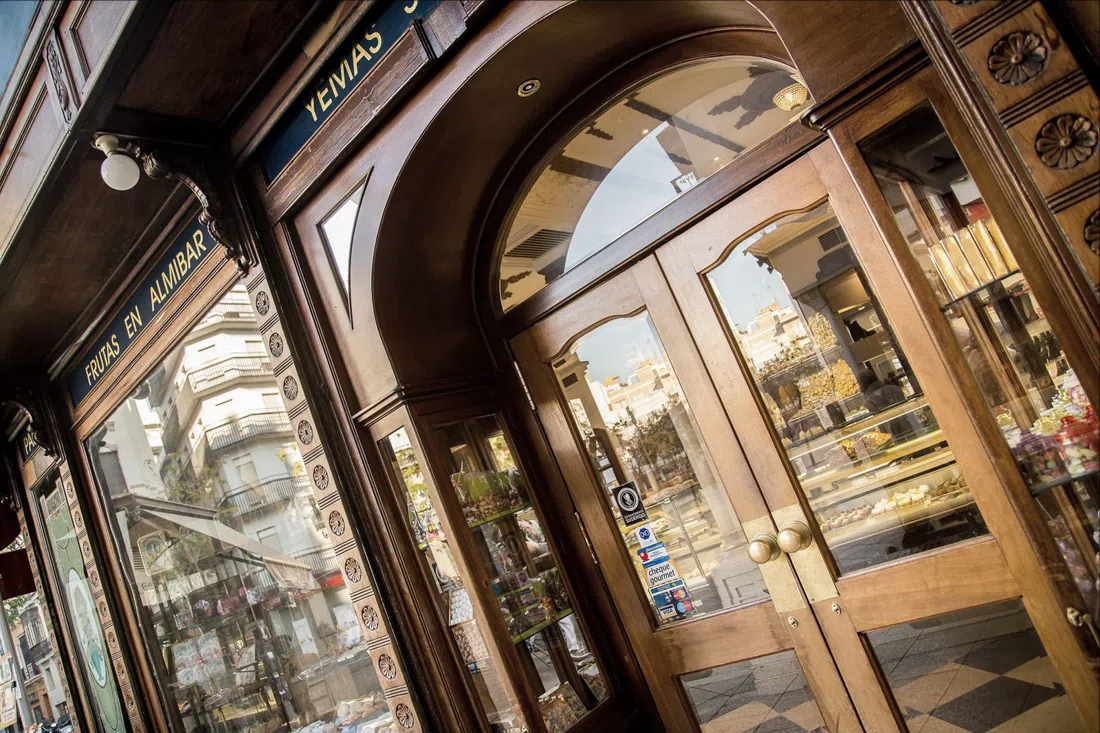
For cake with a chair under it, Confitería La Campana (ten minutes north of the quarter) is the city's oldest working pastry shop, four generations in, with a big room and a terrace that absorbs groups easily. Torrijas and tocino de cielo are done properly here; cake is €2–5 and coffee €2. The counter scrum at merienda time is real and worth timing around.
Where a larger group ends up without an argument
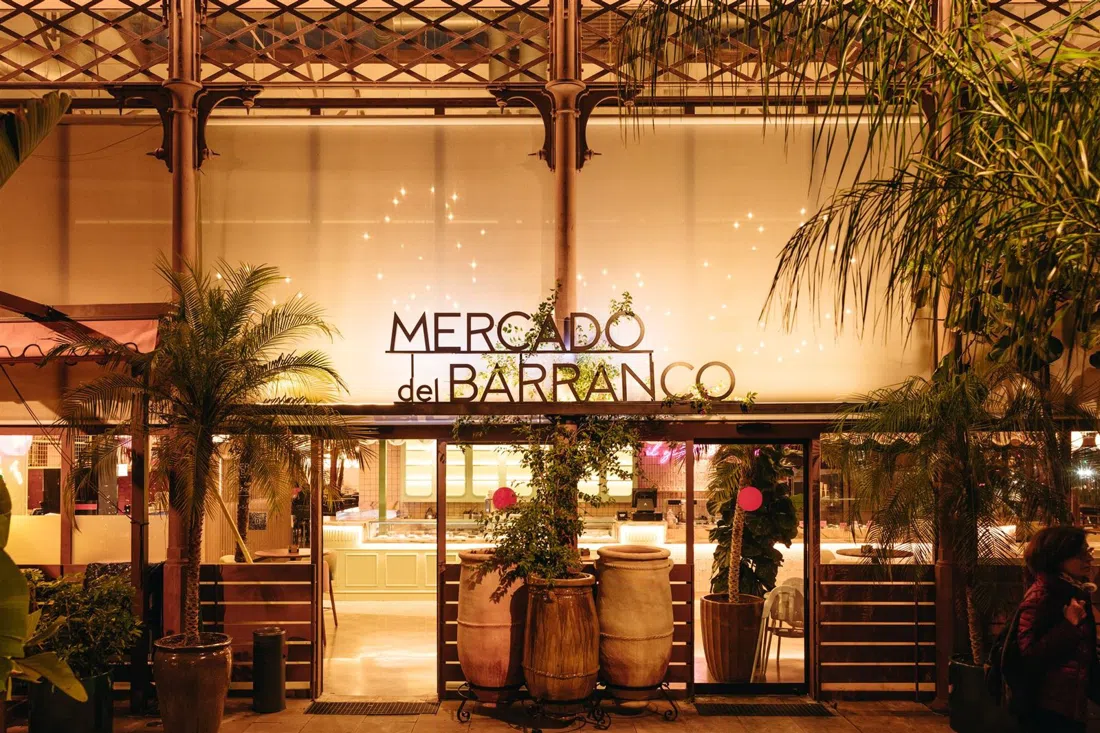
Two addresses just outside the barrio solve the problems Santa Cruz creates. Mercado Lonja del Barranco (on the river, fifteen minutes west) is a 19th-century fish market in an Eiffel-designed iron shed, now around twenty stalls with long shared tables. Nobody needs to agree on anything, no reservation is required, plates run €4–12, and it stays open to midnight and to 2am at weekends, which makes it the only sane option for a second round after the old bars have called last orders.
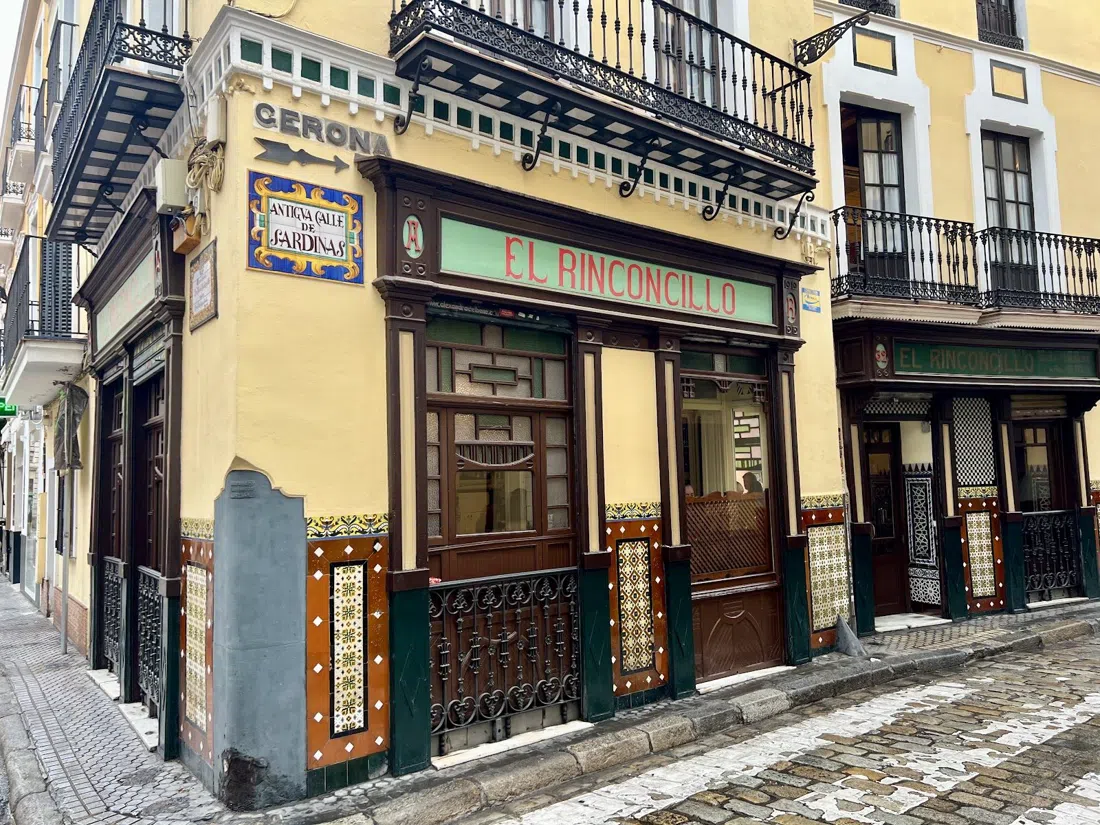
El Rinconcillo (Calle Gerona, fifteen minutes north) is the city's oldest bar, founded in 1670 and run by seven generations of one family, with your bill chalked in pencil on the wooden counter as you go. Order espinacas con garbanzos, stand at the bar if there is room, and expect the ground floor to be elbows-only at peak, so go before 13:30 or after 21:30. The upstairs dining rooms take booked groups. Tapas are €4–9, €25–35 a head.
A flamenco bookend rather than a dinner show
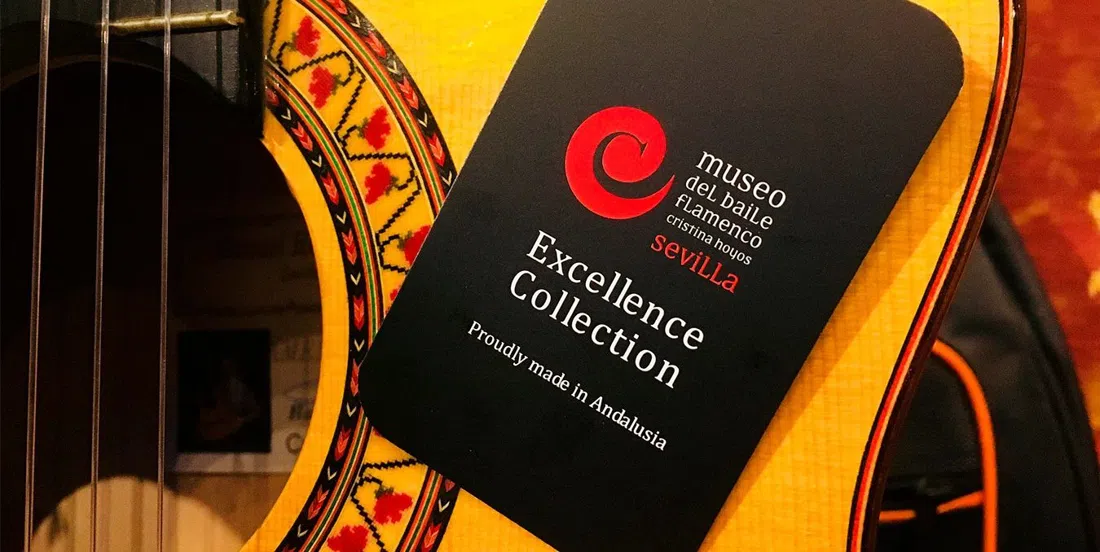
If the evening needs a full stop, Museo del Baile Flamenco (a lane north of the Cathedral, inside the quarter) is the nearest thing Santa Cruz has to a museum you can reliably get into, and the cellar show is a small-room performance rather than dinner theatre. Shows run three times daily at 17:00, 19:00 and 20:45, the museum alone is €6, the show €29 for an adult and the combined ticket €33. Booked groups are accepted for both. The 20:45 slot suits an evening that started eating at seven, and the 19:00 works if you plan to eat late in the Spanish way.
How long the crawl takes and how to order it
Four bars, honestly done, takes three to three and a half hours, and the guided version of this walk runs to about the same length. The sequence matters more than the venue list: stand-up counters first, while you are patient and the rooms are shallow, then something seated once the novelty of standing wears off, then sugar. A workable evening is Las Columnas at 19:30 for one tapa, Las Teresas at 20:00, an orange wine at Álvaro Peregil and a look inside La Fresquita around 20:45, then a booked table at Vinería San Telmo or La Azotea at 21:30. A lunchtime version swaps the ending for Casa Román's terrace and a box from El Torno.
Do not try to combine the ham bars and the convent drum in one pass. San Leandro's church hours and one-at-a-time drum belong to the afternoon; the bars belong to the evening.
Doors, queues and whether to book ahead
Nothing in Santa Cruz has a door policy in the nightlife sense, but several places have hard practical limits and they catch people out. Ovejas Negras takes no reservations and closes Mondays. Bodega Santa Cruz, Álvaro Peregil and La Fresquita cannot take a booking because they have nothing to book. Cervecería Giralda wants a reservation over six, Casa Román wants one in spring, and Vinería San Telmo and La Azotea really do need one at 21:00.
The guided option exists for a different reason than queue-skipping, since there is no queue to skip: what you are buying is someone who knows which counter is worth the elbows tonight and can order in Spanish while you are still reading the chalkboard. Those walks run seven days a week and start from around 81 USD per person, and the best-reviewed one here holds 4.9 out of 5 across 5,624 traveller reviews, a fair signal that the format works when it is run well. Walking it yourself costs nothing but the tapas, and on a quiet weekday it is entirely doable with this article and a phrase or two.
What the lanes ask of you
Be realistic about the ground. The judería is uneven stone, several lanes are too narrow for two people abreast, and the good bars are standing-height with no space for a pram or a wheelchair to turn. Cervecería Giralda's rooms and terrace, Casa Román's plaza tables, La Azotea and the riverside market are the addresses to build around if anyone in the party needs a seat, a level floor or a bathroom without stairs. Children are welcome everywhere in the early evening, since Spanish bars are not adults-only spaces, but a standing counter at 22:00 is nobody's idea of fun with a tired six-year-old.
Whether it is worth doing
Yes, with one condition: treat it as eating, not as a tour of a sight. The quarter's restaurants closest to the Cathedral include some of the laziest kitchens in the city, and if you wander in hungry at 14:00 you will pay €18 for a reheated plate under a laminated menu and conclude the barrio is a tourist trap. Walk the same streets at 09:30 or after 21:00, order one thing at each of the four counters named above, and you get what the guidebook version never delivers: a 1670 tavern, an 1870 ham bar, a hammam and a Holy Week shrine, all in one evening, for less than the price of a mid-range dinner. It suits couples and pairs best, works well for four to six, and needs planning past eight, at which point the answer is the market or San Telmo's cellar rather than hoping for a gap at the bar.
The best time to go
Time of day beats time of year here. The lanes are pleasant early in the morning and again after 21:00, when the day-trip crush thins and the barrio returns to the people who live in it; between noon and about 17:00 it is at its worst and the kitchens are at their most cynical. Spanish eating hours run late, with lunch from 13:30 to 15:30 and dinner from 21:00, so 19:30 is the sweet spot for a crawl: early enough to get a spot at the bar, late enough that the counters are stocked.
By season, spring and early autumn are the obvious windows, with the caveat that Holy Week and the April fair fill every bar in the quarter and Casa Román's terrace needs booking through that period. High summer is brutal at midday and lovely at 22:00, and it is also when the convent kitchens pause production, so do not build a July afternoon around the yemas. November through February is the version for people coming back a second time: cool, quiet lanes, no wait at Las Teresas, and torrijas season arriving at La Campana.
Practical notes
Everything named here except the market, El Rinconcillo, La Campana and San Leandro sits within a ten-minute walk of the Cathedral, and inside the judería you walk, because taxis cannot enter the lanes and there is no point trying. For the riverside market, allow fifteen minutes on foot along the water or take a short taxi. Wear shoes you can stand in for three hours on stone.
Cards are normal in the sit-down places, but carry €20–30 in small notes for the standing counters and for the convent drum, which obviously takes nothing else. Budget roughly €25–35 a head for a four-bar standing crawl with drinks, €30–45 if you finish at a table, €33 if you add the flamenco museum and its cellar show. Two tapas and a beer at three different bars is a better meal than three courses at one, and it is also cheaper.
Stay inside or immediately beside the quarter if this is the evening you care about, because walking home in four minutes is the whole advantage, and it means you can eat at 22:00 without watching the clock. Compare what is available around the Cathedral and the Alcázar on the Seville hotel search, and book a table at your one seated stop before you land.