The Seville issue
Tiled benches and October shade in Seville's Maria Luisa Park
Forestier's garden is free all day. The canal boats are running again now that the summer suspension has lifted, and the Lope de Vega has reopened for autumn.
By Camille RousselThe city, barrio by barrio
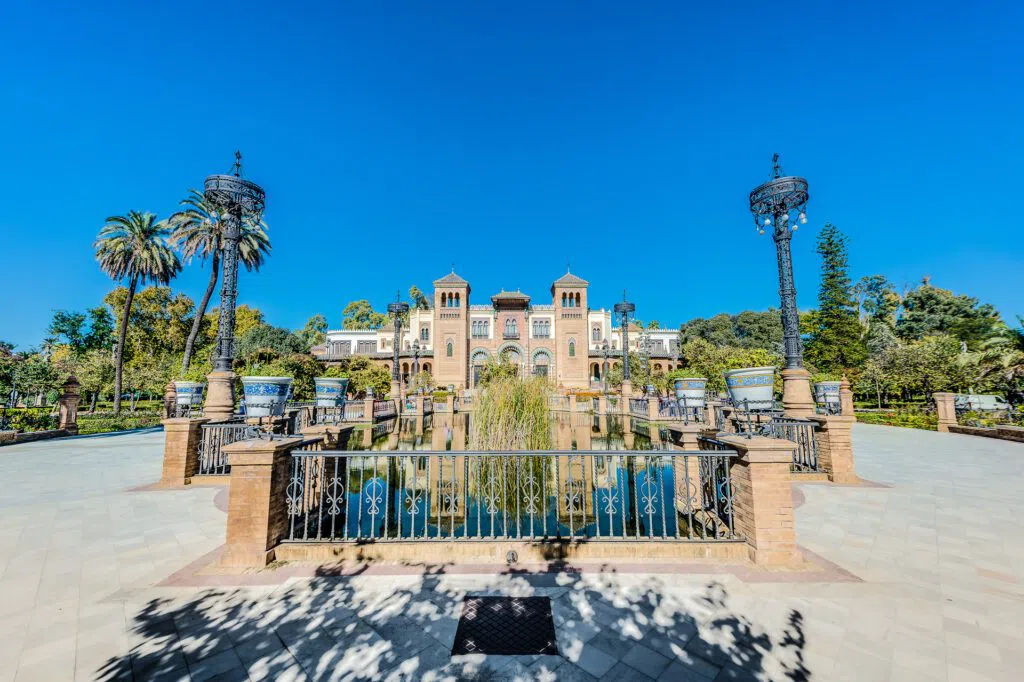
A rowing boat on the Plaza de España canal costs €6 for 35 minutes, cash, handed over at the kiosk out on the paving. The park it floats in costs nothing at all: 34 to 40 hectares of Hispano-Arab garden that Forestier laid out between 1911 and 1922. Every city tour in Seville routes through it.
Walking the avenues
Parque de María Luisa is public ground, free and unticketed, with nothing at the gates to pass through. Tall Mediterranean pines, palms and orange trees stand over the paths, the ground underfoot is sand and gravel, and for most of a route the light comes through dappled. At the junctions there are tiled benches and brick-and-azulejo glorietas, backed by dense ivy and climbing roses.
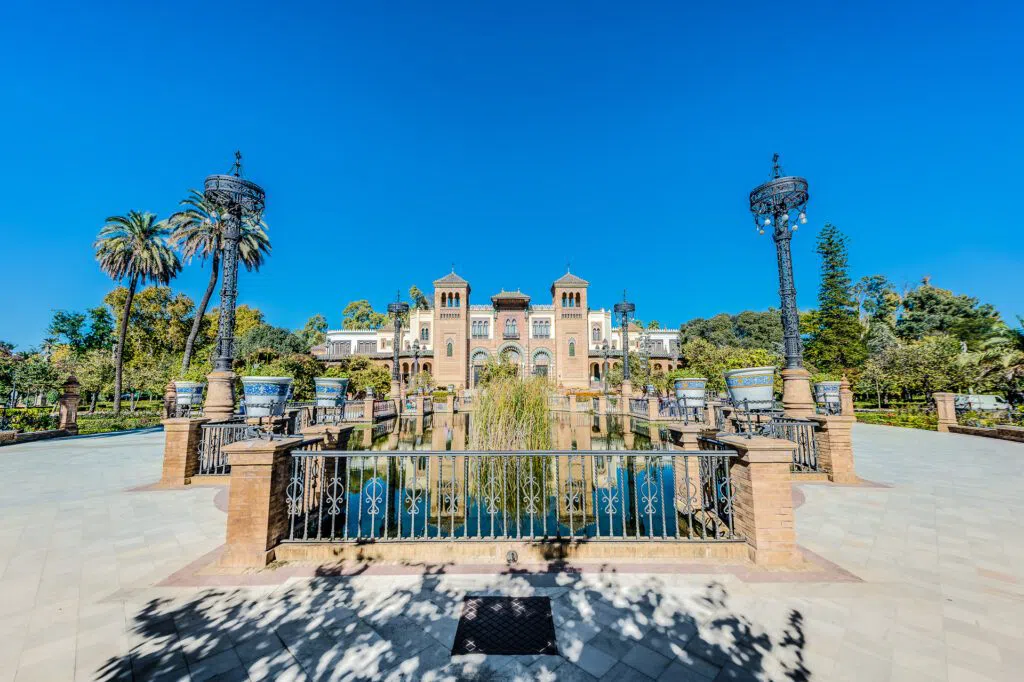
Walking groups, school parties and guided tours circulate all day, and because nobody is screened at an entrance, the only crowding you meet is wherever a tour has just stopped. The Expo of 1929 left its pavilions standing along the avenues, and some are still in use.
Plan your Seville trip
Live prices from our booking partners.
Free cancellation on many rooms. We may earn a commission when you book.
Plaza de España and the canal boats
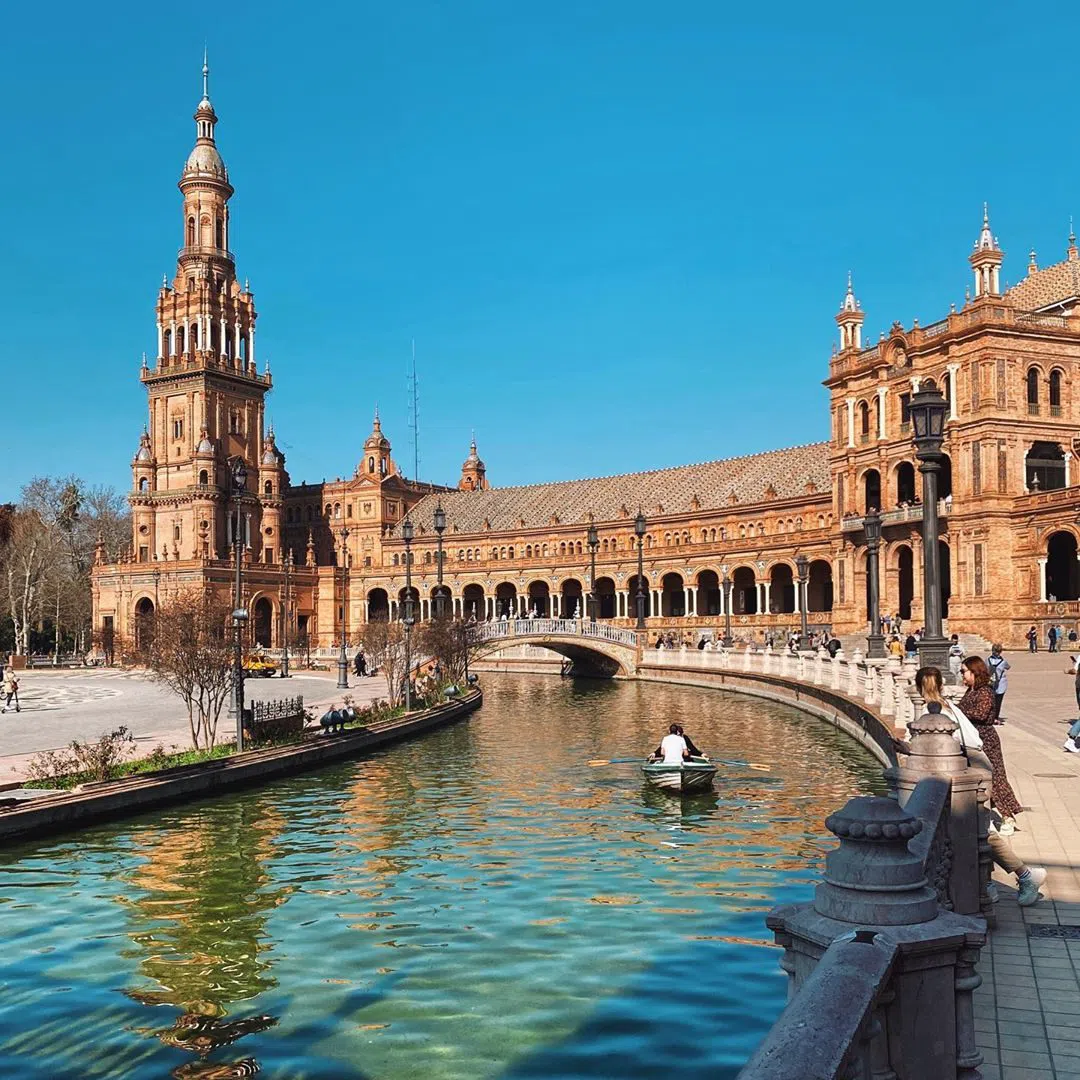
Plaza de España is a vast semicircular palace of brick and ceramic with twin towers, a central fountain and a curving tiled canal crossed by four ornate azulejo bridges. Along the colonnade, 48 alcoves hold painted tile benches and a map for each Spanish province. Entry is free in October 2026, and the tourist entry charge the city has floated for years has never been implemented.
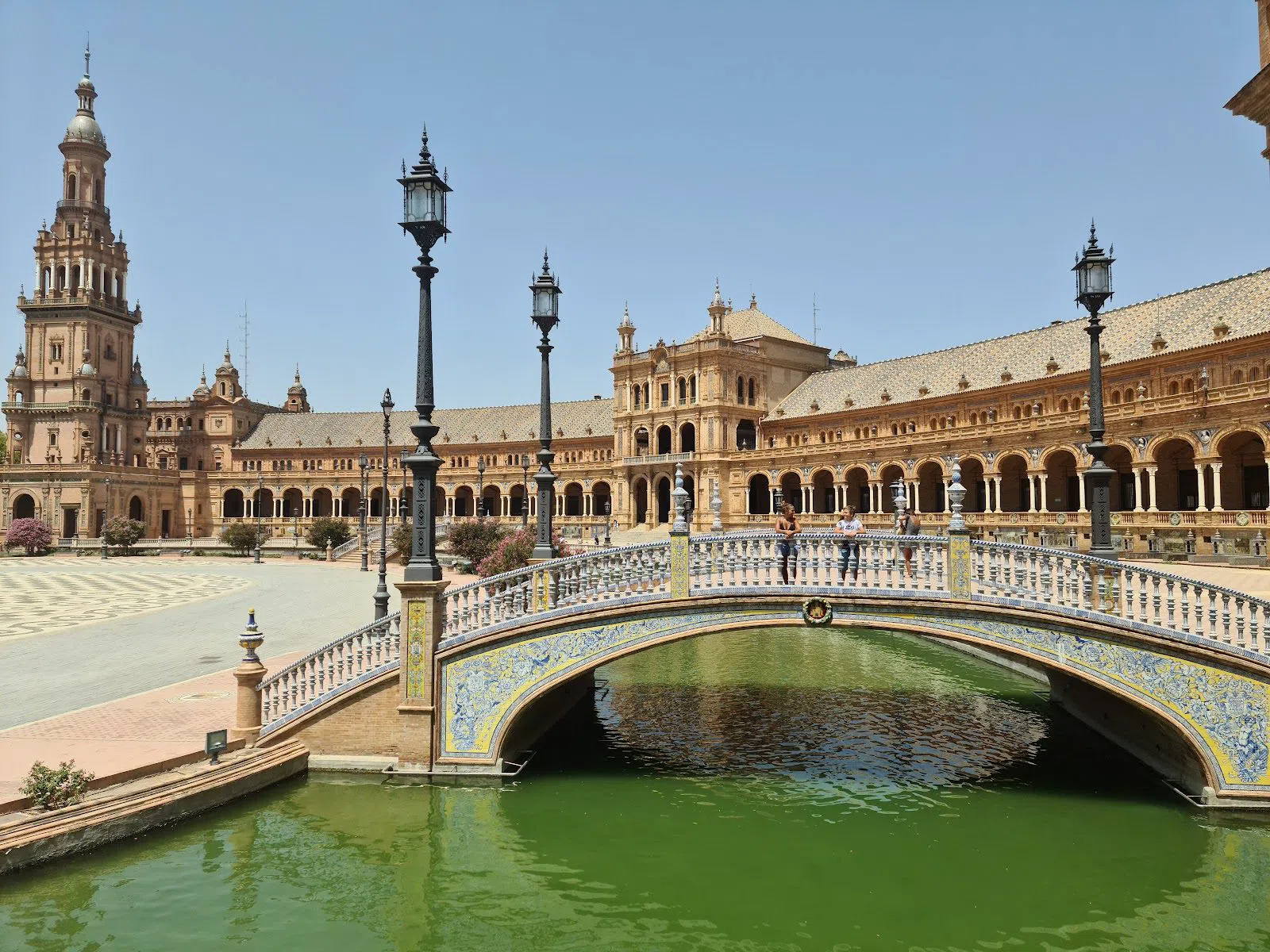
The Navarra and Aragón door ceilings went under a nine-month, €1.2m timber restoration in mid-2026, so expect screening around them. Large guided groups collect at the north tower and along the colonnade, and nothing regulates how many arrive, since there is no ticket to limit them.
Rowing and motor boat hire operates from the ticket kiosk on the plaza paving, cash only. The small blue-and-white skiffs take four people and carry a €4 refundable deposit; a motor launch takes up to 12 and costs €12 for 15 minutes. There is no booking system, so a larger party splits across several boats. From the water the azulejo bridges come at you from below, the oars dipping beside the balustrades, and for €6 it is the best value anything at the plaza offers.
Plaza de América and the new roses
Plaza de América closes the southern end of the park, a long rectangular formal garden framed by three Aníbal González pavilions in Mudéjar, neoclassical and neo-Gothic styles. Seville calls it the Plaza de las Palomas, and clouds of white doves settle on the paving and on outstretched hands. It is open and free, and it is where groups stop for the photograph.
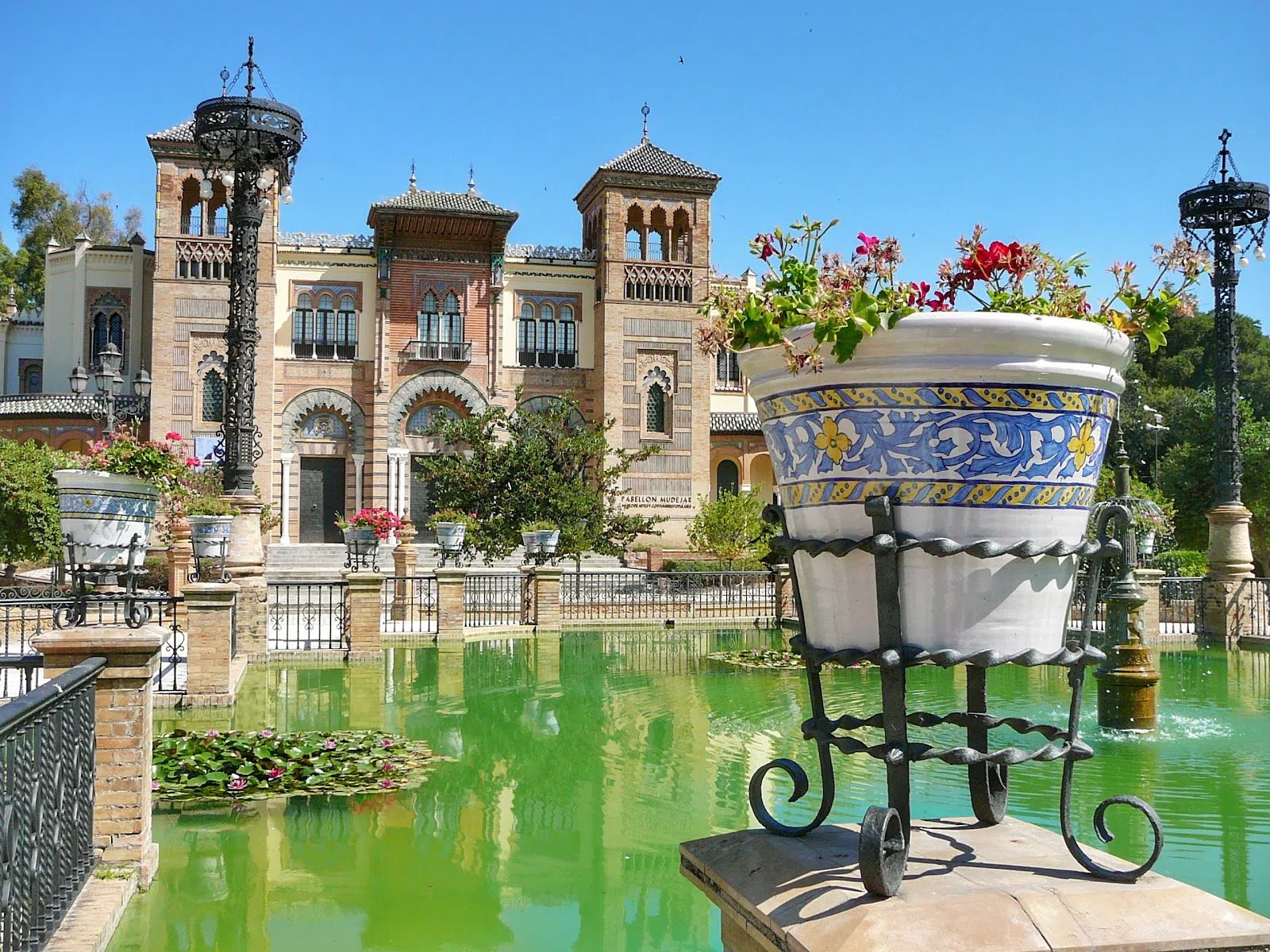
The geometric rose beds are mid-renewal. From August 2026, 15,000 new roses went in, 120 of them climbers, under a €521,118 council project timed to the centenary of the 1929 Expo.
The two pavilion museums
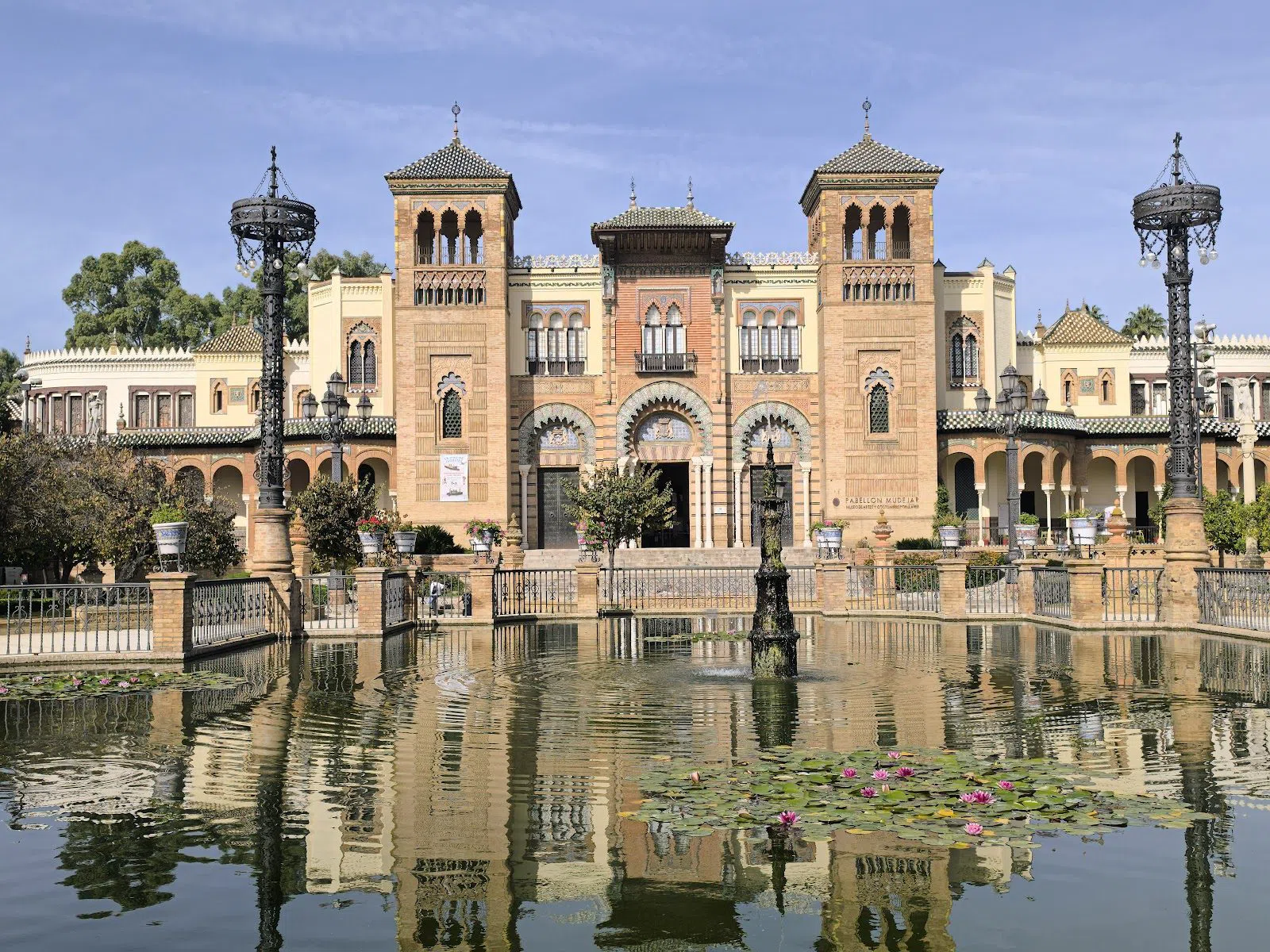
Museo de Artes y Costumbres Populares de Sevilla occupies the Pabellón Mudéjar on the square, an ornate red-brick revival building with horseshoe arches, glazed tilework and a carved portal. Inside are cases of Andalusian lace, ceramics, Feria costume and workshop tools. Admission is nominal (€) and free to EU citizens, which makes it the park's wet-weather fallback. It opens Tuesday to Saturday, 09:00 to 21:00, and closes Mondays; school and tour groups should contact the museum in advance.
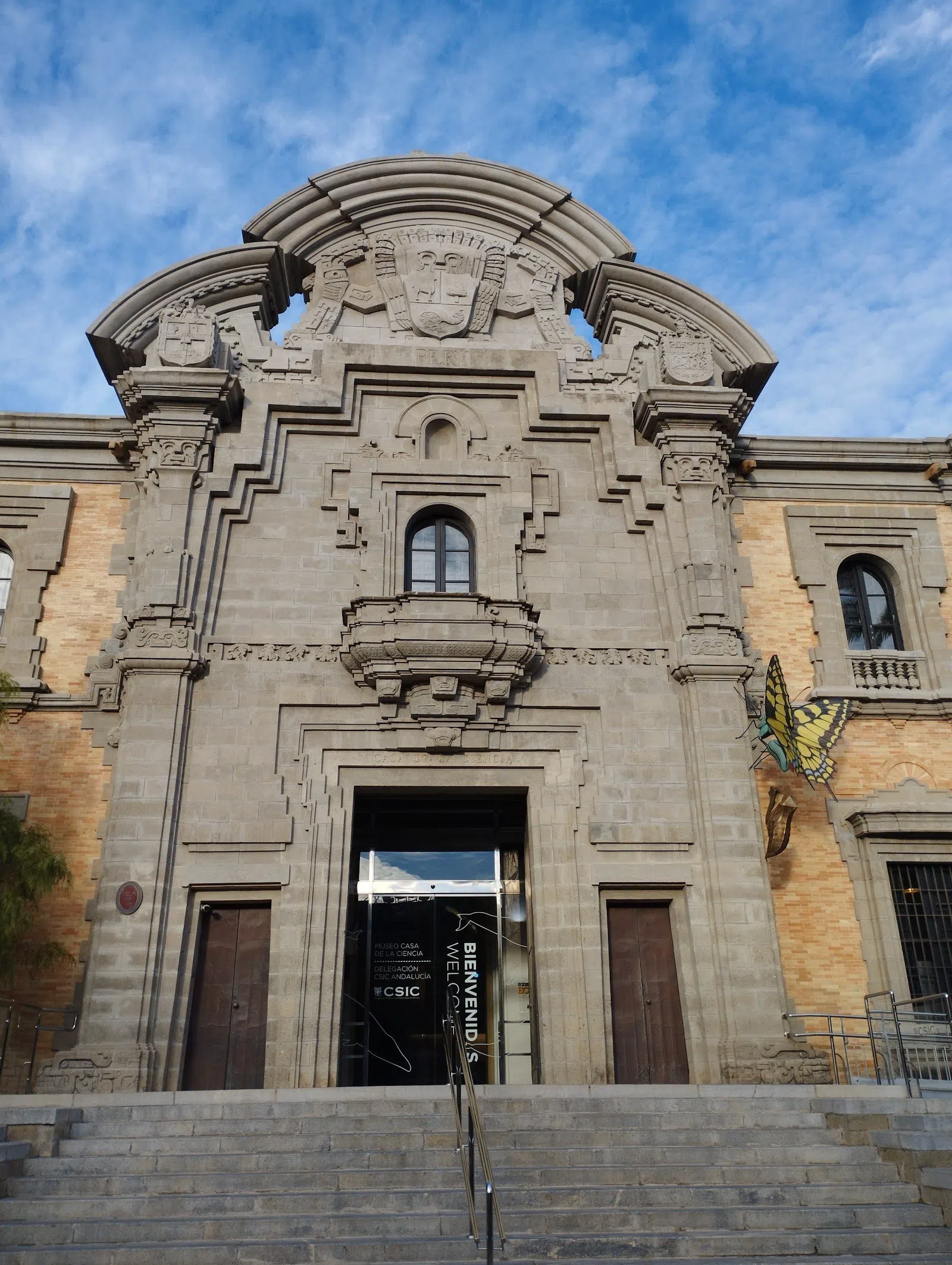
Museo Casa de la Ciencia – CSIC occupies the Pabellón de Perú, fronting the park's main avenue, an ornate carved stone pavilion from the 1929 Expo with a deep wooden balcony and a painted frieze. Inside there is a whale skeleton hall and a small domed planetarium. The museum costs €3, the planetarium €3, the two together €5, and it opens Tuesday to Sunday, 10:00 to 20:00. Two exhibitions, 'Ceniza y lava' and 'Arbóreo', run from September 2026. It is cheap, and it is under a roof.
Bécquer's bench and the duck island
Glorieta de Bécquer is a clearing under a huge spreading bald cypress with a pale buttressed trunk, ringed by a curved white marble bench that carries a bronze bust of the poet, three marble muses and two bronze cupids. The sculpture group came out of a full restoration in 2025 that recovered vandalised fingers and stabilised the bronze patina. It is the most photographed seat in the park and it fills fast, so decide when you want to be there rather than drifting up to it.
Isleta de los Patos is a pond with rough stone edges and two small islands joined by a low bridge, with ducks, swans and peacocks on the water. The Pabellón de Alfonso XII stands beside it, a hexagonal neo-Arab templete with horseshoe arches and shaded benches. Both are what survives of the old San Telmo palace gardens. The templete is the one reliably shaded place to sit mid-route, and the bridge itself is small.
Monte Gurugú
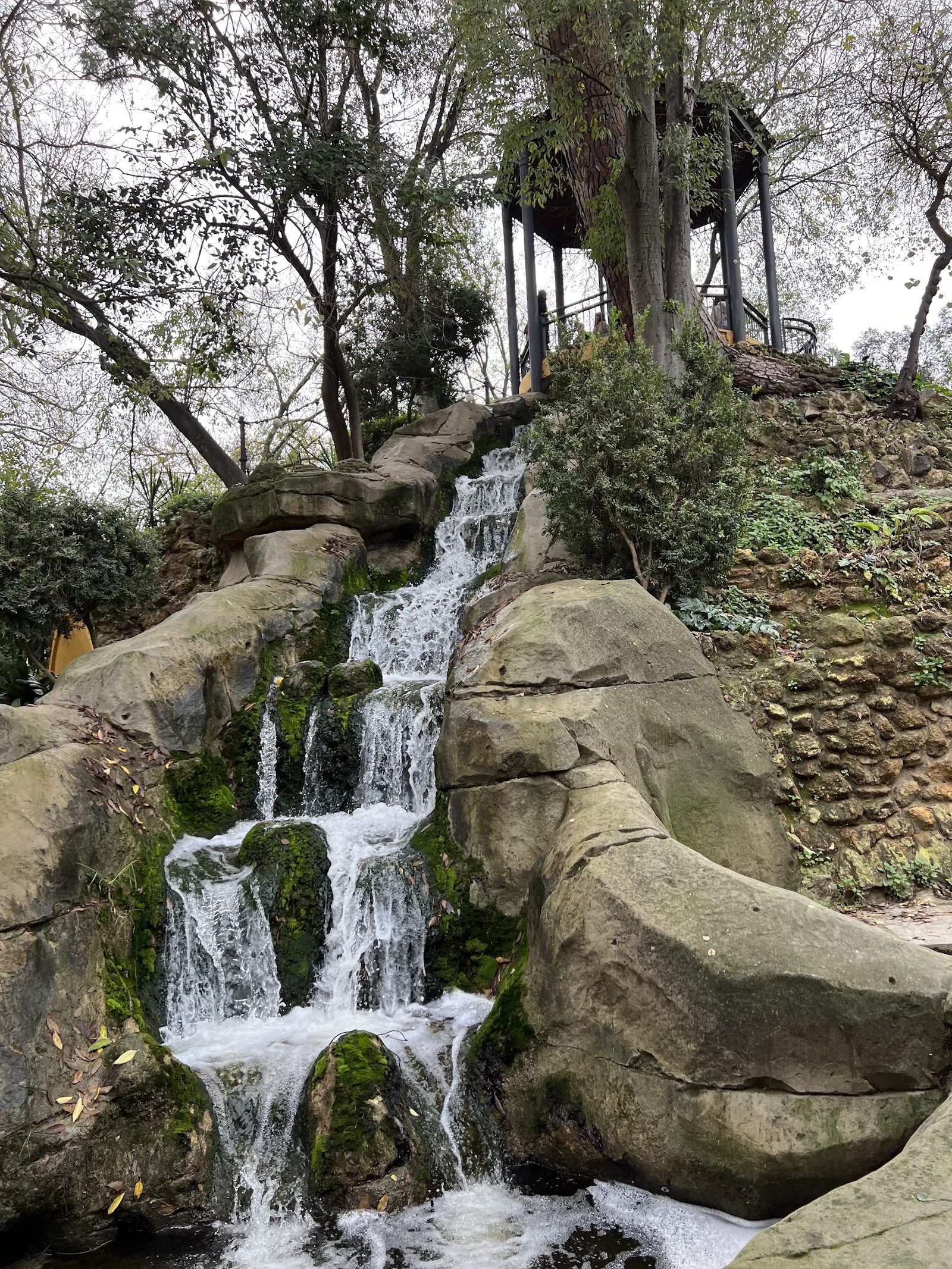
Monte Gurugú is a small rockwork hill thick with vegetation, with a stone staircase winding up to a railed mirador. From the platform you look across the canopy to the Plaza de España towers, the only elevated view inside the park. An artificial waterfall slides down one face into a pool below, and the council repaired its pumping system after years of running dry, so check it is actually running before you promise it to anybody. The stairs and the summit platform are narrow, and nobody staffs the hill.
Lunch in the park and a table at its edge
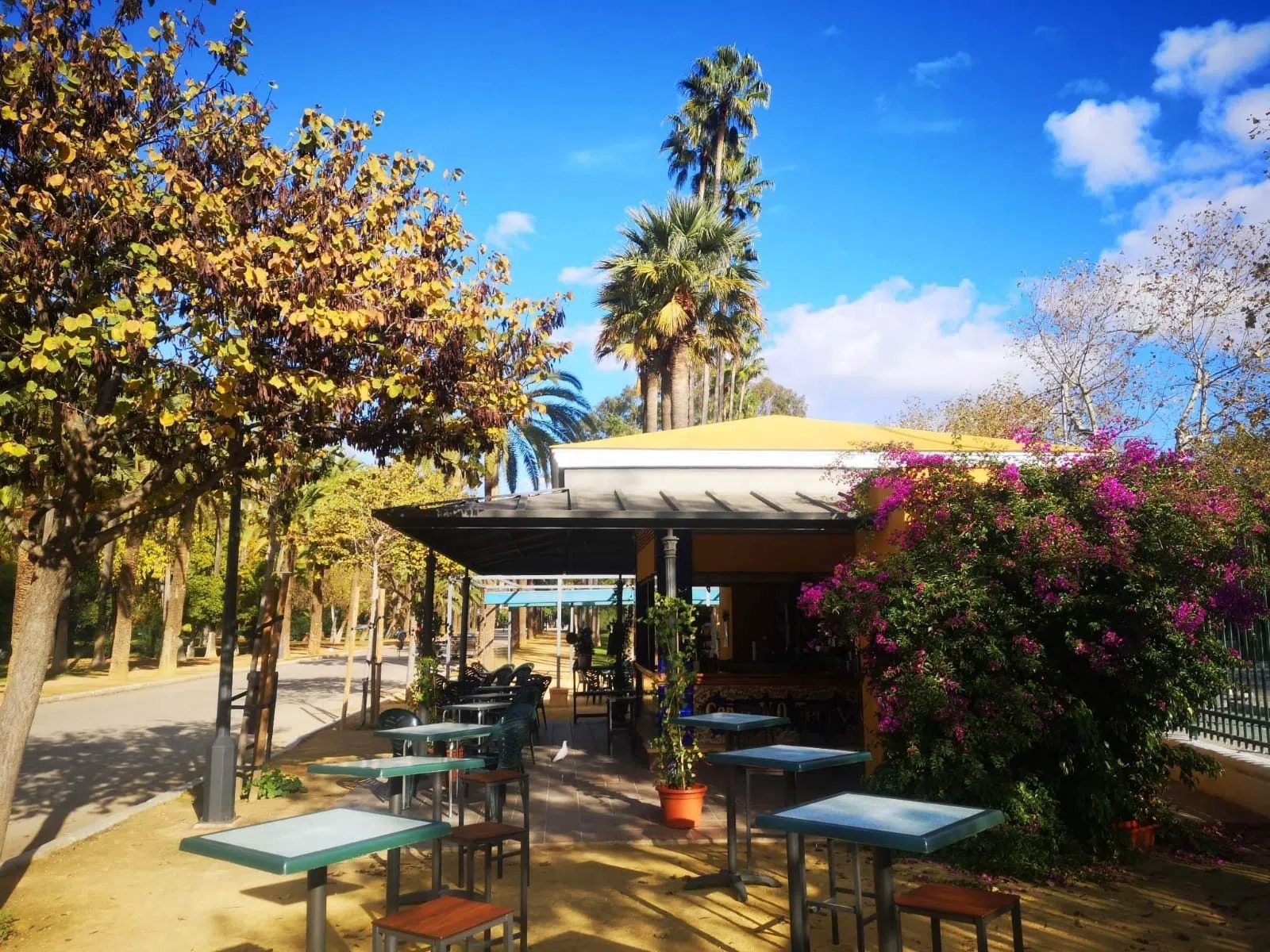
Kiosco Abilio (Avenida de Don Pelayo) is an open-sided park kiosk with metal tables under pine shade, standing between Plaza de España and Plaza de América. Tapas arrive on paper napkins with caña glasses, three generations of family photographs hang behind the counter, and the plates are traditional Sevillian at kiosk prices (€€). It serves 11:00 to 17:00 and closes Mondays, so it is a lunch stop and not a dinner one. The terrace is walk-in, and the number is +34 686 237 501.
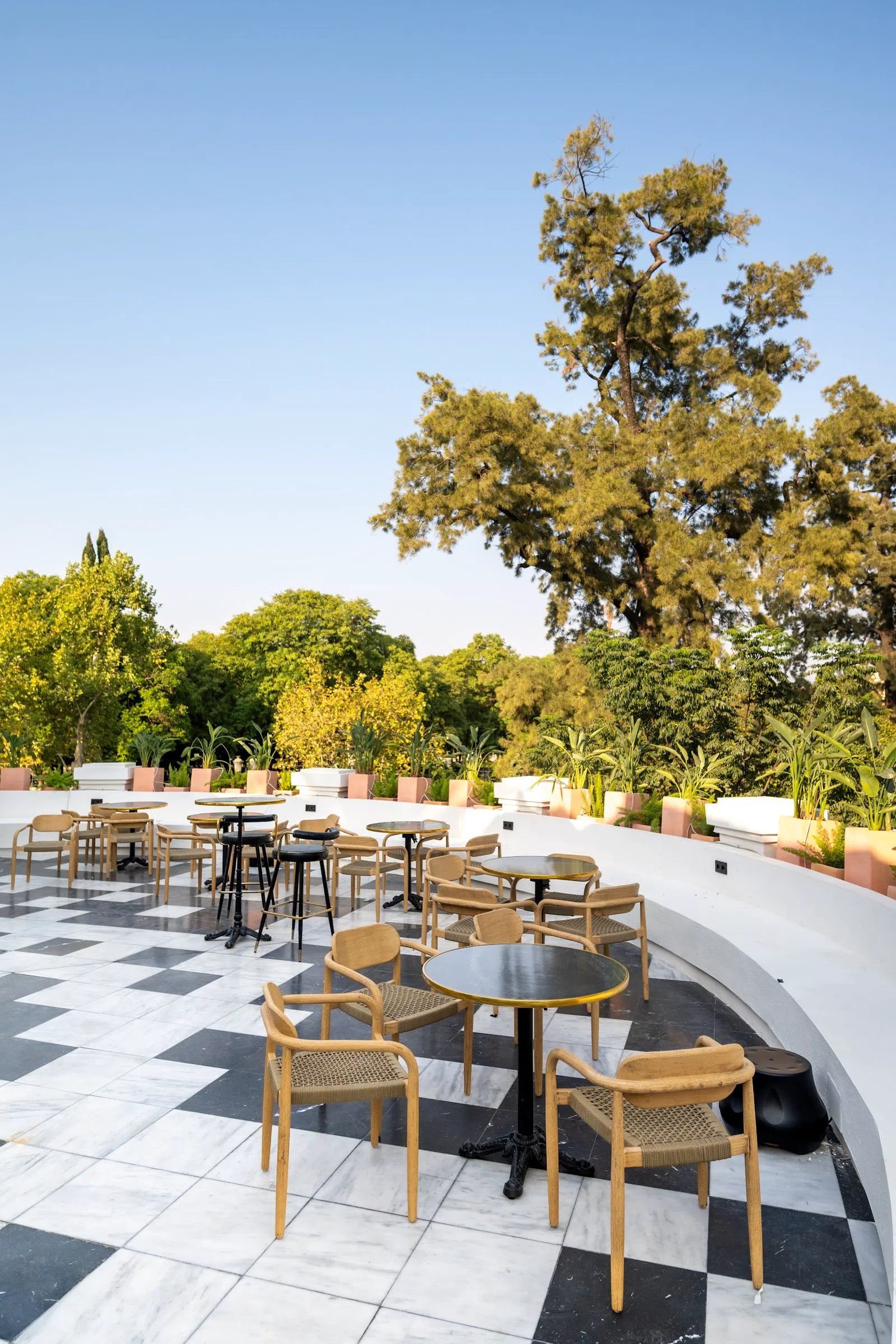
Restaurante Café La Raza (Glorieta de San Diego) is the former Bar Citroën, which closed in 2021 after 92 years and reopened in July 2026 under Grupo Puerto de Cuba La Raza. The restored 1929 Expo pavilion keeps its colonial-style colour and dark woodwork inside, and the heated outdoor terrace under the trees runs to almost 200 m². Service is 09:00 until late (€€€), metres from Plaza de España. Book ahead for a larger table, and the room also takes private events.
Costurero de la Reina and the old tobacco factory
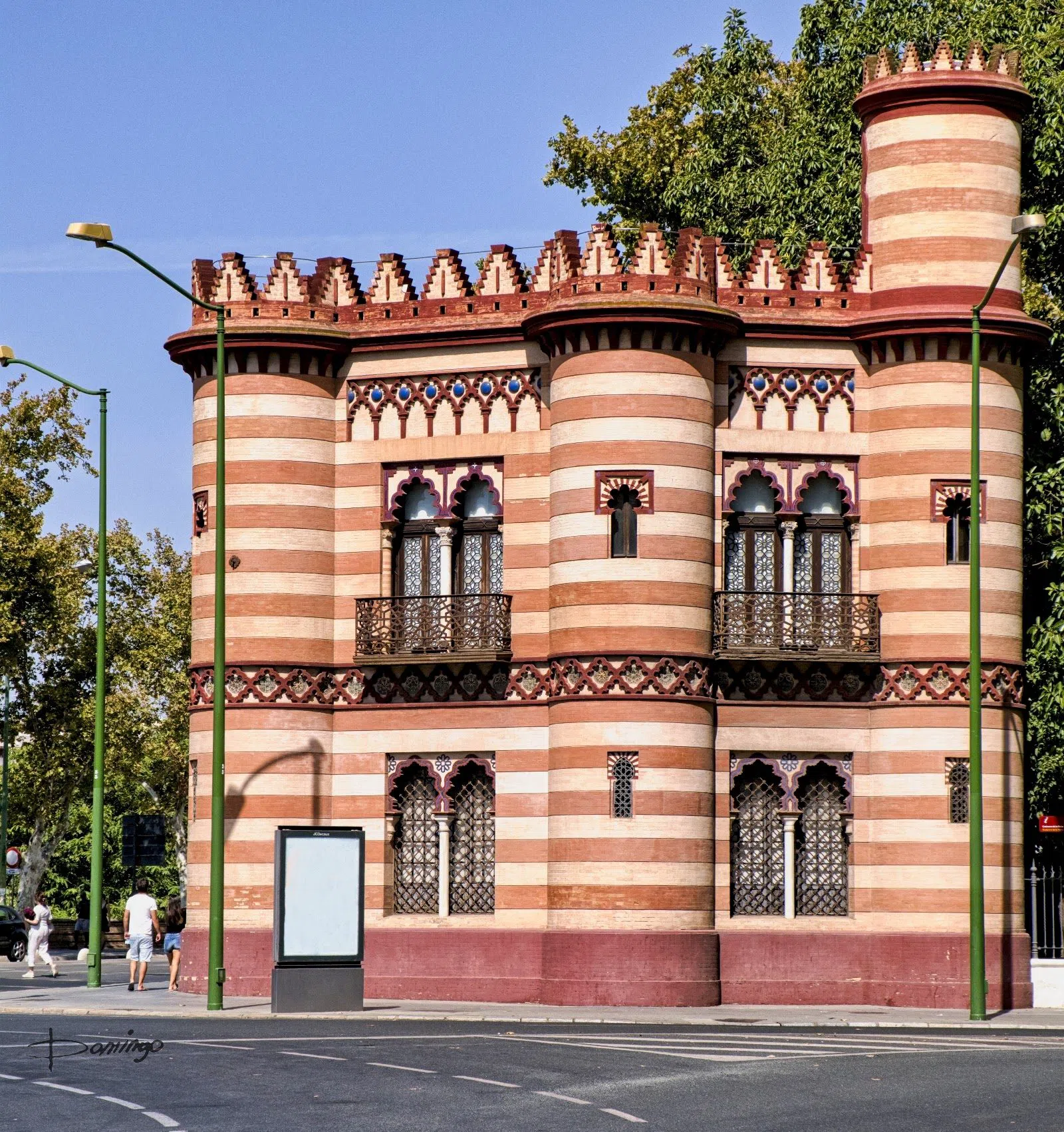
Costurero de la Reina (corner of Paseo de las Delicias) is a small hexagonal castle in cream and brick with crenellated turrets and tiny pointed windows, built in 1893 as the first neo-Mudéjar building in Seville. It now holds the city tourist information office, free to walk into, with maps and the current opening times for everything else in the park, which is the argument for starting here on the river side. The interior is tiny, and the hours have shifted, so phone to confirm them before you count on them.
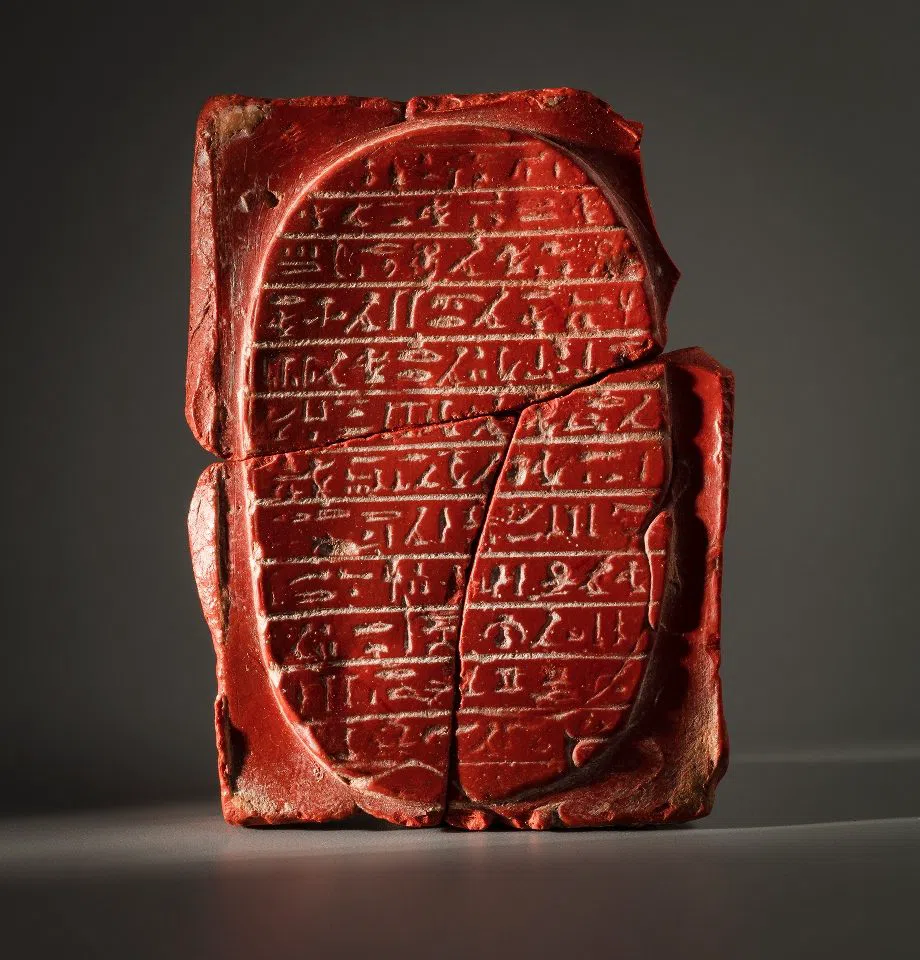
Antigua Real Fábrica de Tabacos (Calle San Fernando 4) is the park's northern bookend, an immense 18th-century stone factory with a carved Baroque portal under a bronze angel and a moat-like perimeter. It is Carmen's cigarette factory, now the University of Seville's Rectorado, and part of it is free to wander: the Patio del Reloj and the Patio de la Fuente, with student noise under the arcades. Guided visits run Thursdays at 18:00 and Fridays at 13:00 in Spanish during term, meeting at the Calle San Fernando door, and group bookings go to [email protected]. The university has floated charging visitors, but free access is the current state.
Teatro Lope de Vega from 11 October
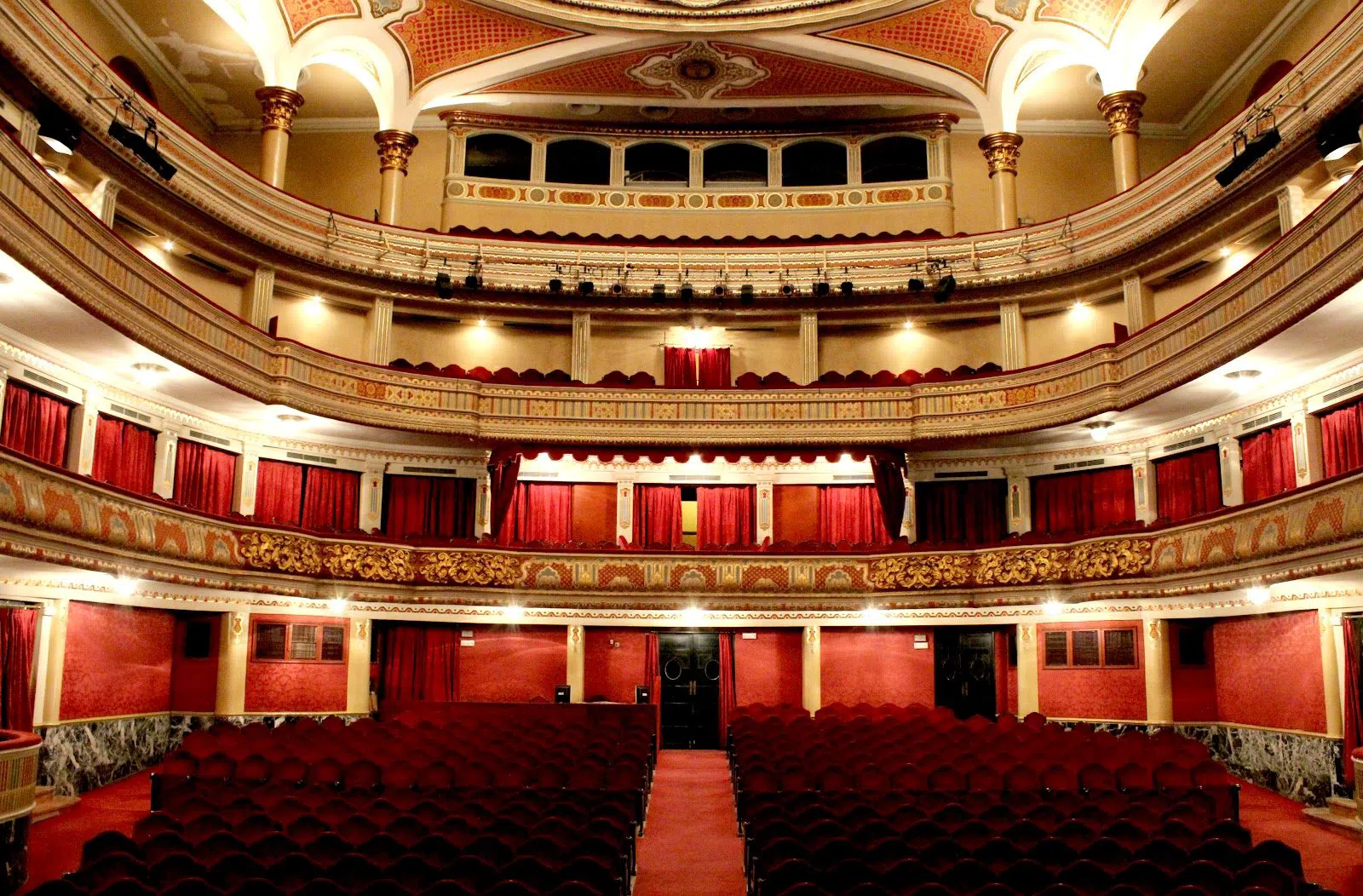
Teatro Lope de Vega stands beside the Casino de la Exposición at the north edge of the park, a domed 1929 Expo theatre in warm stone and brick behind a Baroque-revival portico. It reopened in September 2026 after two years shut and a €10m refit, with the horseshoe auditorium re-upholstered under a restored chandelier. The autumn season runs from 11 October and tickets are €4 to €25, sold through normal ticket sales; a block of seats needs booking early.
Carriages and guided circuits
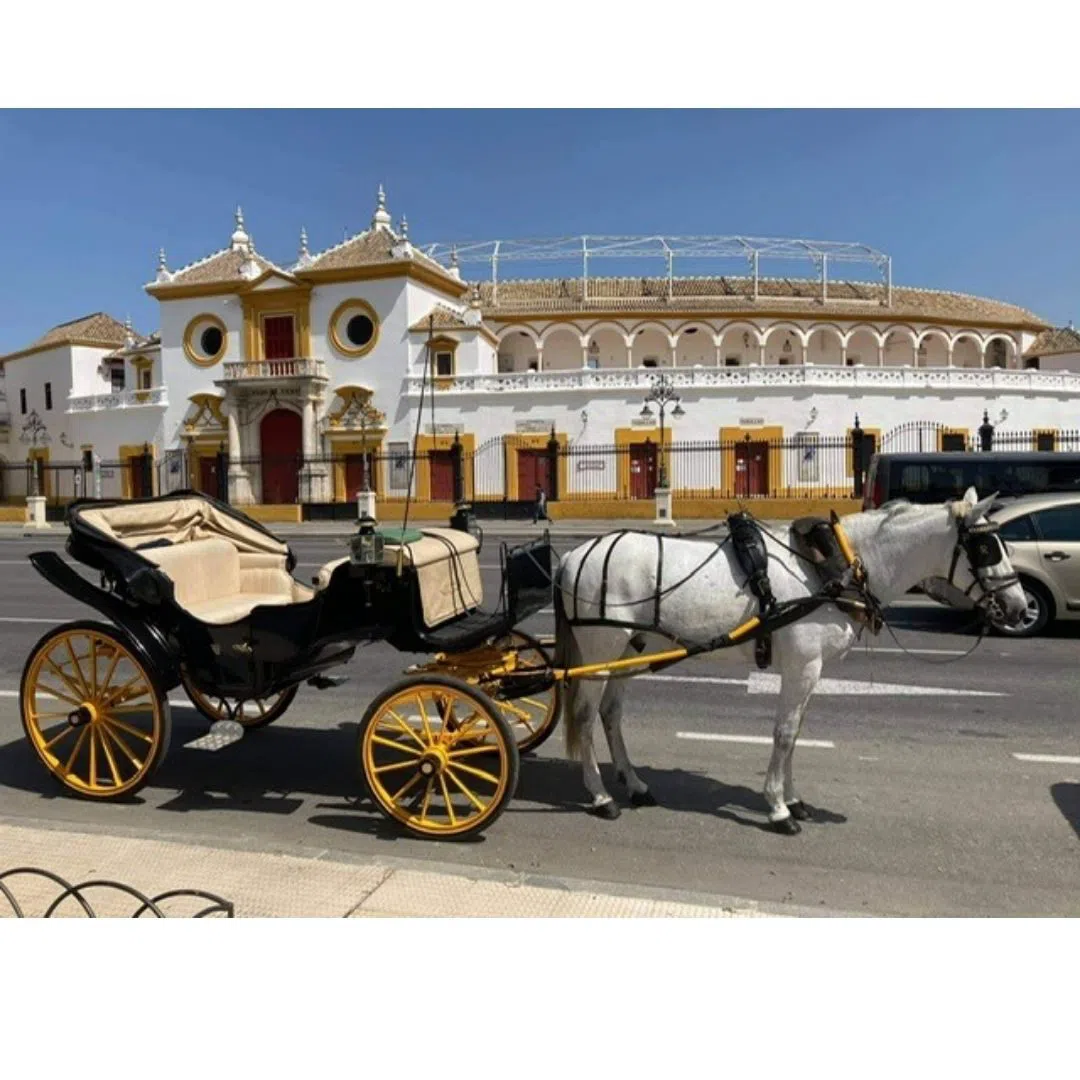
Licensed horse-drawn carriages wait at the ranks, black-and-yellow lacquered open landaus with brass lamps, one harnessed horse each and a driver in shirt sleeves. The loop through María Luisa and Plaza de España is the prettiest circuit they run, the wheels crunching along the sand avenues past the tiled glorietas, and a carriage carries four passengers plus the driver. The official rate for the standard circuit is €45, though the ranks near the Cathedral often quote €45 to €70, so agree the price and the duration with the driver before you climb in, and look at the condition of the horse.
Guided bus and bike circuits through the park run seven days a week and are being booked steadily at the moment, so reserve one a day or two ahead. Inside the park itself nothing takes an advance ticket, and the museums and the boats are paid on the spot.
Best time to go
The park opens at 08:00 and closes at 00:00, every day. The canal kiosk runs 10:00 to 19:00, which puts the boat first in a morning if you want one. Boat hire suspends each year from 30 May to 20 July for the Icónica festival, and October is clear of it.
At the Casa de la Ciencia, the weekend guided tours at 11:15 and 12:15 are free with admission. The Museo de Artes keeps winter-season Sunday hours of 09:00 to 15:00, so a Sunday visit there has to be a morning one.
Who the park suits
The park suits a visitor with a spare afternoon and nothing booked. The avenues, a turn on the water and one pavilion museum fill that afternoon between them, and all it asks of you is walking on sand paths and one narrow staircase.
Hours, closures and what to book
Mondays close the Museo de Artes y Costumbres Populares, the Casa de la Ciencia and Kiosco Abilio. Book theatre seats early, reserve at La Raza, and email the university ahead for a guided visit.
See the Seville guide and the Seville hotel search.
Before you go
Is María Luisa Park free to enter?
Yes. The park is public, open 08:00 to 00:00 every day, and there is no gate to pass and no ticket to buy. Plaza de España is free too in October 2026, and the tourist entry charge floated for years has never arrived.
How much is a boat on the Plaza de España canal, and can I book?
A rowing boat is €6 for 35 minutes, holds four people, and takes a €4 refundable deposit. A motor launch is €12 for 15 minutes and holds up to 12. The kiosk takes cash only and does not book ahead, so a larger party splits across several boats. It runs 10:00 to 19:00, and the annual suspension for the Icónica festival runs 30 May to 20 July, so October is clear of it.
Is anything in the park closed or under restoration in October 2026?
A nine-month, €1.2m timber restoration of the Navarra and Aragón door ceilings at Plaza de España started in mid-2026, so parts of them sit behind screens. The Museo de Artes y Costumbres Populares, the Casa de la Ciencia and Kiosco Abilio all close on Mondays. At Plaza de América the rose beds are still filling in, with 15,000 new roses planted from August 2026.
What does a horse-drawn carriage ride cost?
The official rate for the standard circuit is €45, and ranks near the Cathedral often quote €45 to €70. Each carriage carries four passengers plus the driver. Agree the price and the duration before you climb in, and look at the condition of the horse.
What is there to do in the park if it rains?
Two of the park's pavilions hold museums. The Museo de Artes y Costumbres Populares, in the Pabellón Mudéjar, charges nominal admission, is free to EU citizens, and opens Tuesday to Saturday 09:00 to 21:00. The Casa de la Ciencia, in the Pabellón de Perú, costs €3 for the museum and €3 for the planetarium, or €5 combined, Tuesday to Sunday 10:00 to 20:00.