The Seville issue
What Seville Eats When It's Not Eating Tapas
Churros fried since 1904, fish in a paper cone, rice cooked to order and three Michelin kitchens: this is the Sevillian food that never turns up on a tapas crawl.
By Rocío DelgadoEating Seville, stall to taberna
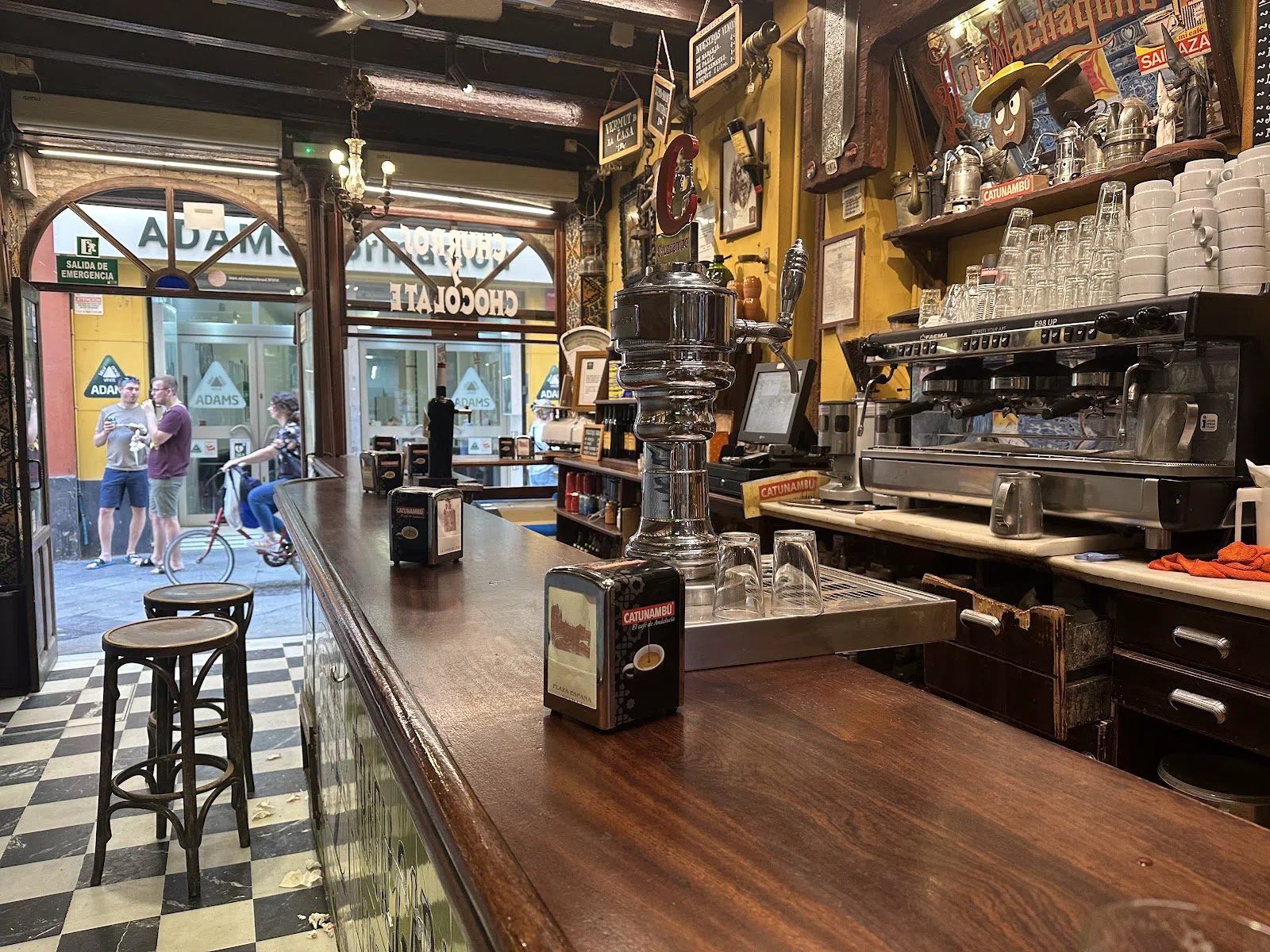
A tostada with carne mechá costs €3.70 in Seville, arrives before nine in the morning on a saucer-sized plate, and tastes of pork that was shredded that same week in the kitchen behind the bar. Tapas are what the city sells to visitors; they are not what it eats all day. Between the first churro of the morning and an ice cream walked home at midnight there is a whole eating culture a bar crawl never touches. It is cheaper, more specific, and in most cases easier to book.
Breakfast is the meal the city does best
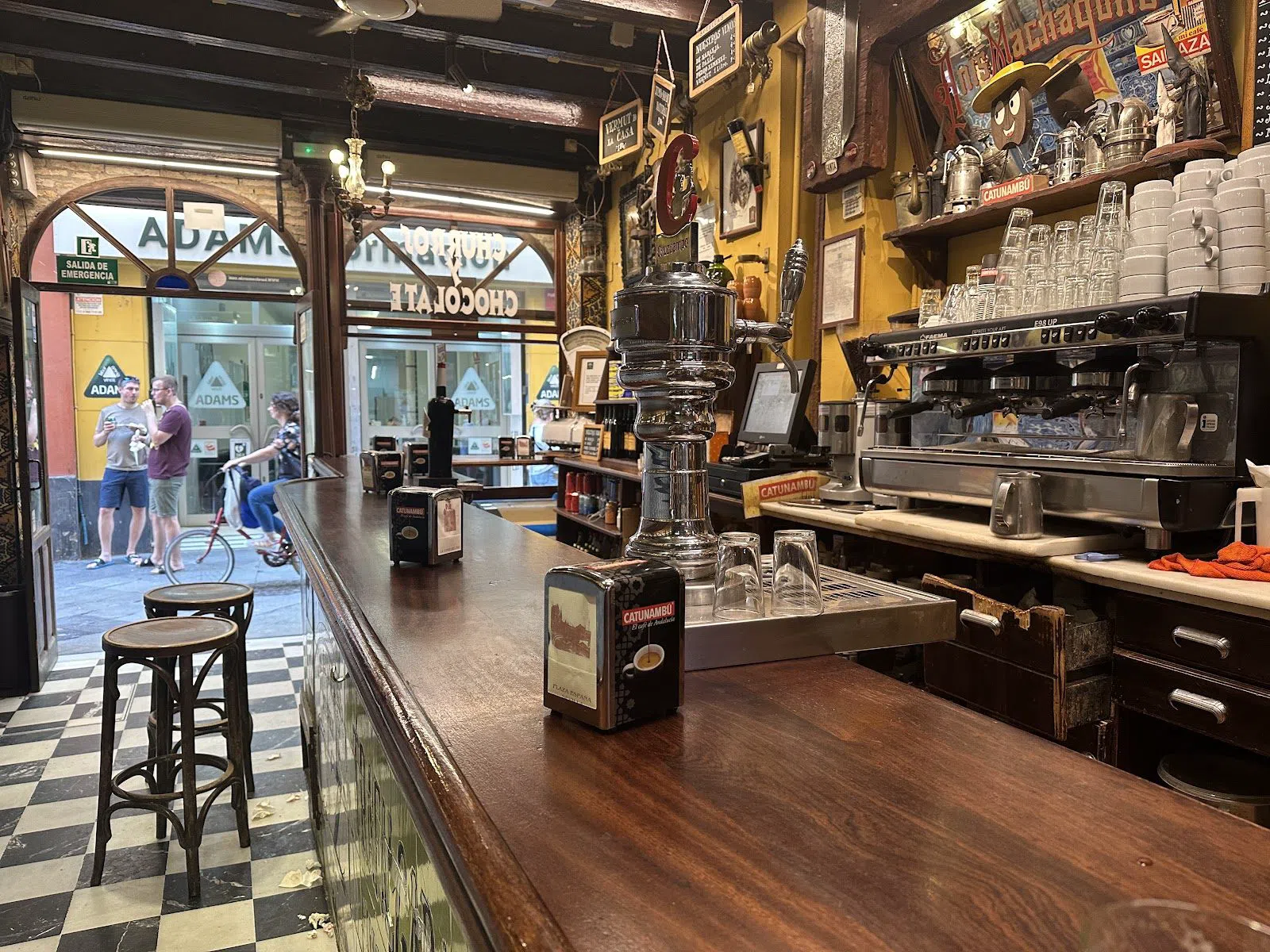
Sevillian breakfast is a fixed ritual with a fixed price, and it happens standing up. At Bar El Comercio (El Centro, off Plaza del Salvador) the fryer has been running since 1904, and it runs all day rather than shutting at eleven like most churrerías, so the mid-afternoon churro is as good as the eight-o'clock one. Order churros and a cup of thick drinking chocolate and you are looking at €3-6. The dough comes out blistered and salty, the chocolate is closer to melted bar than to hot cocoa, and you dunk rather than sip. There are no bookings and the room is small: four to six people can split between the counter and the handful of tables, and any more than that will stand outside waiting. It is closed on Sundays, which catches a lot of weekend visitors out.
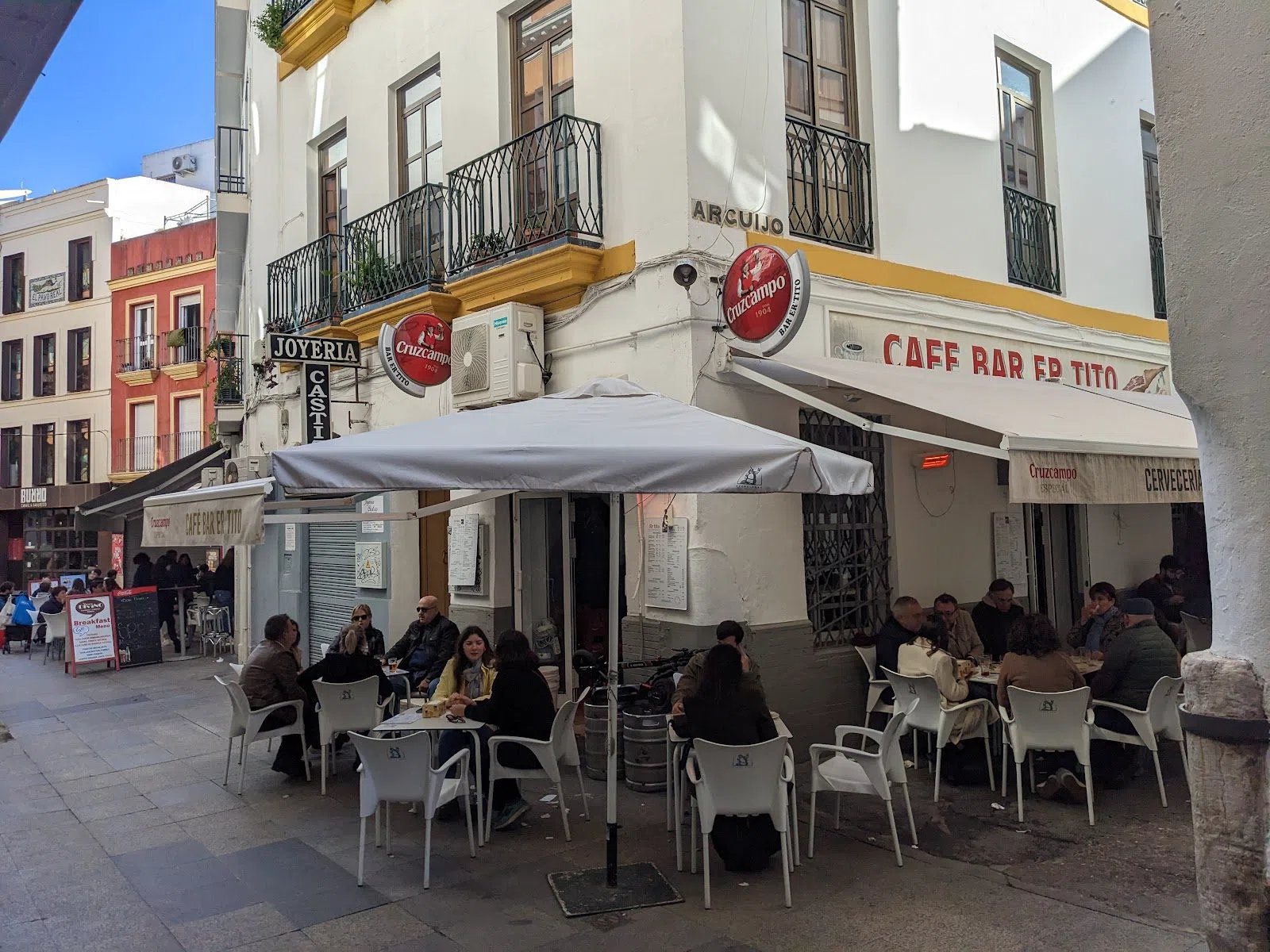
For the savoury version, Café Bar Er Tito does the €3.70 tostada with coffee that most locals actually eat: half a roll, good oil, and carne mechá shredded in-house rather than bought in slabs. The whole breakfast costs less than a coffee in a cathedral-side café. The special rotates, switching to tortilla on Mondays and vegetables on Fridays. It is standing room with a few street tables and no reservations, so it is comfortable for two or three and genuinely awkward for a group of six.
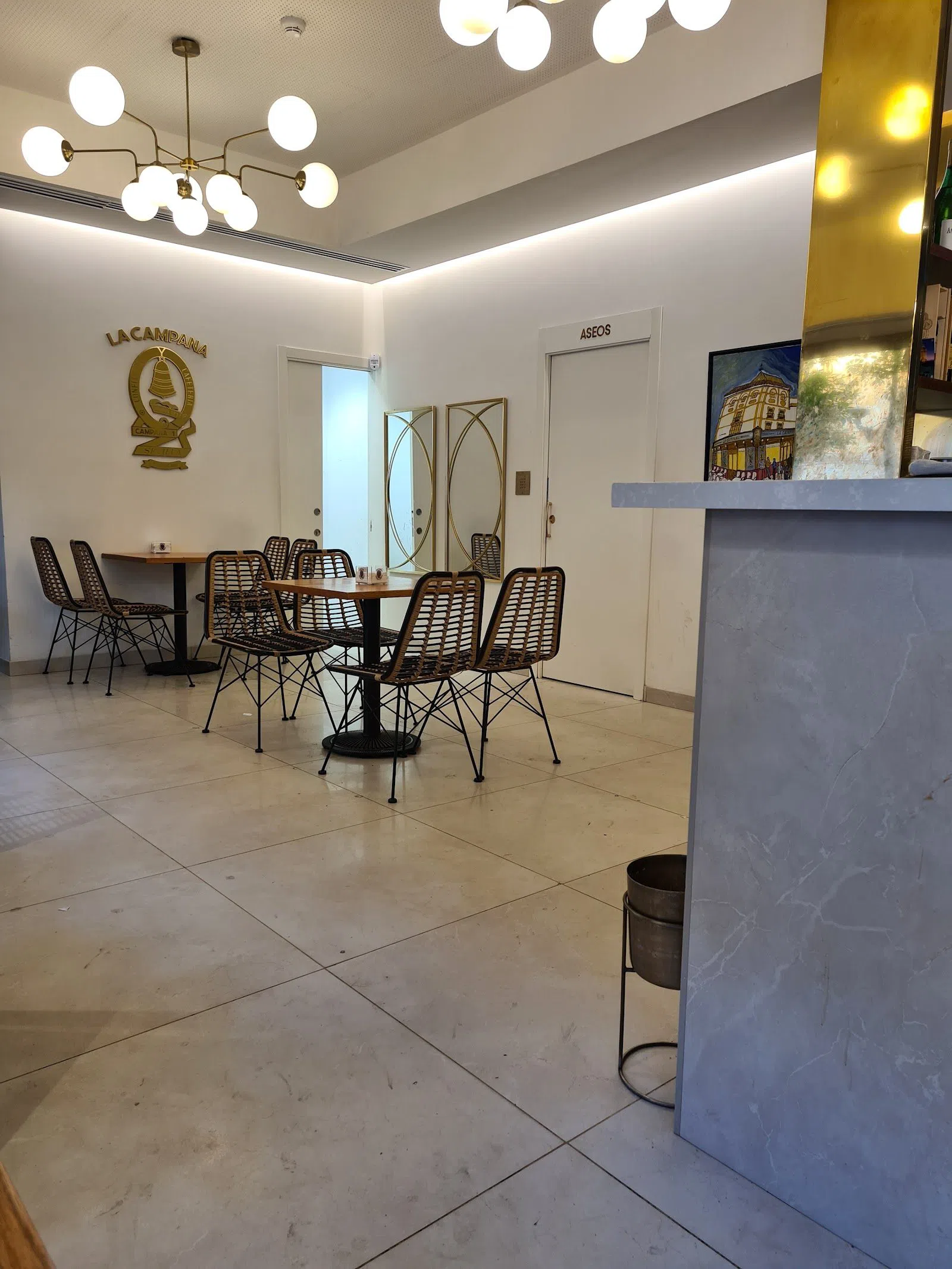
Confitería La Campana (Calle Sierpes, El Centro) is the other end of the same meal: four generations of one family, a heritage-protected interior of dark wood and glass, and a counter of Sevillian pastry that other bakeries are measured against. Pastries run €2-8 each; coffee and cake sitting down lands around €6. Seating is first-come and the café area fills fast, but the counter makes it the easiest stop of all for a group. One person queues, orders a dozen things to take away, and everyone eats them on a bench. It opens from breakfast and stays open late.
Plan your Seville trip
Live prices from our booking partners.
Free cancellation on many rooms. We may earn a commission when you book.
The fried fish a tapas crawl never gets to
If there is one dish that visitors leave Seville without having eaten properly, it is fried fish. Pescaíto frito is a takeaway tradition rather than a bar plate, which is exactly why it falls off the crawl. Freiduría Puerta de la Carne (edge of Santa Cruz, by the gardens) is the oldest freiduría in the city and the benchmark for adobo: fish steeped in a vinegar, garlic and cumin marinade until it is sharp all the way through, then floured and dropped into hot oil so the crust shatters and the inside stays soft. Portions are €8-15 and come wrapped in a paper cone.
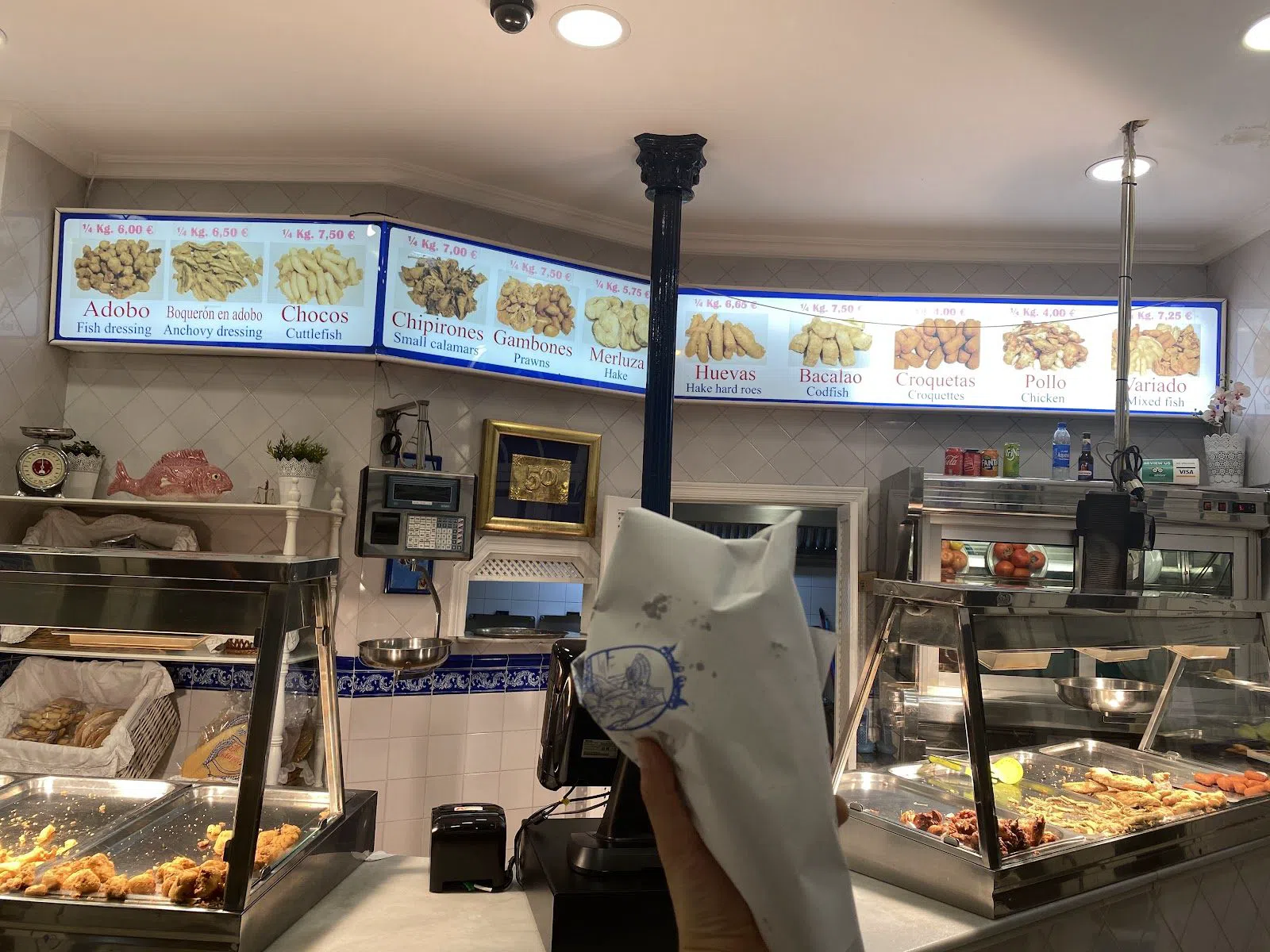
There is a terrace, but it is small and it fills. The move for anything above four people is to order at the takeaway counter and walk the cones two minutes into the neighbouring gardens while they are still too hot to hold, which is also how the dish is meant to be eaten. Squeeze the lemon, eat standing, do not wait for it to cool. It is closed on Mondays.
Rice, oxtail and the stew behind Sevillian cooking
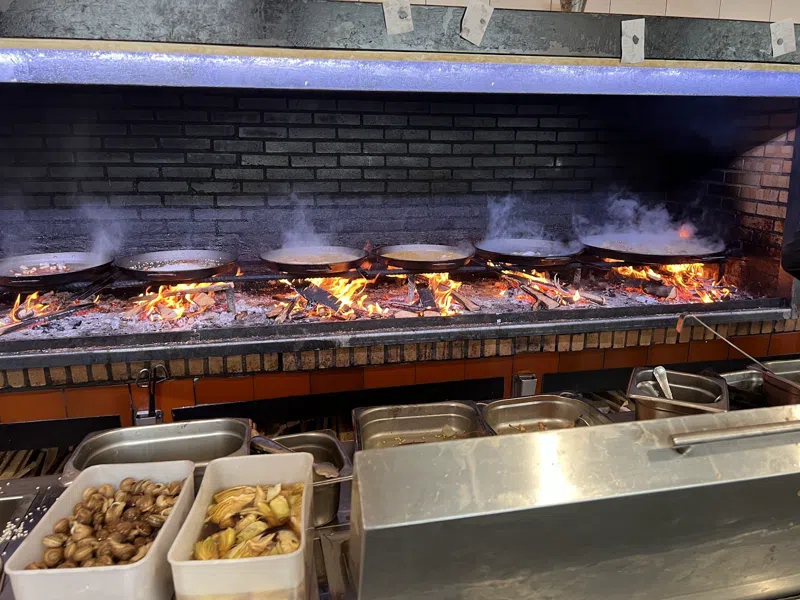
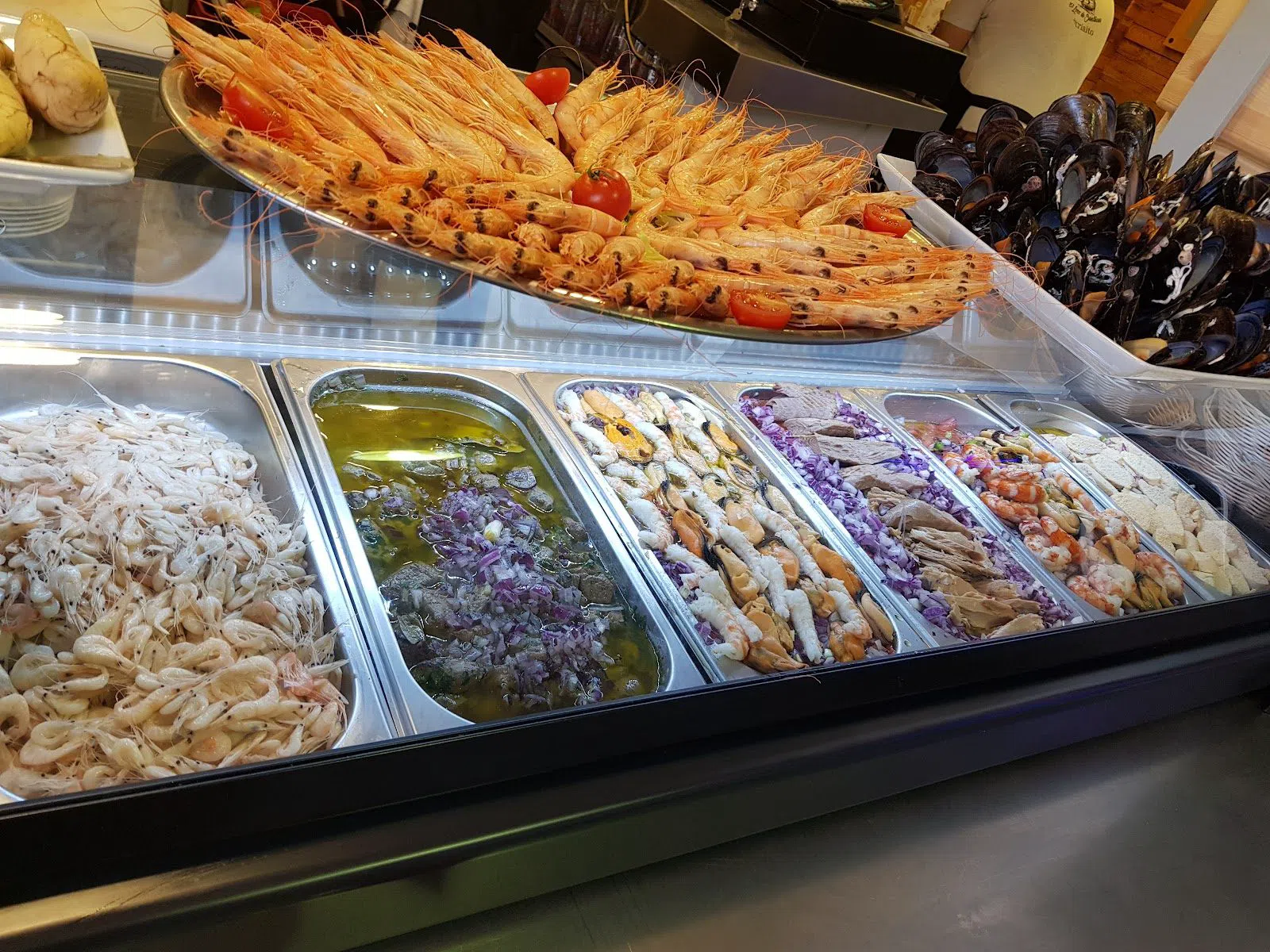
Rice in Seville is not paella for tourists; it is coastal cooking that came upriver from the Atlantic river mouth, and Arrocería Criaito builds more than forty rice dishes on it, inside a covered market hall. Every rice is cooked to order from raw, which means twenty-plus minutes at the table and no possibility of a rushed lunch. Budget €15-25 a head. Two things shape a visit: it serves lunch only, Tuesday to Sunday between 13:00 and 17:00, and it takes reservations and hosts private celebrations, so it is one of the few places here that genuinely wants your group of eight, provided you book and turn up on time.
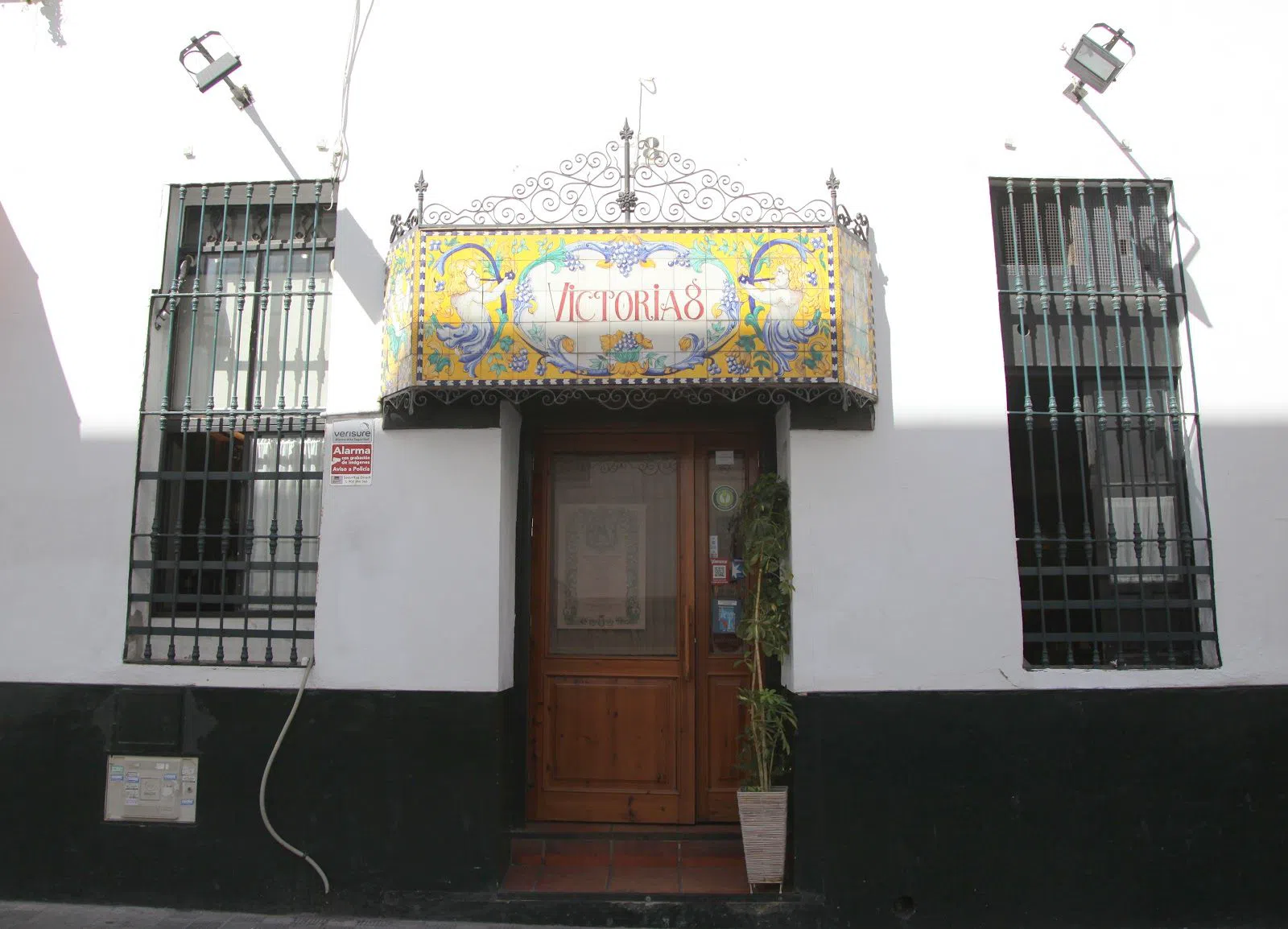
Rabo de toro is the dish most often served as a token tapa: three spoonfuls of shredded oxtail in a puddle of sauce. Victoria 8 (Triana) does six different treatments of it instead, the long-braised classic through to modern plates, and eating two versions side by side is the most interesting hour of food in the city for the money at €25-40 per person. It books Tuesday to Sunday for both lunch and dinner. The dining room is small, so reserve well ahead for six or more; a pair can sometimes walk in early.
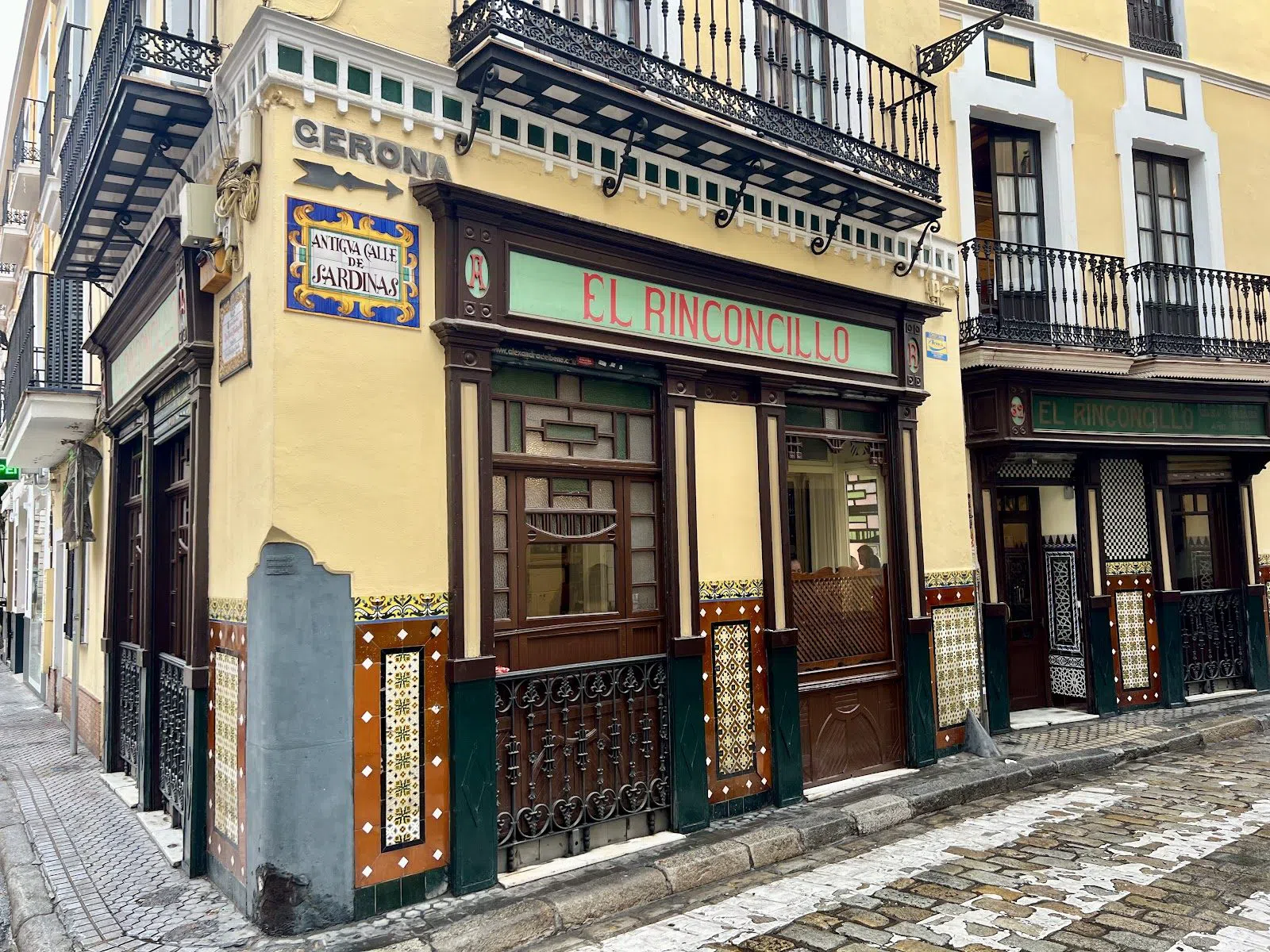
El Rinconcillo (La Alfalfa, El Centro) is Seville's oldest bar, and downstairs is a scrum: chalk tabs on the counter, elbows, no chance of a conversation. Go upstairs instead. There is a proper dining room with group and tasting menus, bookable on 954 223 183, and it is one of very few historic bars that can genuinely seat a table of ten. Eat the espinacas con garbanzos, spinach and chickpeas built on cumin, coriander, ginger and cloves, the Moorish spine of local cooking and completely vegetarian by accident of history. Upstairs runs €20-35 per person for a sit-down meal rather than a standing snack.
Vermouth from the barrel before lunch
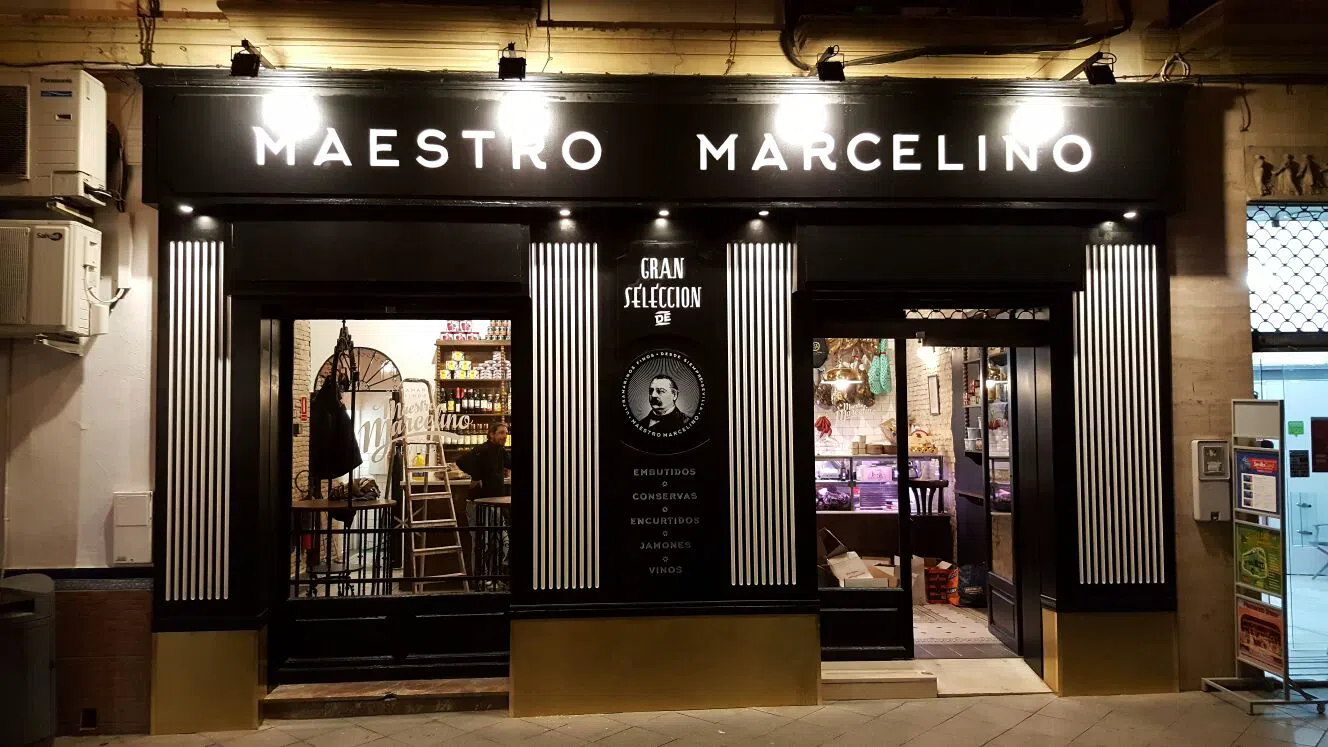
The pre-lunch vermouth is the ritual most visitors miss entirely, largely because it happens between noon and two while they are still queueing for a monument. Maestro Marcelino (a minute from the Cathedral) pours two own-label vermouths straight from the barrel, the classic (bitter and fruity) and the dulce, at €3-4 a glass, with ham and cheese plates at €10-20. It is a narrow standing bar: three or four people is the working maximum and a large group will simply not fit through the door.
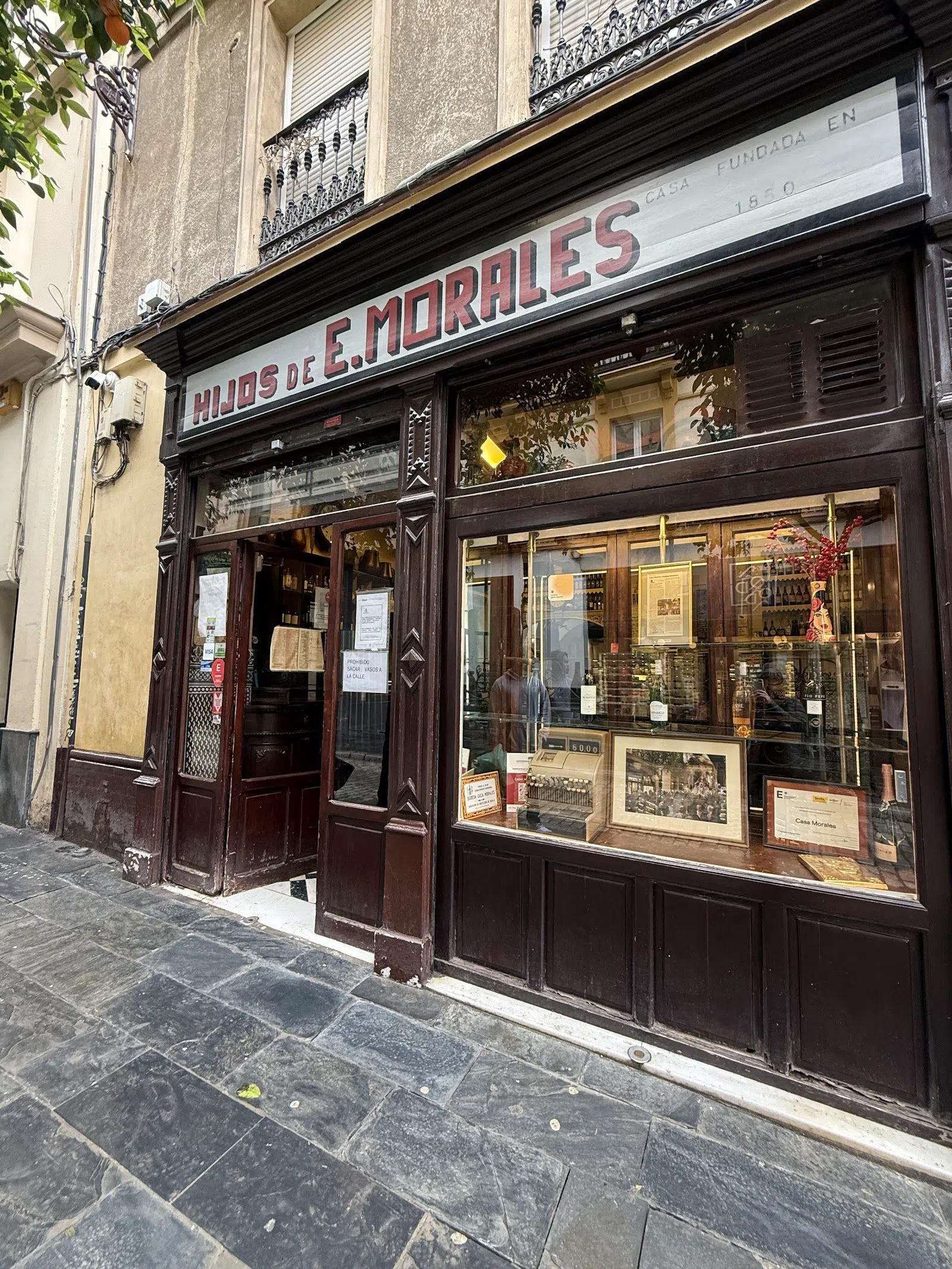
Bodega Casa Morales (near the Cathedral, Calle García de Vinuesa) has been going 175 years and still pours from the barrel in a back room lined with enormous clay wine jars. Drinks are €2.50-4, plates €3-6. Go for the vermouth and the sherry, a chilled manzanilla with a plate of cheese, and do not try to make it dinner; that is not what it is for. There are no bookings, it is standing room, and six or more people will end up scattered across the two rooms. Hours are Monday to Saturday, 12:00-16:00 and 20:00-24:00, closed Sunday.
Where a table of ten actually works
Most of the good eating above punishes groups. Casa Robles (El Centro, by the Cathedral) is the exception built for them: three floors, private rooms, event catering, and reservations by phone or through OpenTable. Family-run since 1954, it does the full sit-down Andalusian meal at €40-60 per person, with seasonal produce, properly cooked fish and meat, and house pastries at the end. It is the reliable answer when there are twelve of you, half the table wants a menu in English, and nobody wants to stand.
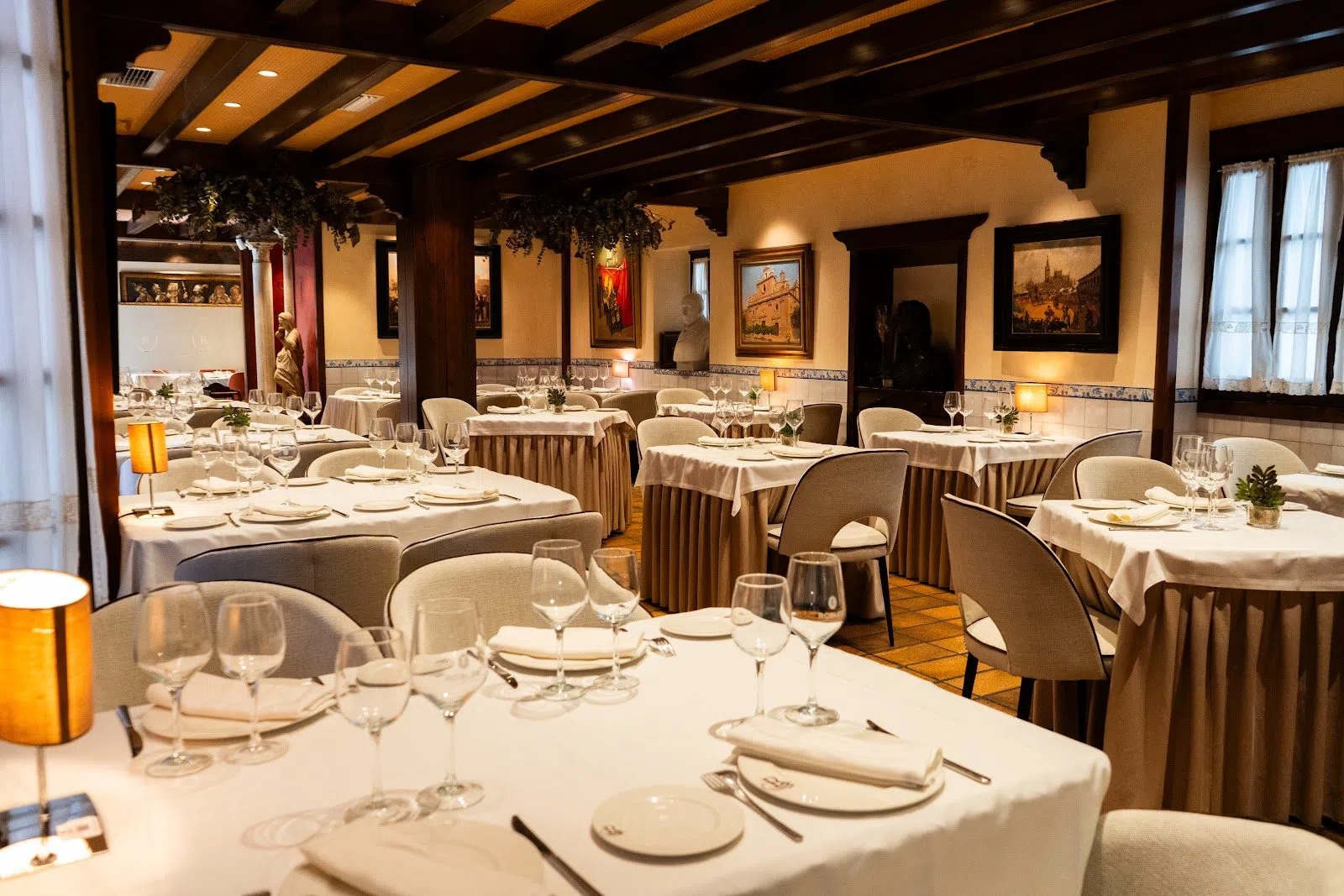
Three Michelin kitchens worth the money
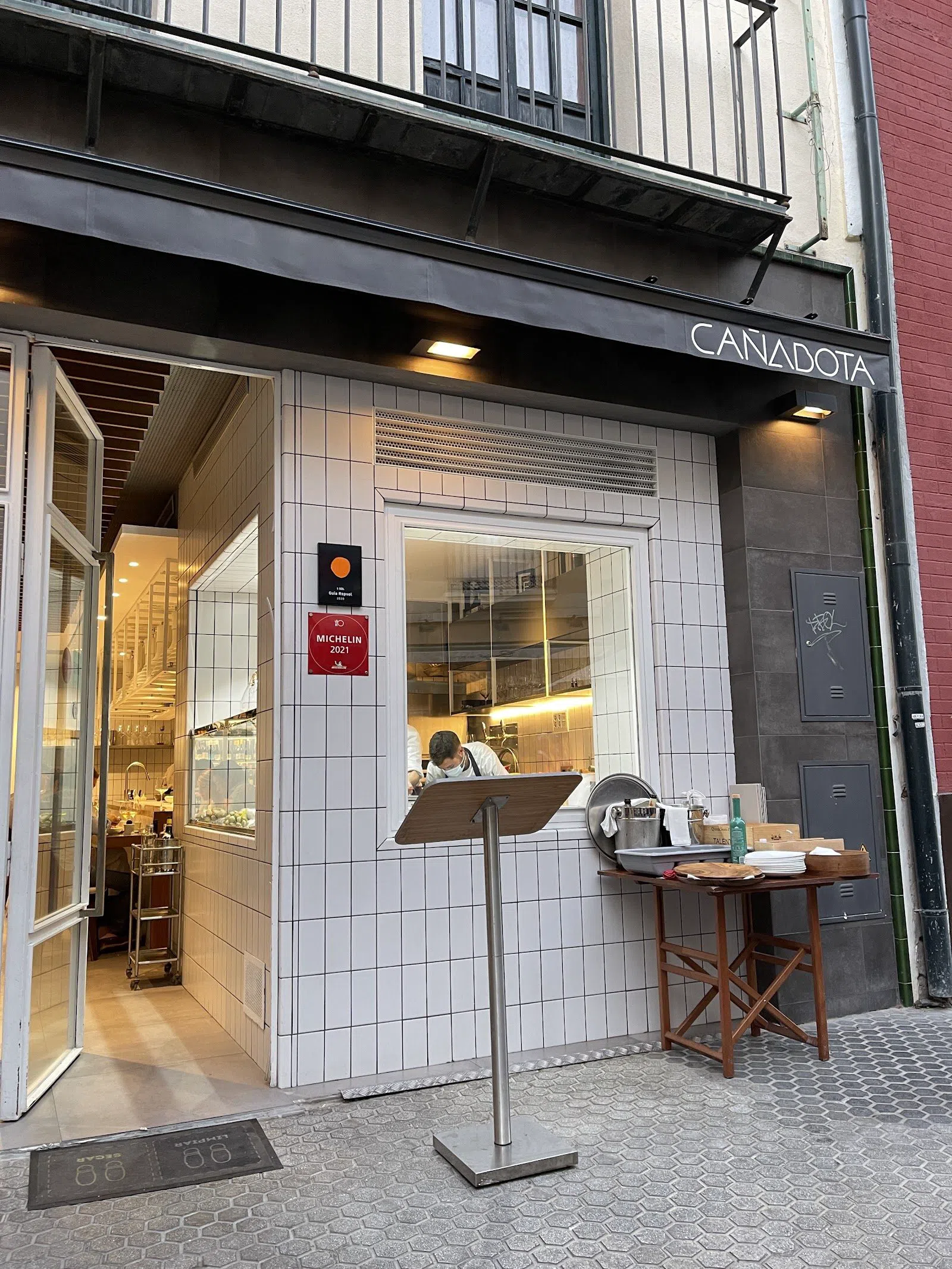
Cañabota (El Centro, Calle Orfila) holds one Michelin star awarded in 2021 and settles the question of whether Seville can do serious fish. The menu is rewritten daily from the Atlantic market: whole fish over embers, cuts most restaurants throw away, served counter-led to thirty seats. €70-120 per person. Book well ahead, and know the shape of it: pairs and small groups only. A party of eight will not fit, and asking will not change that.
Abantal (east of the centre) is the city's long-standing star, where Julio Fernández puts Andalusian flavours through avant-garde technique. It is tasting-menu only: €80 for nine courses, €100 for twelve, €115-145 with pairing, and there is a chef's table you can book. The menu changes daily with the season, so what you read online is not what you will eat.
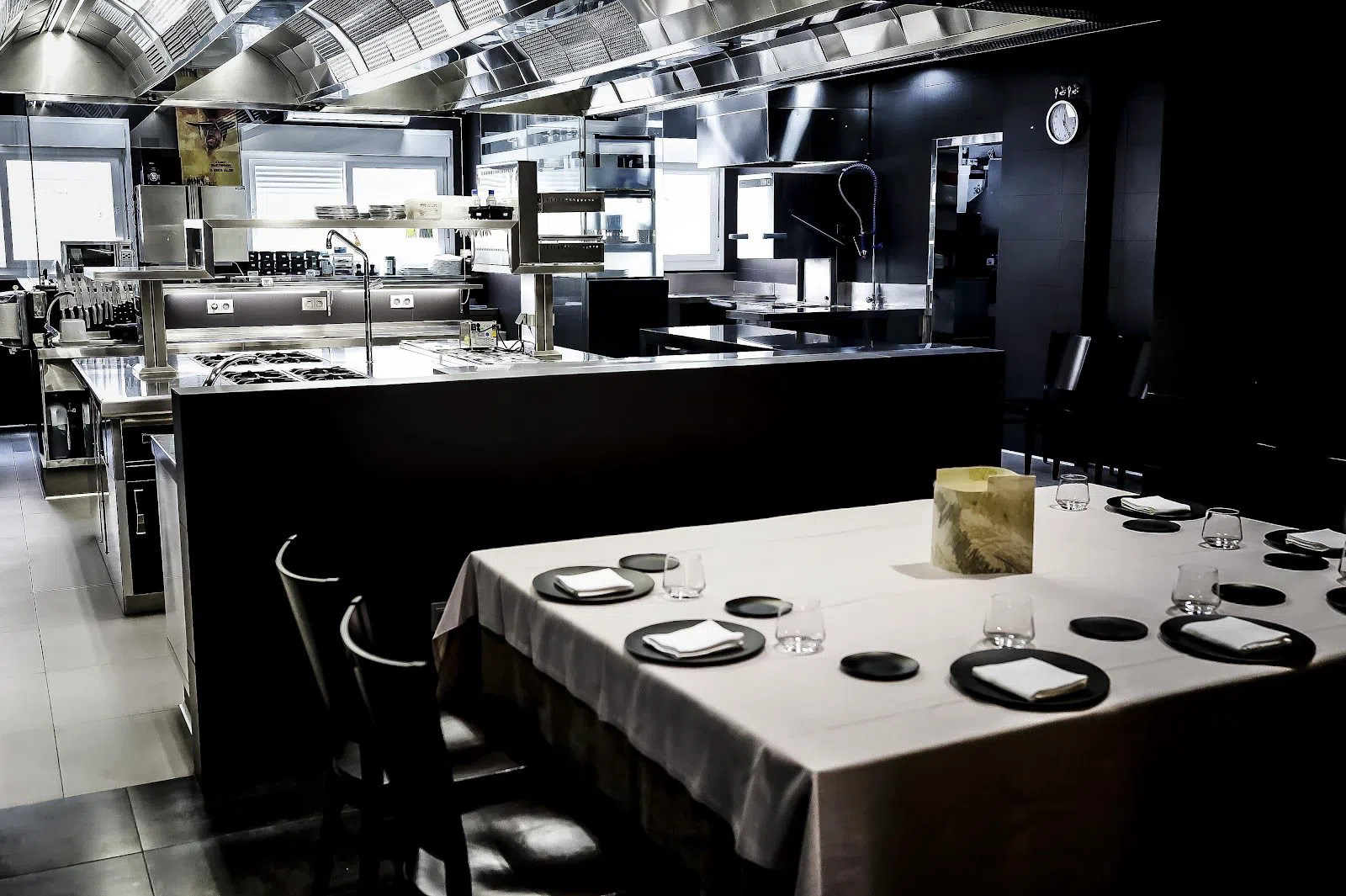
Sobretablas (south of the centre) is the newest of the three. Camila Ferraro cooks regional food with El Celler de Can Roca training behind it, and the kitchen was awarded a Michelin star in the 2026 guide. Dishes are built to share, which suits small groups, and you should book for anything over four. It opens Tuesday to Saturday with a single lunch sitting at 13:45 and a single dinner sitting at 20:15, so there is no flexibility on time. €50-80 per person, and it adapts properly for allergies, vegetarians and vegans. It is the only kitchen on this list I would send a strict vegan to without a warning first.
Convent sweets and ice cream after midnight
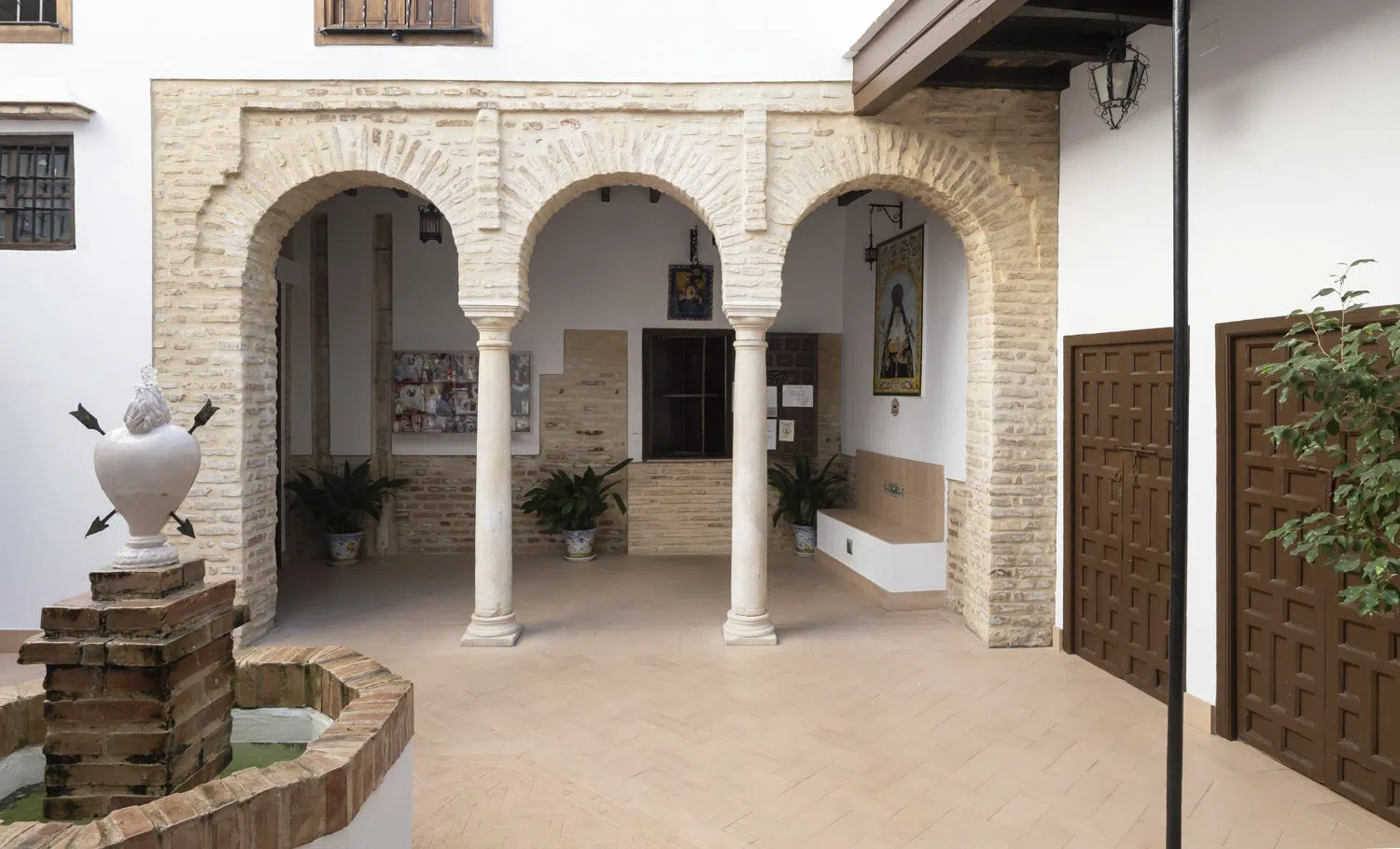
At Convento de San Leandro (El Centro, by Plaza de San Ildefonso) you buy sweets through a torno, a revolving wooden hatch in the wall. Yemas de San Leandro have been made here from egg yolk and sugar since the 16th century: dense, almost fudgy, absurdly rich, and one is enough. A box is €10-15. Buying is one person at a time, so a group should queue outside and send a single buyer in. The hours are narrow and inflexible: Monday to Saturday only, 9:30-13:00 and 17:00-19:00.
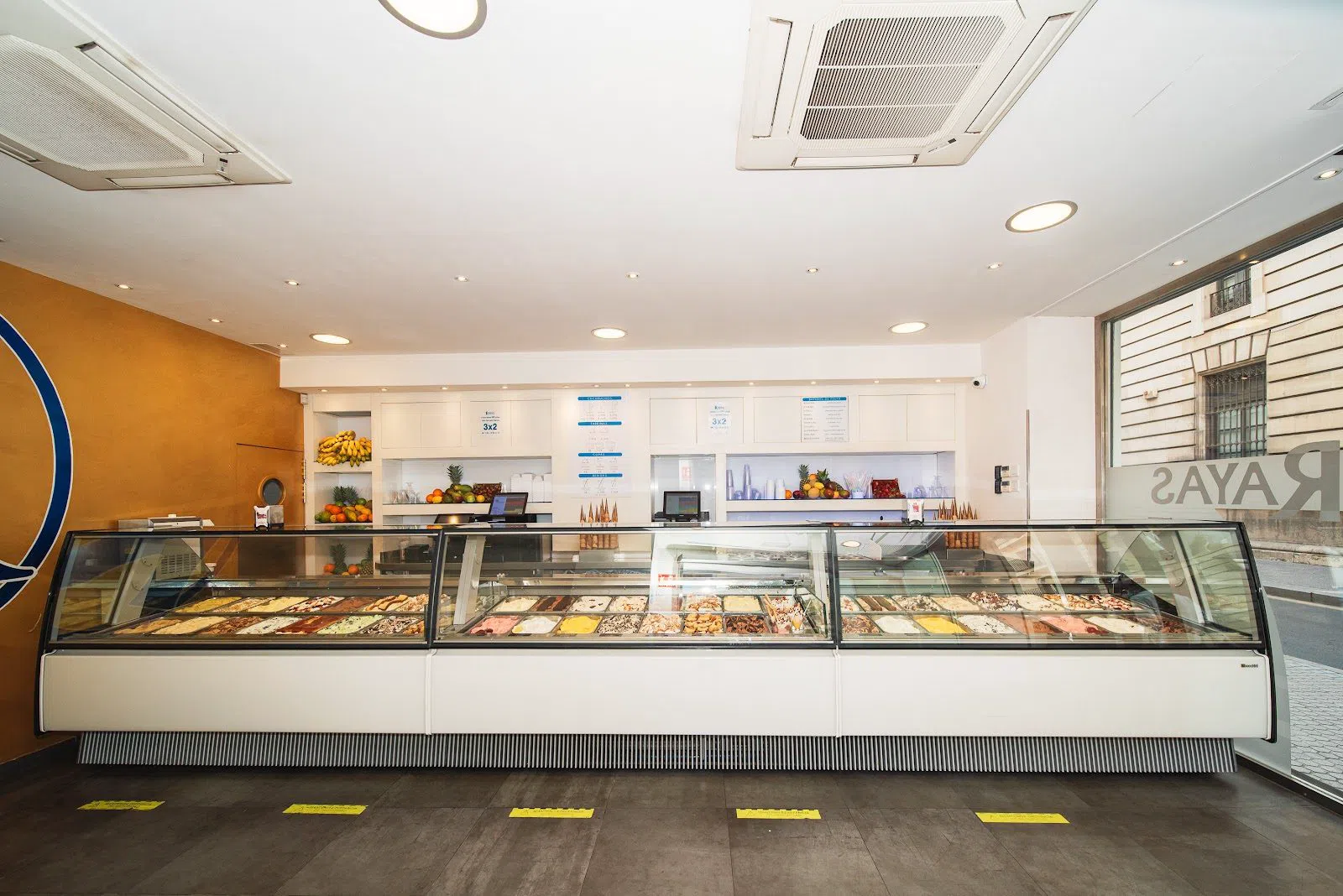
September evenings still hit the mid-thirties here, and Helados Rayas (El Centro, near Santa Catalina) exists for exactly that. It has made its own ice cream in the city since 1980, opens mid-afternoon and runs past midnight. Cones are €3-6. There will be a queue out of the door in warm weather, but seating is irrelevant: everyone walks with a cone, so it is the one stop on this list where the size of your group genuinely does not matter.
Cook it yourself for a morning
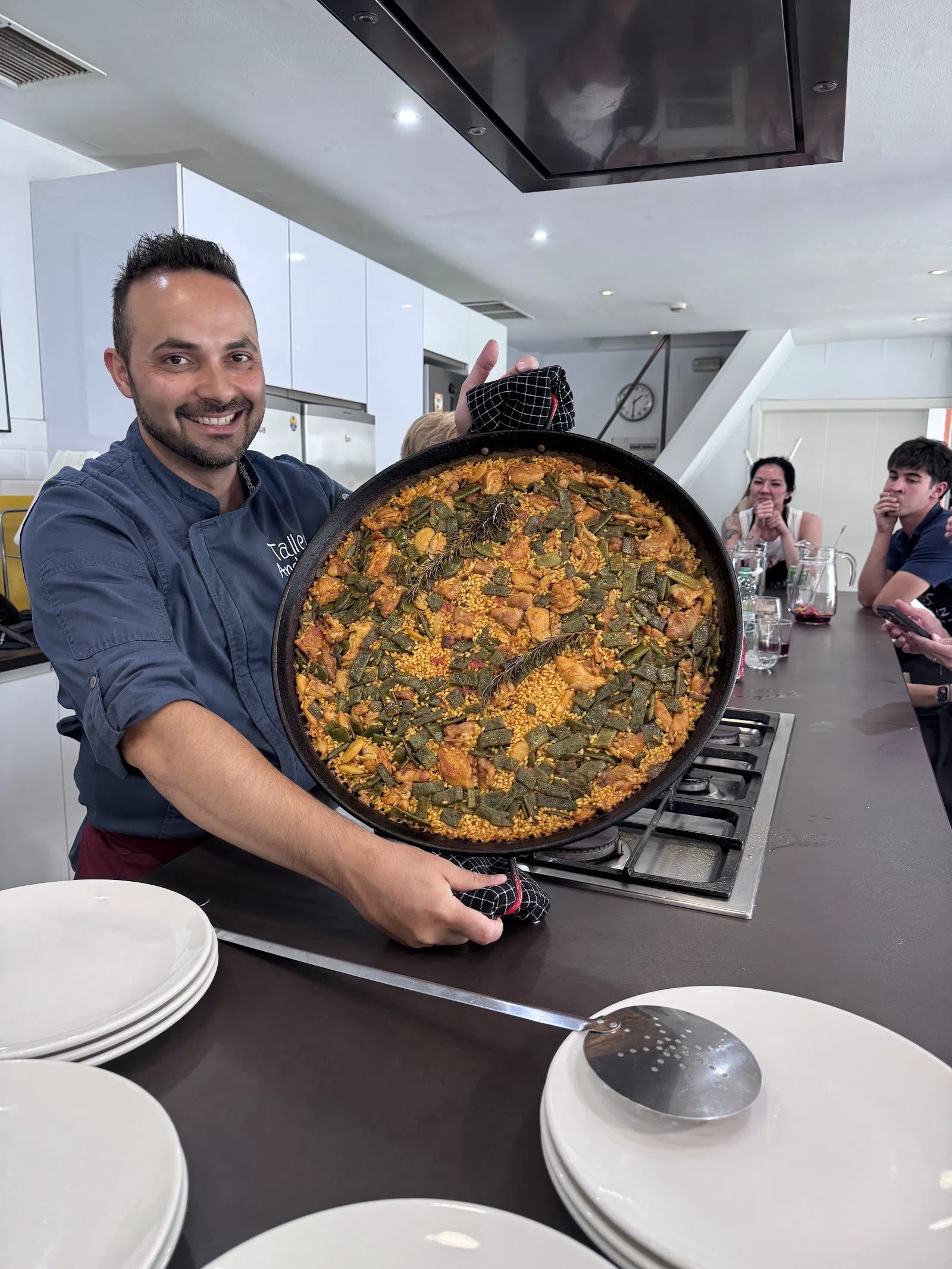
Taller Andaluz de Cocina (Triana market) is the only entry here that is a plan rather than a meal: a guided market tour first, then hands-on Andalusian cooking, then you sit down and eat what you made. Classes take up to sixteen people, private group bookings are available, and cancellation is free up to 24 hours ahead. It runs €65-90 per person and it sells out in season, so book it before you book anything else. If your group has one person who wants to understand the food rather than just eat it, this is where you put a morning.
Getting around, paying and timing your meals
Everything above except Abantal, Sobretablas and Victoria 8 sits inside a 25-minute walk of the Cathedral, and the historic centre is largely pedestrianised. Walk, or take a taxi for the outliers rather than fighting the one-way system. Timing is the thing that catches people out: breakfast runs 08:00-11:00, vermouth 12:00-14:00, lunch starts at 14:00 and is the day's big meal, dinner rarely before 21:00. Kitchens genuinely close between 17:00 and 20:30, so a 19:00 dinner plan will fail.
Carry some cash. Cards work almost everywhere now, but the standing bodegas, the torno at the convent and the freiduría counter are all faster with coins, and €20-30 in small notes covers a day of them. On budget: a full day of breakfast, vermouth, a fried-fish cone and an ice cream comes in under €30 a head; add a sit-down lunch at Victoria 8 or upstairs at El Rinconcillo and you are at €55-70; a Michelin dinner doubles or trebles that on its own. Book the star kitchens and the cooking class two to four weeks ahead, Victoria 8 and Arrocería Criaito three or four days ahead, and simply turn up at everything else.
Staying inside the centre or in Triana is what makes this itinerary work, because most of it happens on foot at hours when you want to be five minutes from bed. Compare rates on the Seville hotel search, and see the full Seville guide for districts, transport and what to see between meals.
Before you go
What do Sevillians actually eat for breakfast?
A tostada with coffee, usually standing at a bar between 08:00 and 11:00. The tostada is half a toasted roll with olive oil, tomato, or carne mechá (shredded pork). Café Bar Er Tito charges €3.70 for both. The sweet alternative is churros with thick drinking chocolate, €3-6 at Bar El Comercio, which fries all day rather than only at breakfast.
Where can I eat fried fish properly in Seville?
At a freiduría rather than a tapas bar. Freiduría Puerta de la Carne is the oldest in the city and the benchmark for adobo, fish marinated in vinegar, garlic and cumin before frying. Portions are €8-15 and come in a paper cone. The terrace is small, so order at the takeaway counter and eat in the nearby gardens while the fish is still hot. Closed Mondays.
How far ahead do I need to book restaurants in Seville?
Michelin kitchens (Cañabota, Abantal, Sobretablas) and the Taller Andaluz de Cocina cooking class need two to four weeks, more in high season. Victoria 8 and Arrocería Criaito need three or four days, especially for groups. Breakfast bars, bodegas and the freiduría take no bookings at all, so you turn up and accept the queue.
Which places in Seville can handle a group of eight or more?
Casa Robles is built for it: three floors, private rooms, €40-60 per person. The upstairs dining room at El Rinconcillo seats a table of ten with group menus (book on 954 223 183). Arrocería Criaito takes reservations and hosts celebrations. Cañabota, Maestro Marcelino and the small dining room at Victoria 8 cannot take a large party, whatever you are told.
Is Seville expensive to eat in?
Not unless you choose it to be. Breakfast is €3-6, vermouth €2.50-4 a glass, a fried-fish portion €8-15, an ice cream €3-6, so a full day of local eating comes in under €30 a head. A rice lunch is €15-25, a proper sit-down dinner €25-60, and the tasting menus run €70-145 with pairing. The cheap end is not a compromise here; much of it is the best food in the city.