The Seville issue
Behind the Heavy Doors: Seville's Secret Patios of Shade and Water
The city's coolest, most beautiful rooms are the ones you have to knock, book, or tiptoe to reach — here is how to get behind Seville's studded doors and into its fountain courtyards.

By Camille RousselThe city, barrio by barrio
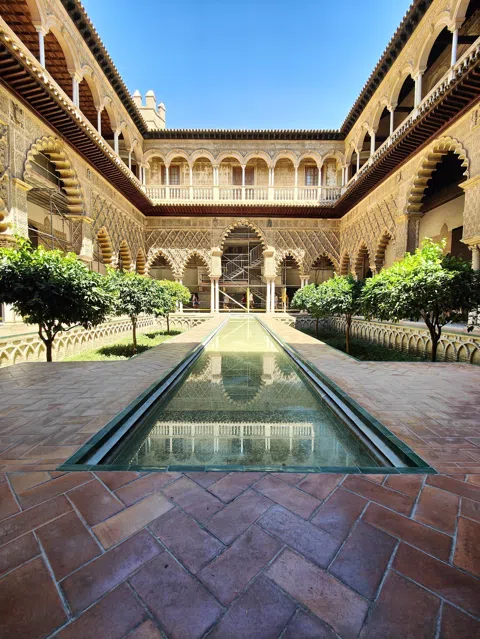
Seville spends its summers in a long negotiation with the sun, and the terms never change: the street is surrendered by noon, shutters come down, and life retreats through a heavy studded door into a patio where a fountain is still running and the tiles stay cool to the touch. These courtyards are the city's true architecture — not the cathedral, not the river, but the shaded, water-cooled room at the centre of the house, an idea borrowed from Roman builders, perfected under Al-Andalus, and lived in without interruption ever since. Most of the finest ones sit behind doors you would walk straight past. This is a guide to the ones you can actually get inside, and how to do it well.
The template palaces: courtyards you buy your way into
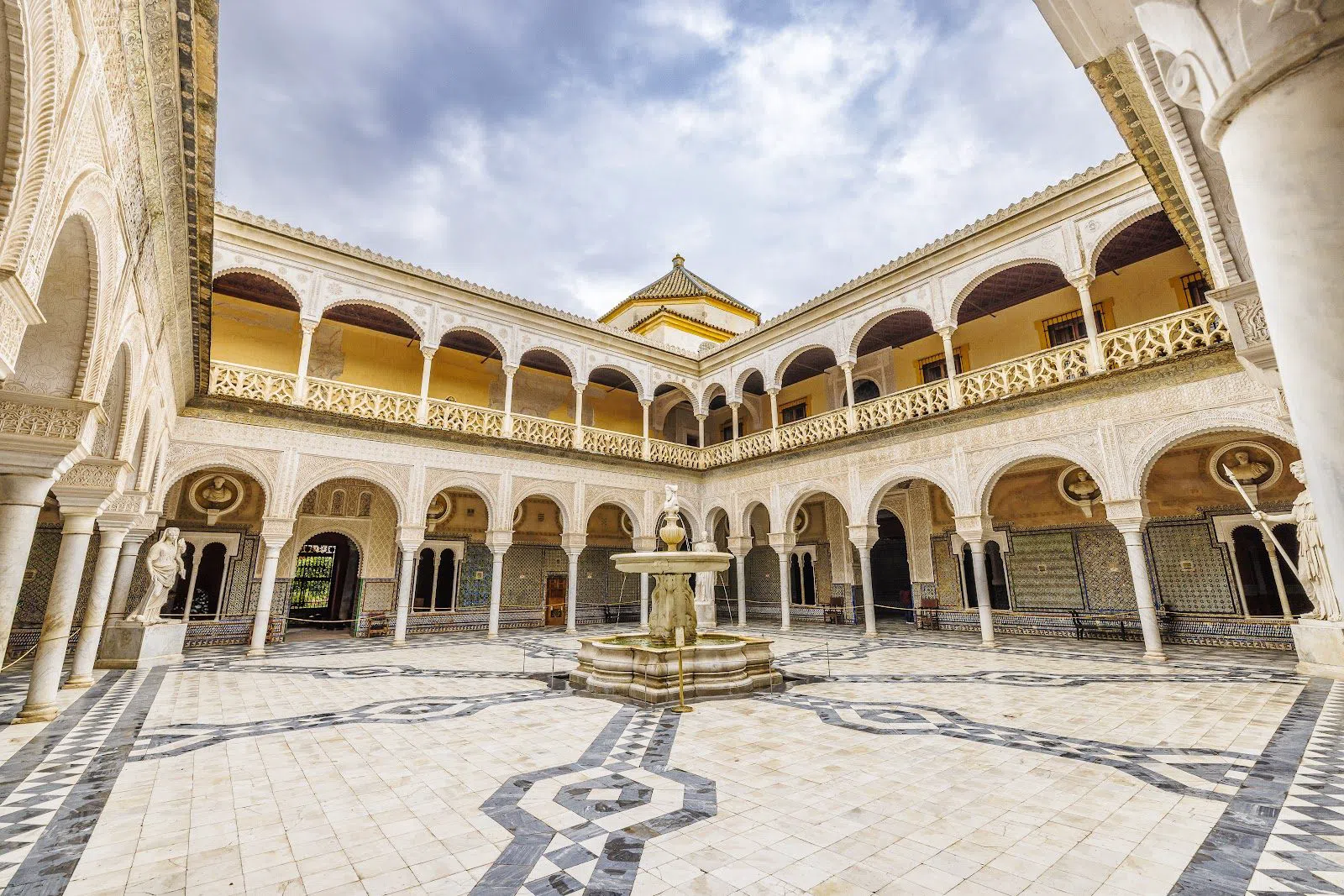
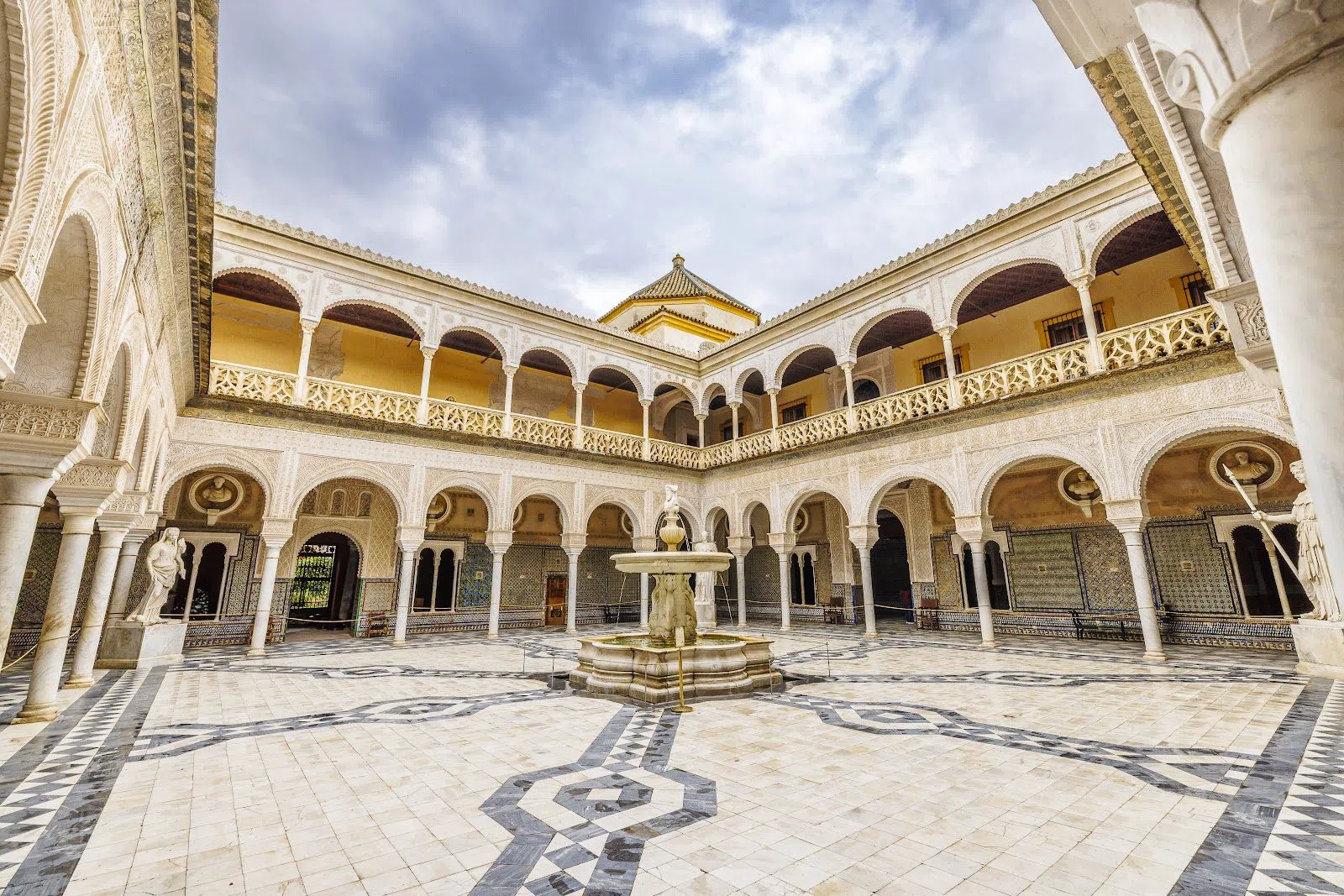
If you understand one patio in Seville, start with Casa de Pilatos (Barrio de San Bartolomé), because almost every other courtyard in the city is a variation on it. Still privately owned by the House of Medinaceli and open daily, it is the template Andalusian courtyard: a two-storey arcaded square with a fountain at its centre, Roman-era statues in the corners, and the finest tilework in Seville climbing the walls in dense geometric bands. It reads as a single grand gesture, but it was assembled over centuries, and the closer you look the more the Gothic, mudéjar and Renaissance layers separate out. Tickets are timed — around €12–15 for the ground floor, roughly €18 including the painted upper-floor apartments — and because it takes both guided tours and larger groups, it can fill; buy ahead, and if you are more than a handful of people, pre-book the slot rather than turning up. The upper floor is worth the extra euros for the quiet and the ceilings.
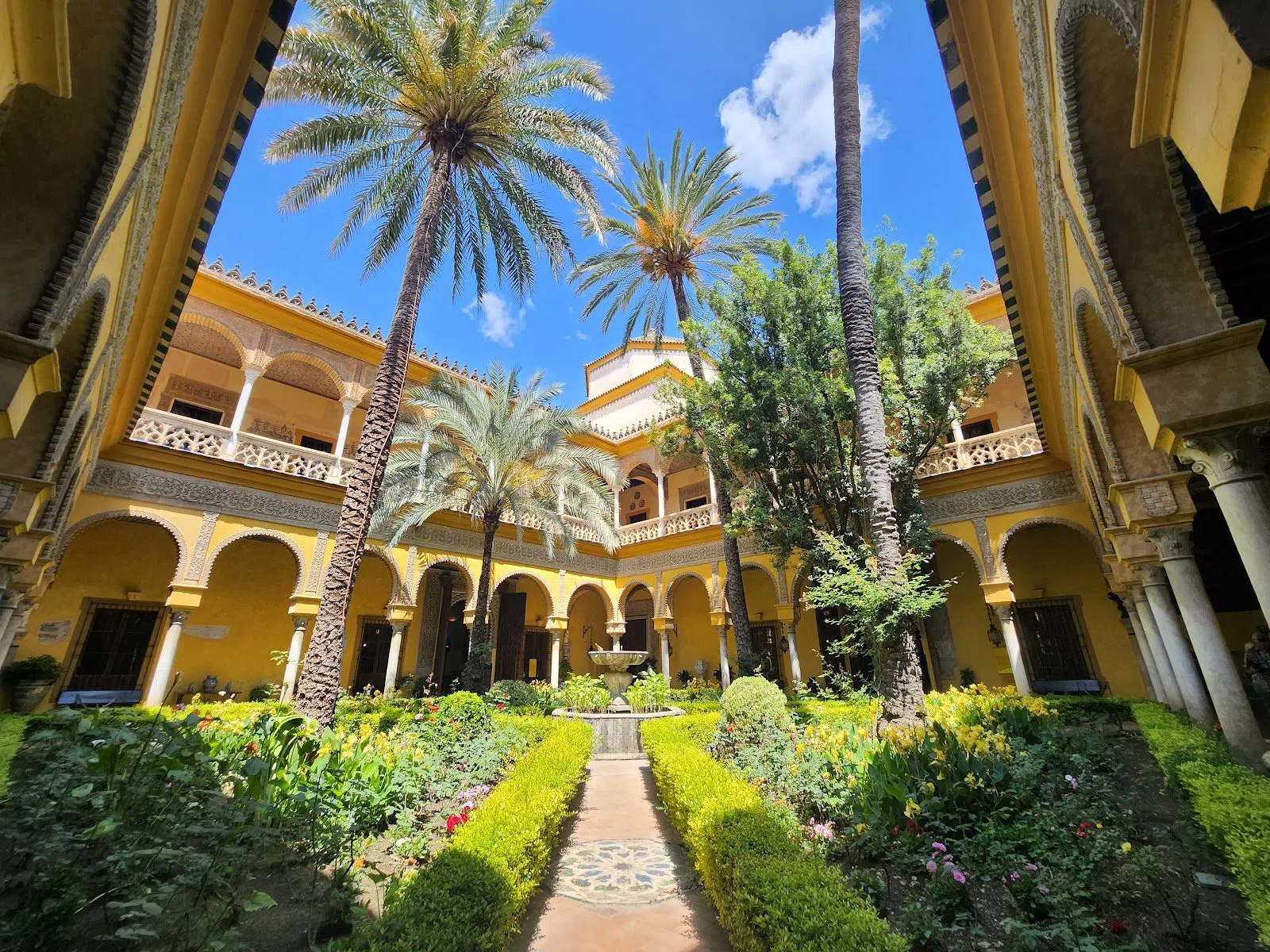
A short walk north brings you to Palacio de las Dueñas (near San Julián, on Calle Dueñas), the House of Alba's flower-drenched palace of interlocking patios. Where Pilatos is one commanding courtyard, Dueñas is a sequence of smaller ones threaded together with bougainvillea, lemon trees and worn stone, and the pleasure here is drift rather than awe. It is self-guided, around €12 for adults, open daily, and — crucially in high season — rarely anything like as crowded as the Alcázar, so it is where I send people who want the beauty without the queue. Note the practical detail that trips groups up: last entry is 45 minutes before closing, so this is a morning or an unhurried late-afternoon stop, not something to squeeze in at the end of the day.
On Calle Cuna in the Centro, Palacio de la Condesa de Lebrija hides one of the genuinely unusual sights in the city: the world's largest private collection of Roman-era mosaics, not roped off behind glass but laid straight into the floor of a courtyard the family actually lived on. You walk across antiquity. The ground floor is self-guided at around €6; the upper floor, with the family's rooms and library, is by guided tour only and pushes the combined ticket to about €12. Groups are accepted, but check the calendar before you commit — it closes on Sundays in July and August, exactly when a hot-weather visitor is most likely to assume it will be open.
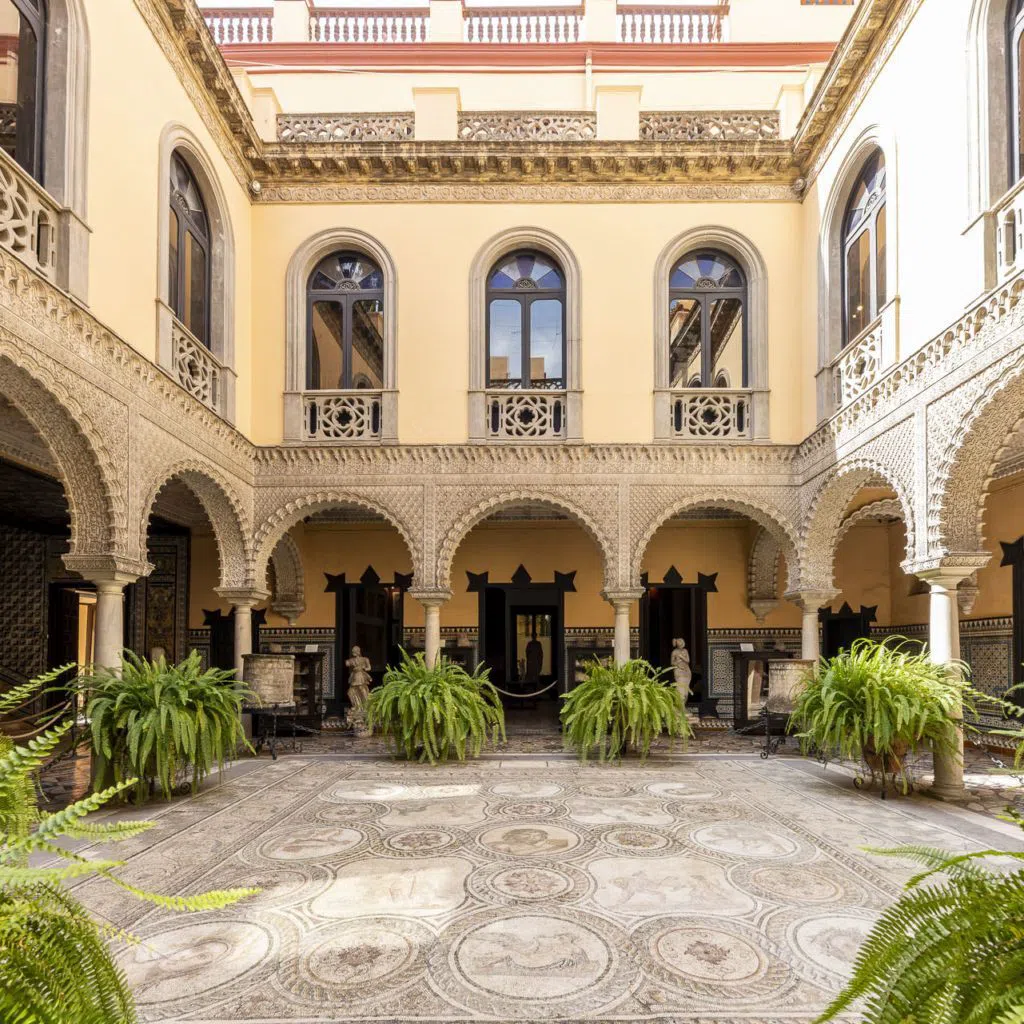
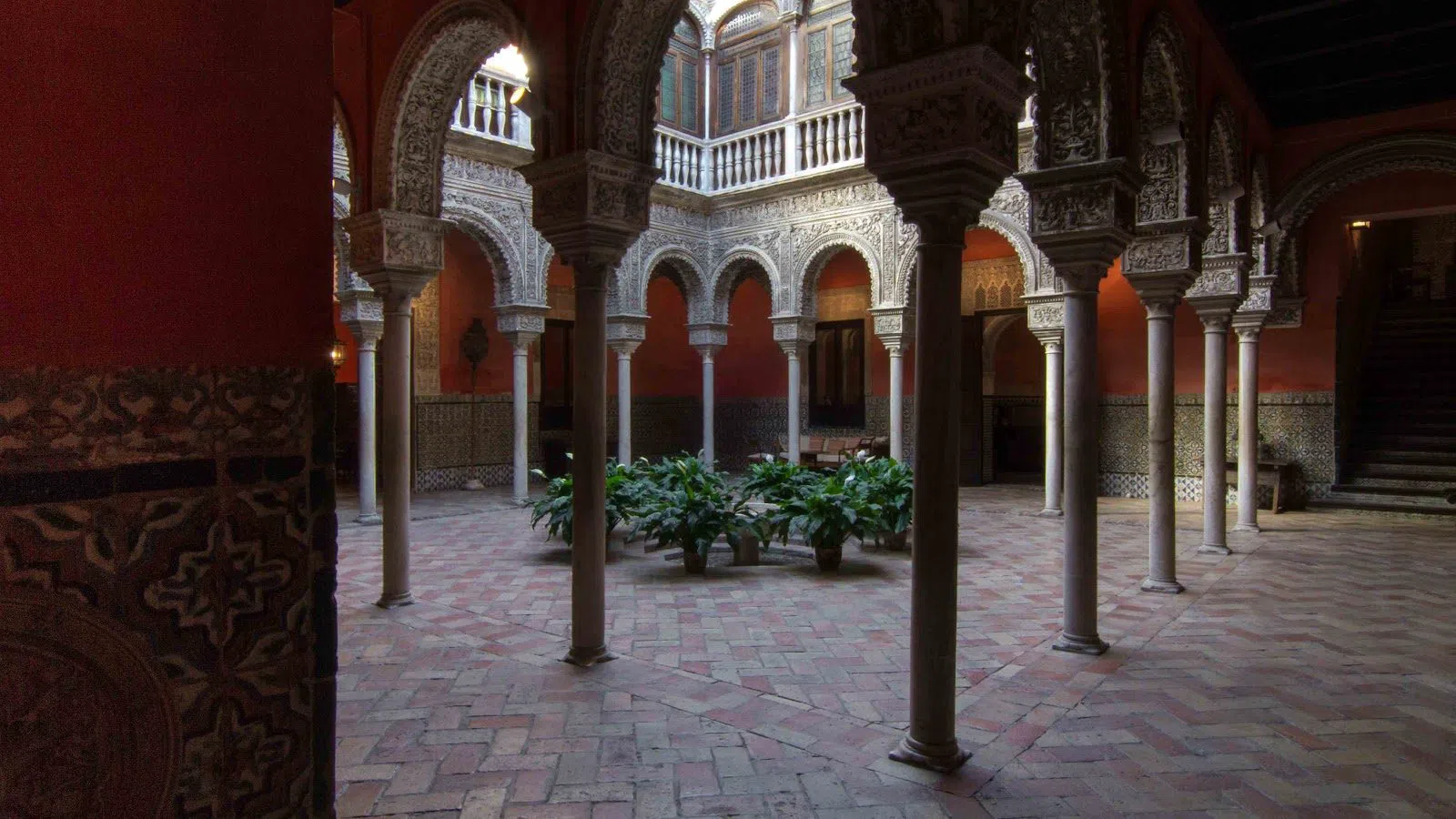
The most intimate of the four is Casa de Salinas (Santa Cruz), and it is intimate by design because it is still a family home. You get in only on a pre-booked guided tour — there is no wander-in option — and small groups suit it far better than large ones. That constraint is the whole point: nothing has been staged for footfall, the mosaics and the mudéjar patio feel domestic rather than institutional, and a guided visit here (around €8–10) never tips into feeling like a museum. Book it as a deliberate contrast to the grander houses, ideally not on the same day, so its smaller scale registers.
Plan your Seville trip
Live prices from our booking partners.
Free cancellation on many rooms. We may earn a commission when you book.
A Baroque cloister, and a courtyard the neighbours still share
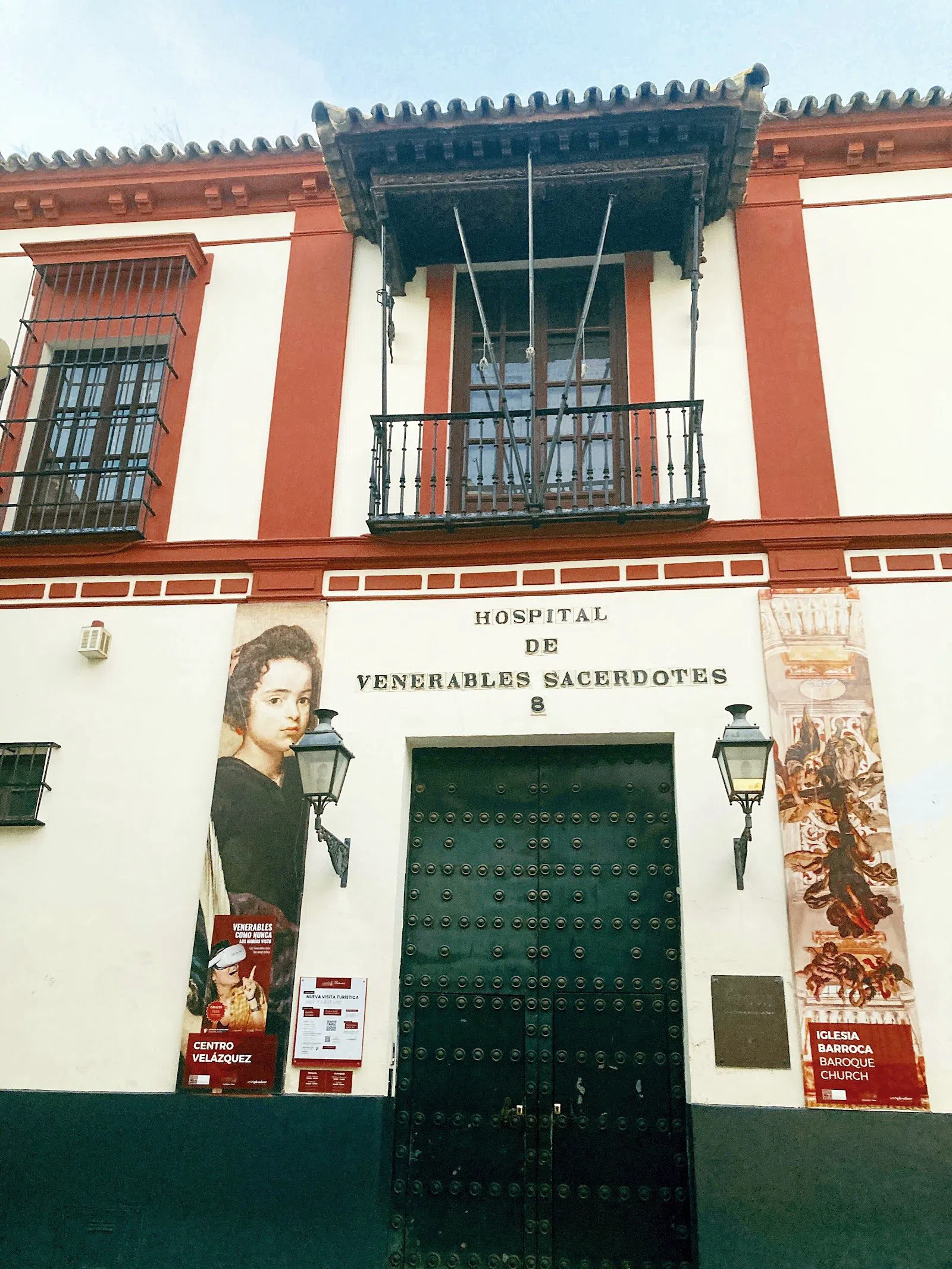
Deep in Santa Cruz, behind a plain façade on its own little square, Hospital de los Venerables is a hidden Baroque hospital cloister run today as a cultural centre by the FOCUS foundation. The courtyard sinks in the middle around a sunken fountain — a deliberate trick to keep water close and air cool — and the audio guide (included in the roughly €12 ticket, concessions about €10, under-12s free) walks you through the building and its Velázquez exhibition without hurry. Groups are welcome, and in 2026 it still runs its occasional candlelit concerts in the evening, which is the single best way to see the space: the stone holds the day's heat, the sound is close, and the crowds of the surrounding barrio have thinned. It is the rare monument in Santa Cruz that repays a slow, quiet visit.
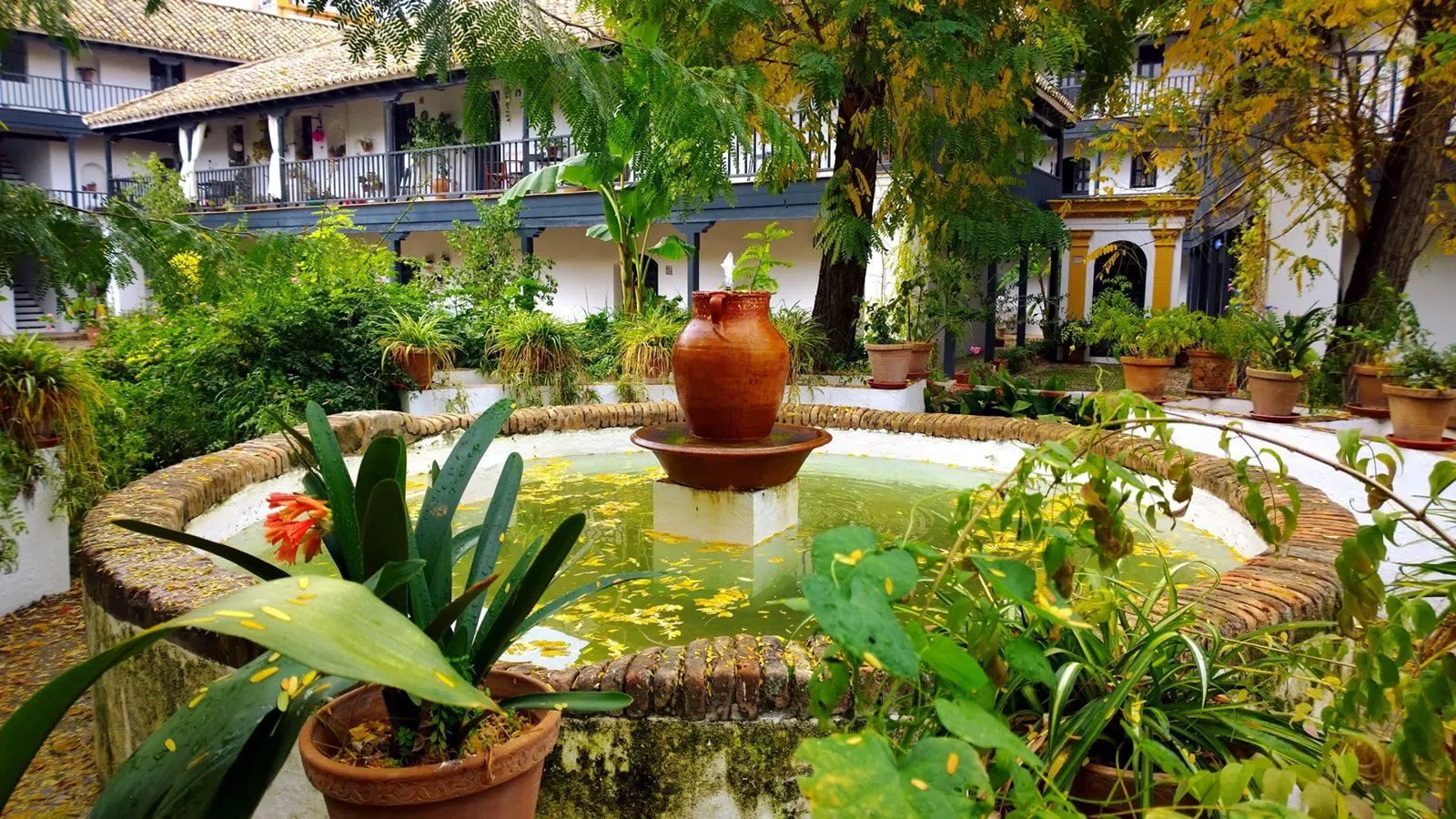
For the other end of the social spectrum — the patio not of a countess but of ordinary neighbours — walk to Corral del Conde (near Calle Santiago, San Bartolomé). This is Spain's best-preserved sixteenth-century corral de vecinos, the shared tenement courtyard where dozens of working families once lived in rooms opening onto a single communal patio with a well at its heart. What makes it moving is that it is still lived in. There is no ticket desk and no charge; you may step in and look, but softly, because these are people's homes and residents value their privacy. Do not bring a tour group here, do not photograph doorways, and do not linger loudly. Treated with respect, it is one of the most quietly human spaces in the city, and a corrective to the idea that the patio was ever only a luxury.
Flamenco with a patio at its heart
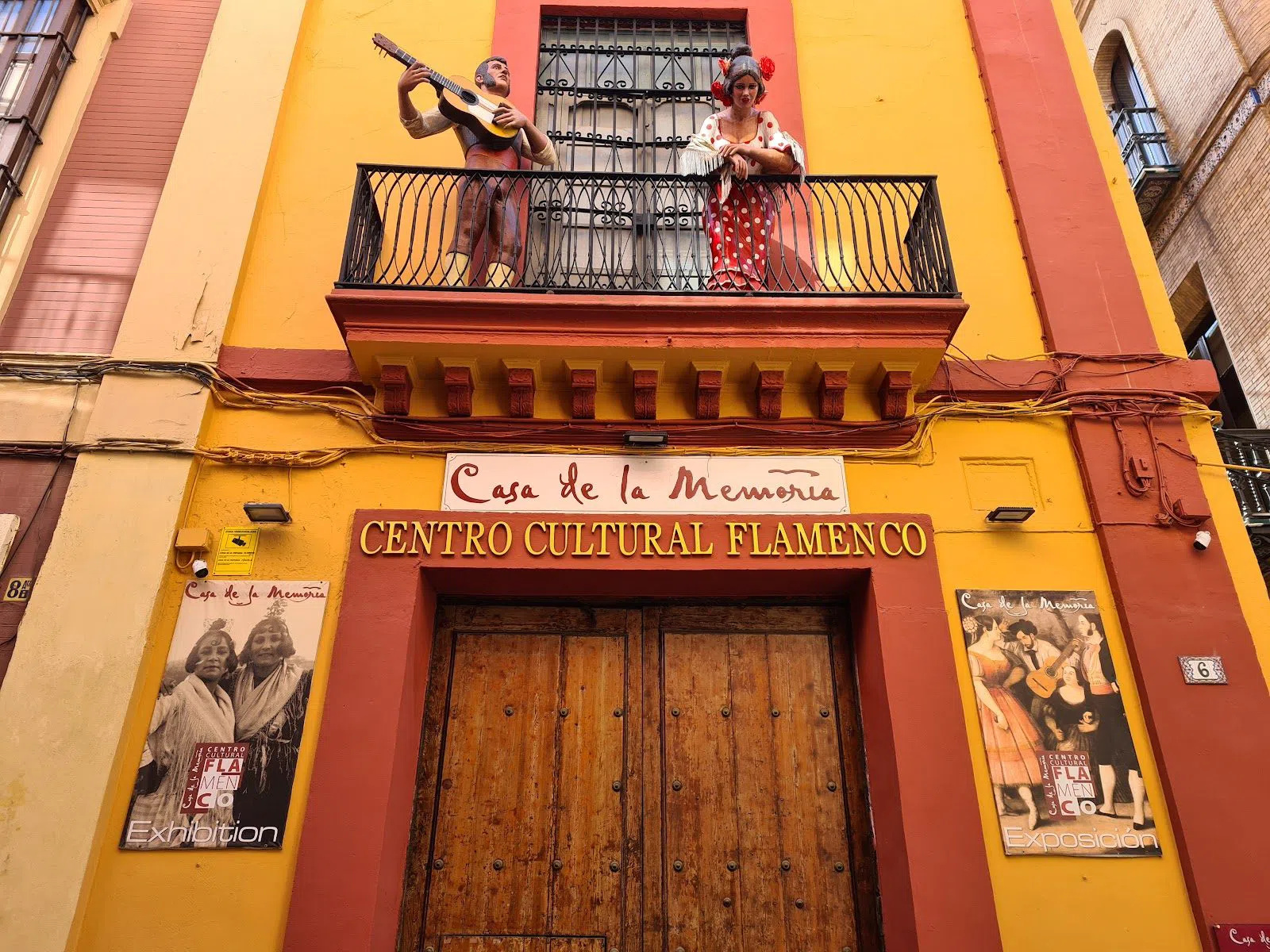
Seville's courtyards were built for acoustics as much as shade, and the city's more serious flamenco rooms know it. Casa de la Memoria (Calle Cuna, Centro) is the purist's choice: no-frills, no dinner-show apparatus, roughly 100 seats around a genuine courtyard, with nightly performances at about 19:30 and 21:00. Tickets run around €20–25 and it sells out, so book ahead; it takes groups, but the intimacy means it is best when the room is attentive. One point worth stating plainly for anyone searching online — it is a single, distinct operator and is not the same as other similarly named tablaos, so make sure you are booking this one.
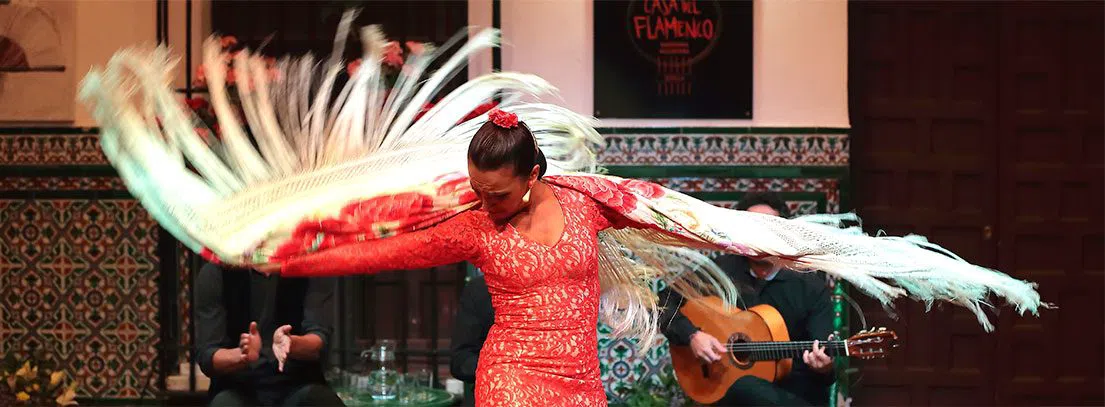
A separate operator entirely, and a different kind of pleasure, is La Casa del Flamenco – Auditorio Alcántara (Santa Cruz, on Calle Ximénez de Enciso). Its draw is that the performances are unamplified: a small tiered courtyard, no microphones, the guitar and the heel of the boot carrying on their own. Tickets sit around €22–27, and groups are accepted with a reservation. If you care about hearing flamenco as sound in a room rather than as spectacle through a speaker, this is where to go, and it is worth sitting close.
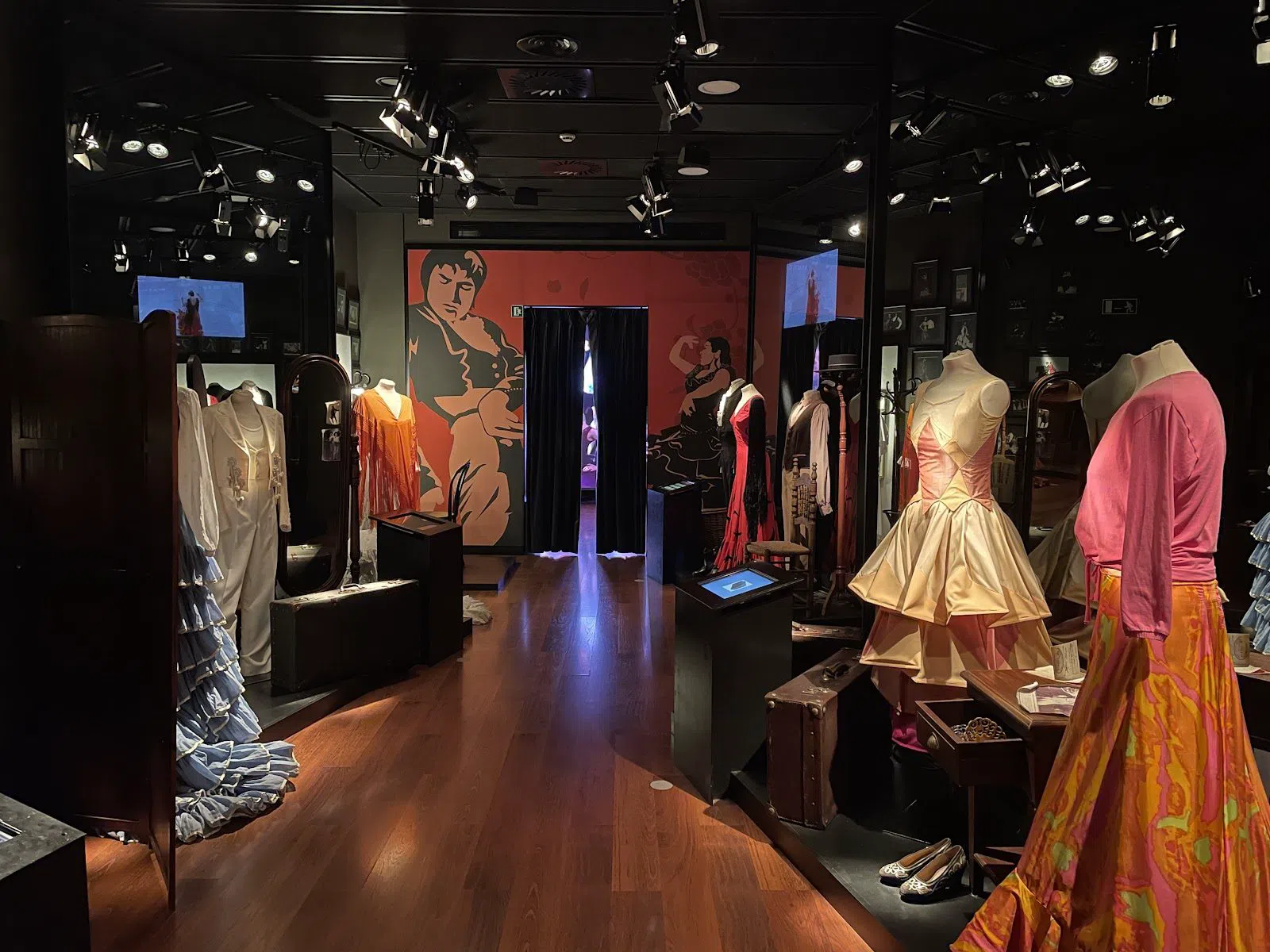
The most flexible option wraps a working tablao around a real patio stage: Museo del Baile Flamenco (Cristina Hoyos) (near Alfalfa). Founded by the great dancer, it functions as a museum by day (around €12) and a courtyard show by night (about €25), with combined museum-and-show tickets at roughly €30. It takes groups and it is one venue doing two jobs, which makes it the easy answer when your party wants both the context and the performance without crossing the city twice. Come for the museum in the heat of the afternoon, stay or return for the show.
Where the patio is the whole dinner
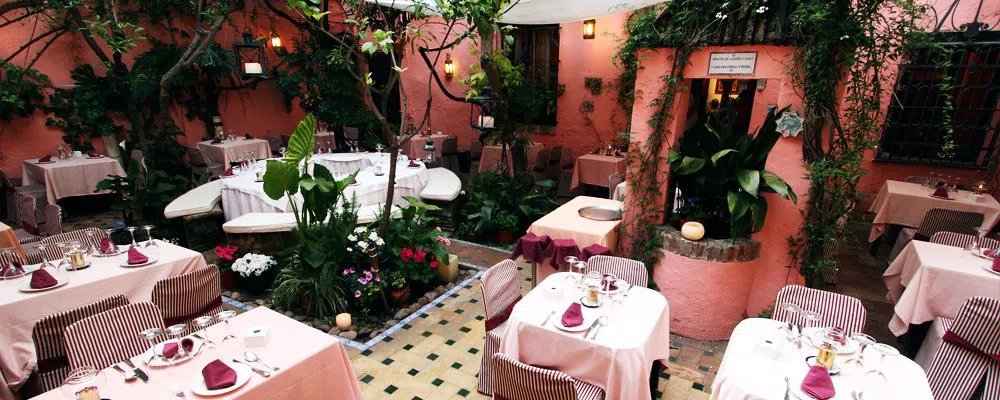
Some of Seville's best courtyards are ones you book a table in. Corral del Agua (Callejón del Agua, Santa Cruz) is the classic: Andalusian cooking served in a fountain courtyard on the old water street, where the patio itself — trailing plants, the sound of moving water — is frankly the reason to reserve rather than the menu. It is genuinely set up for groups, with two indoor salons seating around 20 and 40 and central patio seating for roughly 60, so it handles a celebration well. Expect mid-to-upper prices, mains around €20–28, and book, because the patio tables go first and the indoor salons are a distant second.
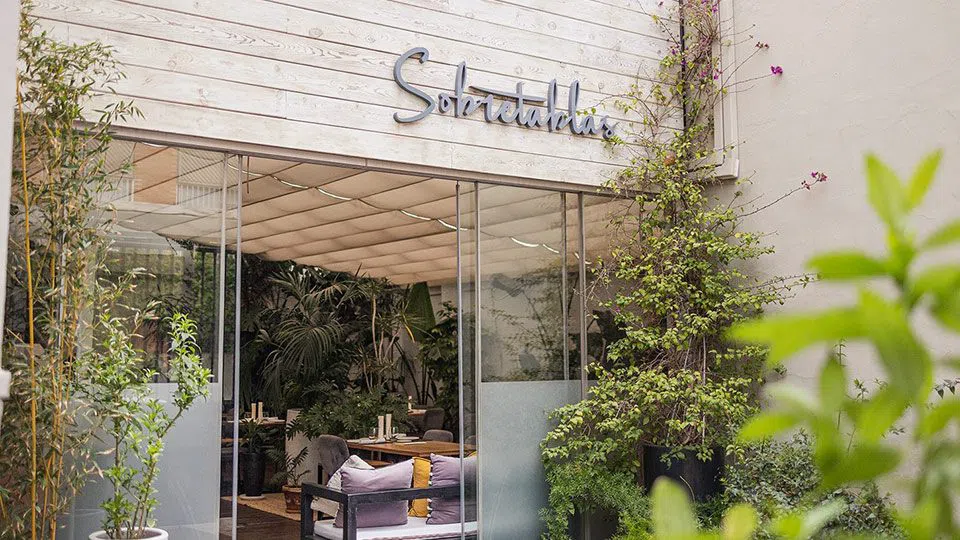
At the opposite scale is Sobretablas (a concealed villa garden a little out from the centre), which is not for big parties and does not pretend to be. It caps at around 35 diners, serves inventive Andalusian cooking as a tasting menu at the Michelin Bib Gourmand level, and the intimacy of the walled garden is the experience. Reservation is essential and you should book well ahead; treat it as a two-people-or-a-few evening rather than a group outing, and give it the whole evening.
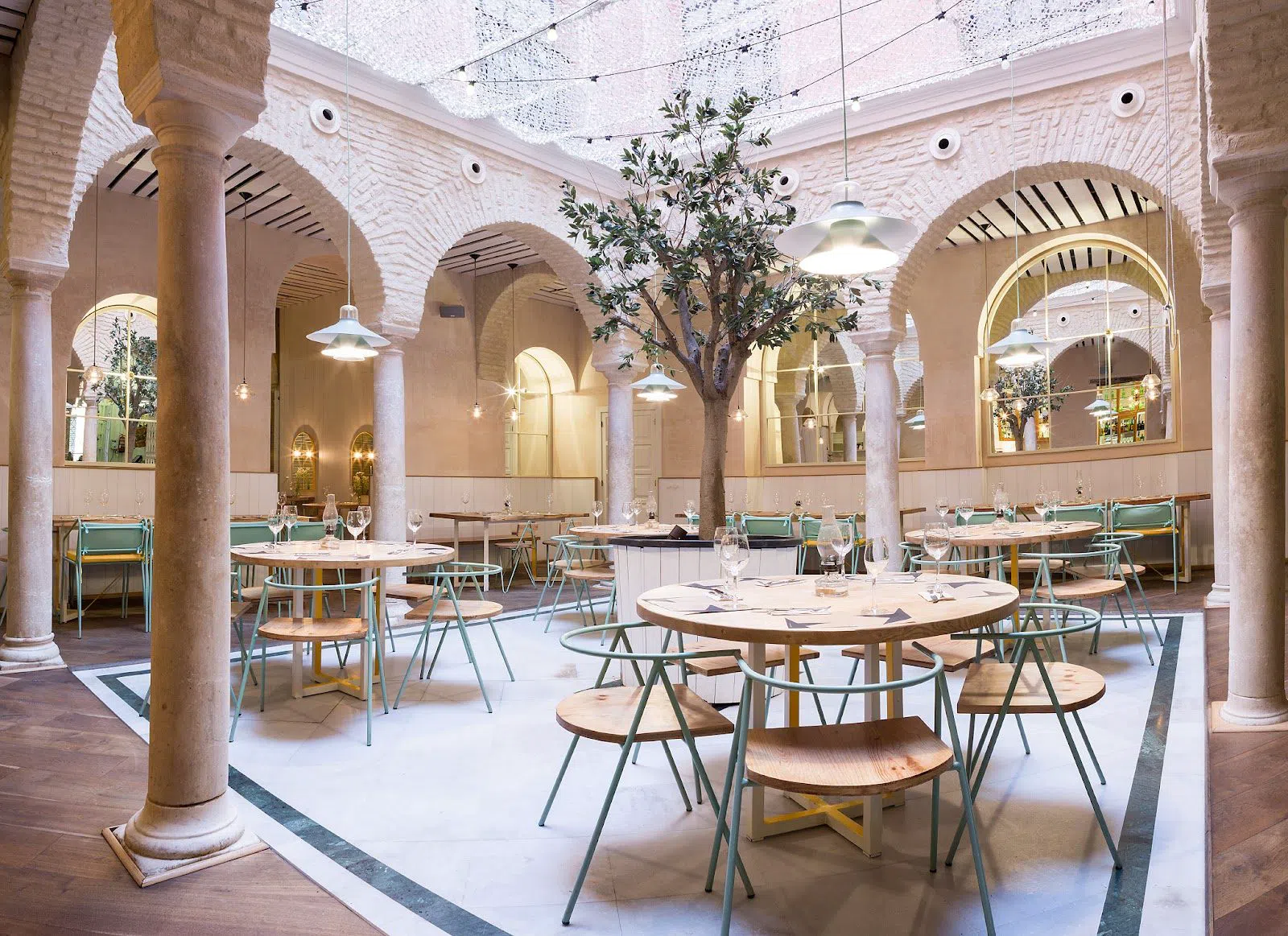
The most group-friendly pick on this list is El Pintón (Calle Francos, a minute from the Giralda), a lively contemporary patio in a restored warehouse. It is open all day, has both patio and terrace seating, and comfortably takes larger tables and events if you reserve — creative small plates in the €30–40-per-person range. When your party is mixed in appetite and size and you want somewhere central that will simply say yes, this is it. Its energy is modern and social rather than hushed and historic, which is a feature, not a flaw, when you are eight people and hungry.
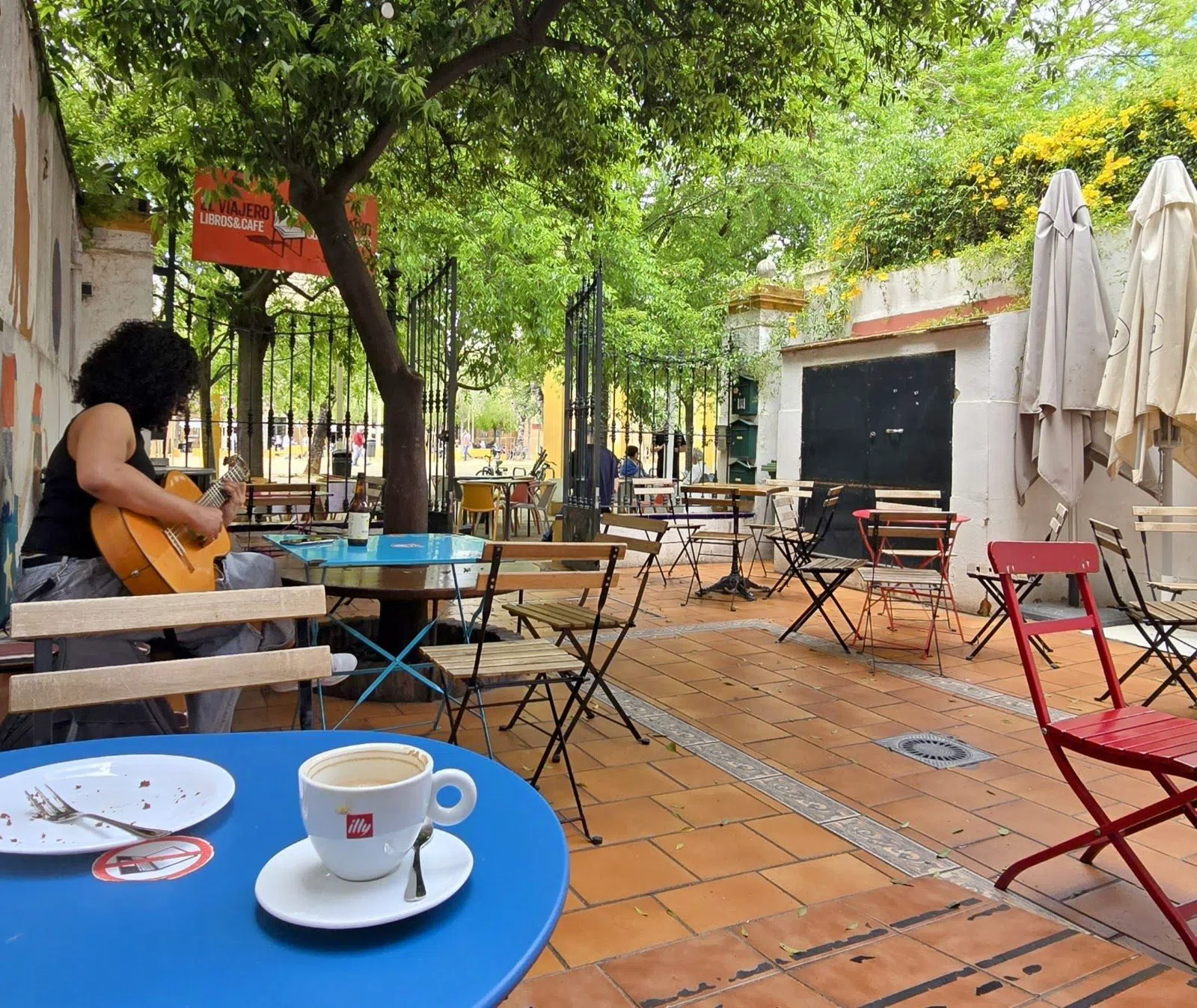
And for the quiet, budget counterpoint to all these grand rooms, El Viajero Sedentario (Alameda de Hércules) is a tucked-away bookshop-café with a small courtyard, right for a slow coffee, a glass of wine or a beer and a book. The patio suits pairs and small groups rather than big parties — do not arrive mob-handed — but as a place to sit out the worst of the afternoon heat for the price of a coffee, it is the low-key antidote to a day of ticketed palaces. Sketch your next few days here; when you are ready to sort where to sleep, the Seville hotel search is the practical next step, and it is worth choosing a base that keeps these clustered barrios walkable.
Practicalities: heat, cash, timing and budget
Almost everything here sits in a tight, walkable core — Santa Cruz, San Bartolomé and the Centro around Calle Cuna and Sierpes — so you will move between doors on foot rather than by transport, and that is the right way to feel how the patios punctuate the streets. If you need to cross town, the single tram line and the metro cover the main axes cheaply, but for this itinerary your own two feet and comfortable shoes matter more than any ticket.
On money: card is accepted almost everywhere for admissions and restaurants, but carry some cash in euros for the small places — a coffee at the bookshop-café, a spontaneous tip after a flamenco set — and remember that Seville's independent sights keep their own hours. The recurring trap is the summer closure: the Roman-mosaic palace shuts on Sundays in July and August, and several houses stop admitting well before they close, so build your day around confirmed times rather than assumptions.
On timing, plan your visits like a local plans the heat. Do the ticketed courtyards in the late morning, retreat to a café patio or a long lunch through the fiercest early-afternoon hours, and save the cloister concerts and the flamenco courtyards for the evening, when the stone has stored the day's warmth and the light softens. Book the small, guided and unamplified rooms — Casa de Salinas, Sobretablas, the tablaos — days ahead, not on the day.
On budget, this can be a modest itinerary or a lavish one. The house-museums run roughly €6 to €18 each, a courtyard flamenco ticket is around €20–27, and a fountain-patio dinner ranges from about €30 a head to a full tasting menu. A frugal but rich day is very doable: one palace patio, a free and respectful look into the neighbours' corral, a coffee in the bookshop courtyard, and one flamenco show — a real sense of the city for well under €50. For deeper context on neighbourhoods, seasons and what else fills a longer stay, the Seville guide is the place to go next.
Before you go
Which Seville patios can I just walk into, and which need booking?
The palace house-museums (Casa de Pilatos, Palacio de las Dueñas, Lebrija ground floor) sell timed or self-guided tickets you can often buy on the day, though ahead is safer in summer. Casa de Salinas is guided-tour-only and must be pre-booked. Flamenco courtyards and the patio restaurants (especially the small Sobretablas) need reservations. Corral del Conde is free but residential — look in quietly, don't book or tour it.
When do Seville's courtyard sights close in summer?
Watch the July–August timetable closely. Palacio de la Condesa de Lebrija closes on Sundays in Jul–Aug. Palacio de las Dueñas stops admitting 45 minutes before it closes. Casa de Pilatos and Dueñas open daily otherwise. Always plan the day around confirmed opening times rather than assuming a place is open in the heat.
How much does it cost to see the main patios?
House-museums run roughly €6–€18 each: Lebrija ~€6 ground floor (~€12 both floors), Casa de Pilatos €12–15 (~€18 with the upper floor), Dueñas ~€12, Casa de Salinas ~€8–10 guided, Hospital de los Venerables ~€12. A courtyard flamenco ticket is about €20–27, and a patio dinner ranges from ~€30pp to a full tasting menu.
Which patios suit a group, and which are better for couples?
For groups: El Pintón (the most group-friendly), Corral del Agua (salons for 20 and 40 plus a ~60-seat patio), Casa de Pilatos and the Museo del Baile Flamenco all take larger parties with booking. For couples or small groups: Casa de Salinas, Sobretablas (caps around 35) and the café-bookshop El Viajero Sedentario. Don't bring a big group to Corral del Conde — it's people's homes.
Where can I hear real, unamplified flamenco in a courtyard?
La Casa del Flamenco – Auditorio Alcántara in Santa Cruz is built around unamplified acoustics in an old courtyard. Casa de la Memoria on Calle Cuna is the purist, no-frills option with nightly shows around 19:30 and 21:00. The Museo del Baile Flamenco wraps a working tablao around a real patio stage. All three are distinct operators — book the specific one you want, as they sell out.