The Seville issue
Alameda de Hércules, Seville: the city’s late-night, bohemian heart
From Roman columns to drag clubs and sherry bars, Alameda de Hércules is Seville at its most lived-in, loud and gloriously unpolished.
By Rafael OrtegaSeville's Mudéjar and Moorish thread
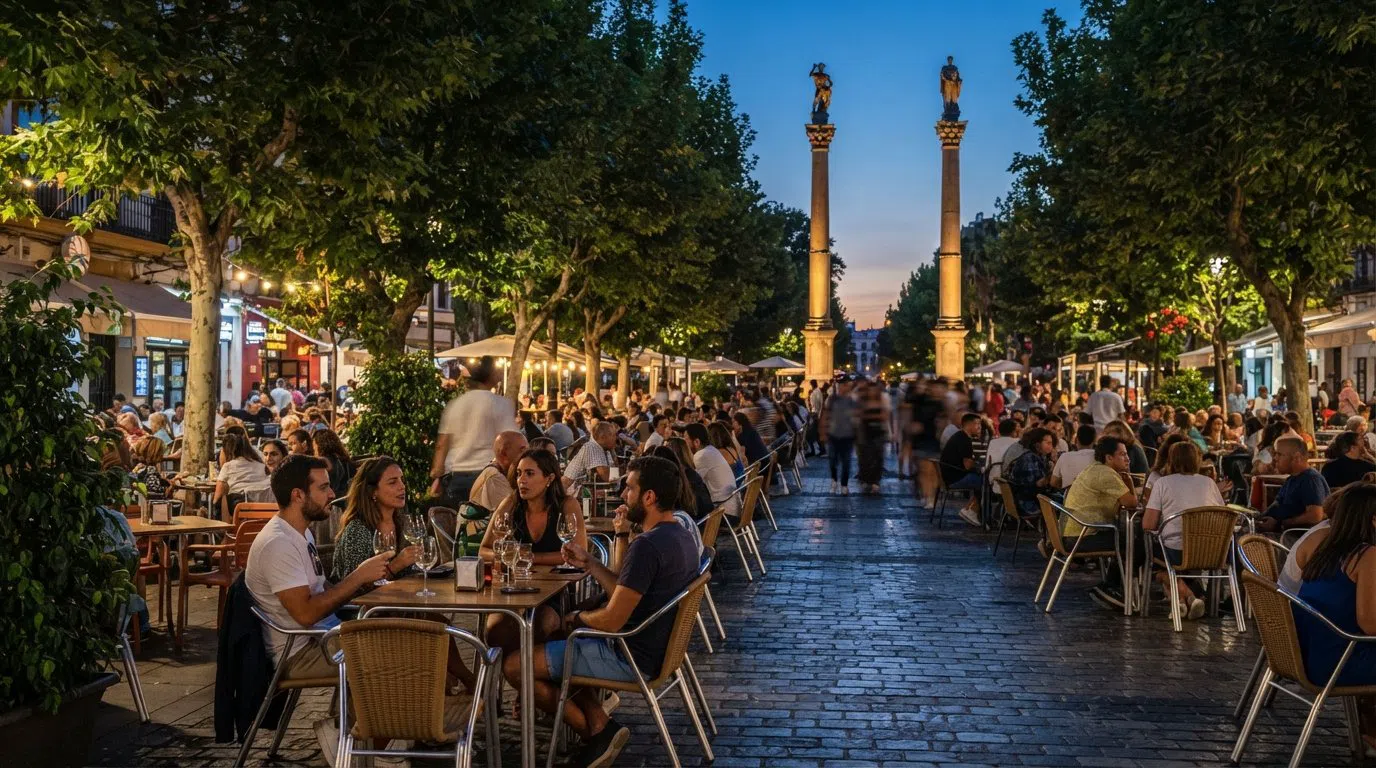
Two Roman columns stand guard at the southern end of the Alameda, and if you arrive at the right hour you can watch the plaza change mood around them: morning dogs and newspapers, then footballs skidding over dust, then the first vermut of the evening and, much later, the long Andalusian rumble of a night that refuses to go home. These are not decorative props. They are the old stones of Seville, topped by Hercules and Julius Caesar, and they tell you at once that this is a place where the city likes to remember its past while making a bit of noise in the present.
What Alameda de Hércules is known for
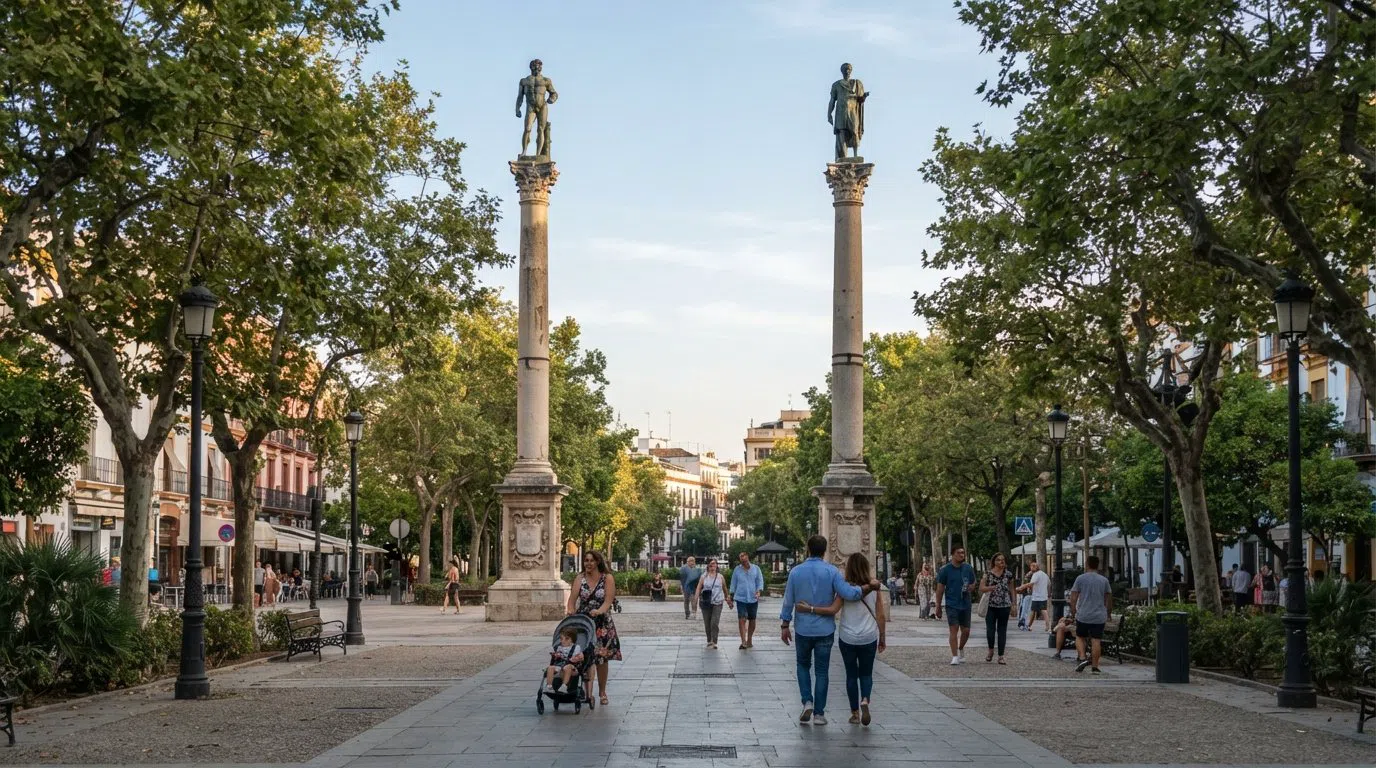
The Alameda is Seville’s oldest public promenade, laid out in 1574 when the Count of Barajas drained a swampy former arm of the Guadalquivir and planted white poplars — álamos — along what became a long, open rectangle of public life. The two Roman columns at its southern end are Egyptian granite, roughly nine metres tall, lifted from the ruins of a Roman temple on nearby Mármoles street. In the 16th century they were crowned with statues of Hercules, the mythical founder of Seville, and Julius Caesar, the Roman restorer. That is the official story, and it is a good one; Seville likes its legends with a bit of civic architecture attached.
For centuries the Alameda has been grand, seedy, fashionable, unfashionable, and then fashionable again. It was a 19th-century haunt of bullfighters, poets and bohemians, later a red-light zone, and after the 2008 renovation it found its present self as the city’s counter-cultural hub. What it is known for now is plain enough: nightlife, the LGBTQ+ heart of Seville, and a genuinely good, unpretentious eating-and-drinking scene that feels younger and more experimental than the postcard old town around the cathedral. It is also a live neighbourhood, not a set piece. By day children play football under the plane trees, dogs run loose, old men read the paper, and cafés serve tostadas and café con leche to a slow trickle of locals. By night the terraces on both long sides fill with students, artists, drag queens, thirty-something sevillanos and everyone in between. The soundtrack is indie guitars from Fun Club, reggaeton from a passing scooter, and a hundred conversations trying to outlast one another.
This is not a place for early bedtimes. The terraces warm up around 10pm, and the clubs do not really get going until well past 1am. On weekend nights the plaza can run loud until 4 or 5 in the morning, which is exactly why it works for the people who love it and exactly why others should stay elsewhere.
Plan your Seville trip
Live prices from our booking partners.
Free cancellation on many rooms. We may earn a commission when you book.
Where to eat & drink
The Alameda and the streets feeding into it hold some of Seville’s best modern tapas, but they do not all look the same, and that is half the pleasure. Espacio Eslava, on Calle Eslava a short walk off the plaza, is the place that everybody mentions first for a reason. It is a no-reservations bar, so the queue starts around 8:30pm, and the room has that particular Spanish energy of people pretending to be patient while already planning their second round. The dish that made it famous — the slow-cooked egg on a boletus-mushroom sponge cake with caramelised-wine glaze — won the city’s tapas fair in 2010 and has been copied badly ever since. The pork ribs on sugarcane skewer and the honey-glazed cheek are worth waiting for too.
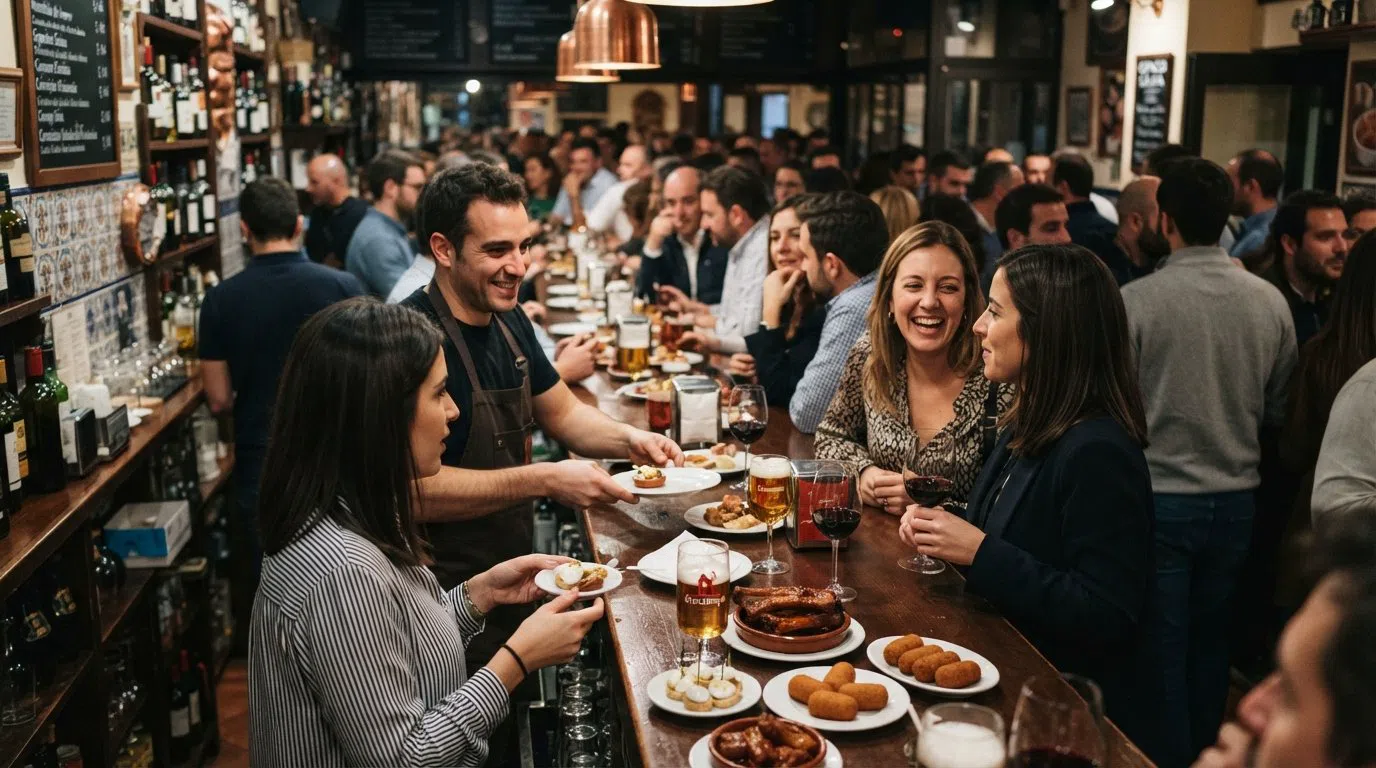
If Eslava is the headline act, Casa Ricardo is the old song that still knows every verse. On Calle Hernán Cortés 2, in the antigua Casa Ovidio, it has poured sherry since 1898. There is no printed menu, only a narrow bar hung with Semana Santa images and the steady confidence of a place that has survived enough decades to stop explaining itself. Order the croquetas and the solomillo al whisky and let the room do the rest.
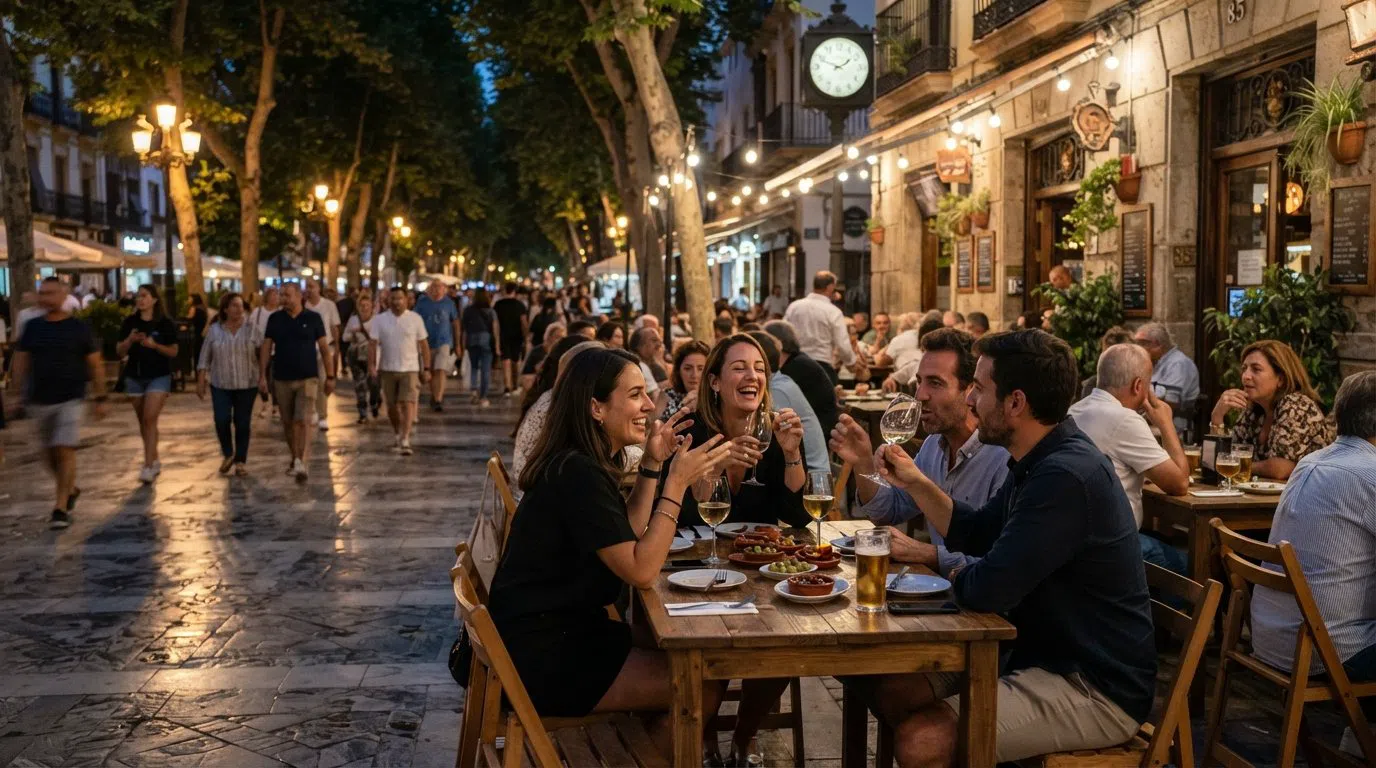
A few streets away, Antigua Abacería de San Lorenzo on Calle Teodosio 53 gives you the old grocery-and-tapas format that Seville does so well: shelves stacked with cheeses and cured meats, a counter that invites grazing, and the feeling that you might have wandered into a pantry with public rights. Bar Antojo on Calle Calatrava 44 is the opposite in style but not in ambition: a cool little room for neat, modern plates such as croquetas and truffle-and-courgette risotto. Arte y Sabor, at Alameda 85, leans Mediterranean and North African, with clearly marked veggie options and a terrace made for people-watching when the evening is still deciding whether to behave.
For beer people, Maquila on Calle Delgado 4 is the one to know. It is Seville’s original brewpub, pouring its own Son-label ales alongside modern tapas. That matters here because the Alameda is not only a cocktail-and-vermut district; it is also where the city’s more curious drinkers came to ask for something other than the usual. On this plaza, that counts as a small civic revolution.
Going out
Start with a caña or a vermut on one of the plaza terraces and watch the evening gather itself. Gigante Bar, at Alameda de Hércules 17, is the reliable all-rounder: coffee and cake by day, cocktails by night, open to 1am and to 3am on Fridays and Saturdays. It is the sort of place that understands the Alameda’s rhythm without trying to improve it.
For something more intimate, Tremenda Muela on Calle Lumbreras is a Cuba-inspired cocktail bar where the bartenders hand you samples to help you choose. That alone tells you the level of care. They also run themed dinners and a Sunday “cocktail & cake” session, which feels exactly like the kind of slightly mischievous idea this quarter should keep inventing.
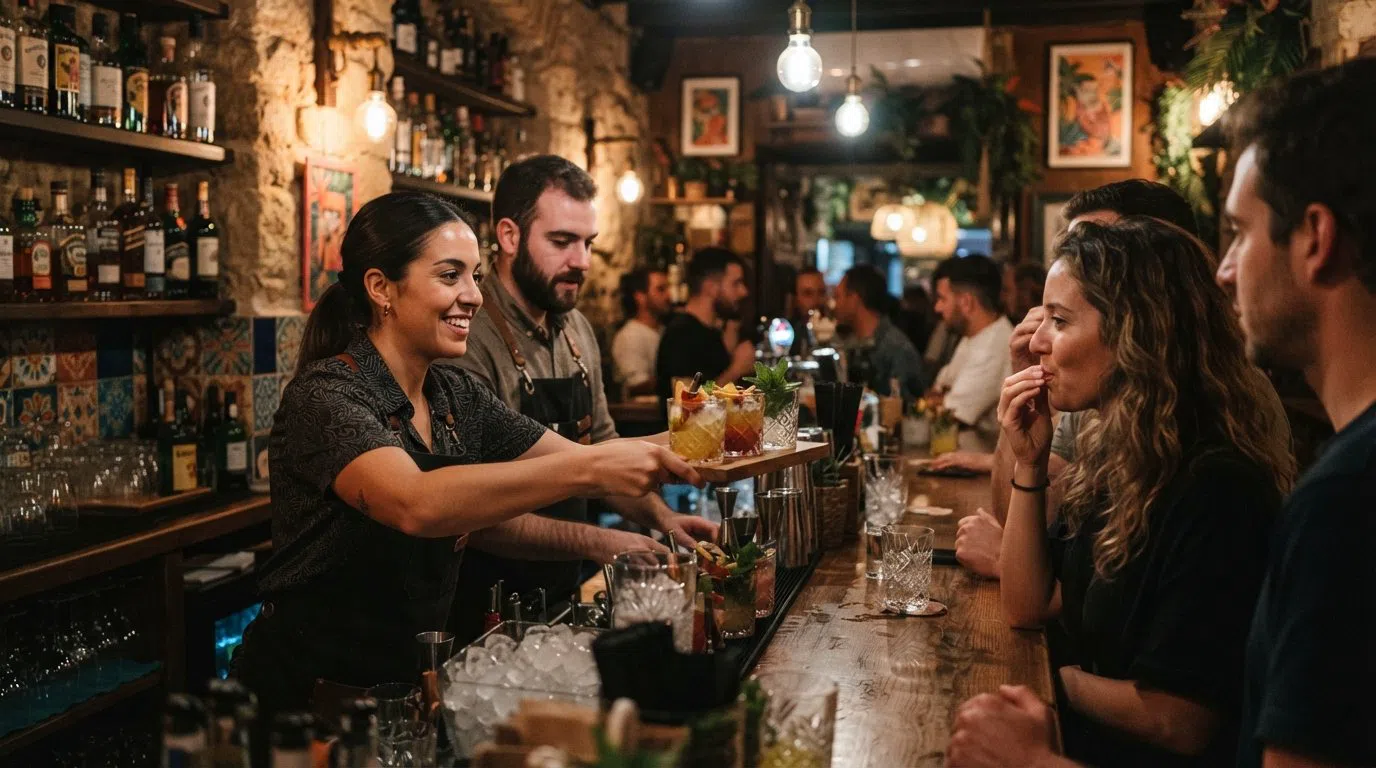
Then there is Fun Club, the little concert hall on the plaza where indie and guitar bands play most nights to a student crowd before the room turns nightclub after the band finishes. It is one of those venues that gives the Alameda its pulse after dark. La Sra Pop works in a different register — café, bar and cultural space, with open mics, jam sessions, poetry and emerging live acts — but it belongs to the same ecosystem of rooms where Seville’s younger creative life can make a noise without being told to sit down.
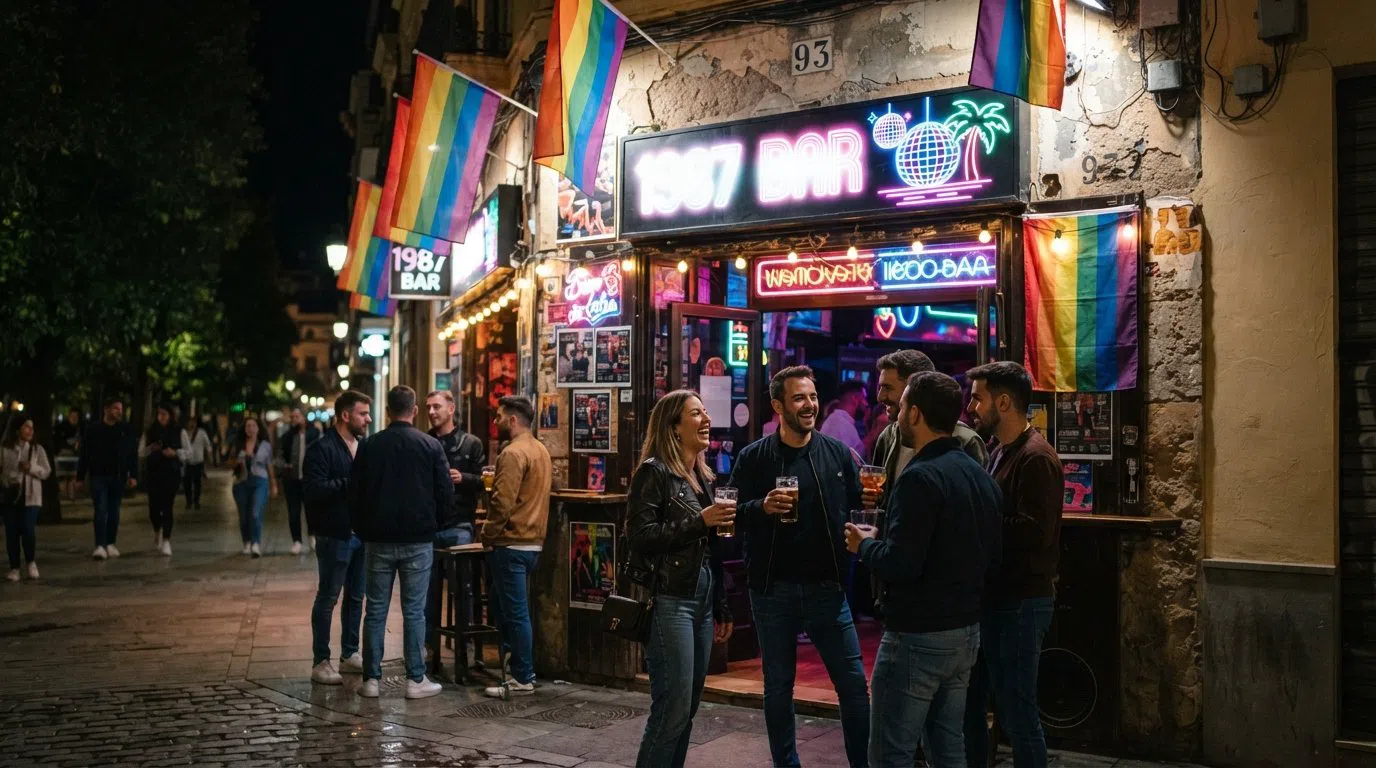
The Alameda is also the city’s LGBTQ+ centre, and it does not treat that status as a marketing line. It lives it. 1987 Bar, at Alameda 93, bills itself as Spain’s first 80s-themed discopub and opens nightly from 10pm until 4:30am, or 5am on weekends. Ítaca, on Calle Amor de Dios 31, has been Seville’s flagship gay club for more than two decades, with a Rome-themed dance room open until 5 to 7am. El Bosque Animado and Men to Men / Pride B4R round out the strip. Rainbow flags on the bars, no side-eye, everyone welcome — that is the simple truth of it.
Nothing peaks before 1am, so pace yourself. The Alameda is generous, but it is not in a hurry.
Things to do and what to see
The local sport here is terrace-watching, and there is no shame in making a profession of it. But the Alameda also gives you proper sights within a two-minute walk, which is useful when your second drink has made you sentimental and your third has made you curious. On Plaza de San Lorenzo, the Basílica de Jesús del Gran Poder holds one of Spanish Baroque’s masterpieces: Juan de Mesa’s Jesús del Gran Poder, a cross-carrying Christ carved around 1620 with a face of startling anguish. It is one of the city’s most emotional Holy Week presences, and the basilica beside it keeps the whole square anchored in a quieter register.
Beside it stands the 13th-century Iglesia de San Lorenzo, a parish church that gives the square its older spine. A short stroll south brings you to the Palacio de las Dueñas, the Alba family’s 15th-century palace of tiled courtyards, orange trees and art, and the birthplace of poet Antonio Machado. It is one of the loveliest and least-crowded house-museums in the city, which in Seville is praise of a very particular sort: not merely beautiful, but mercifully untrampled.
On Sunday mornings, a small arts-and-crafts market sets up on the plaza itself with paintings and trinkets from local makers. It is worth a wander, though you should know that the big historic flea market once known as La Alameda has moved out to Charco de la Pava by the river. If you want the real rummage, come on Thursday. The El Jueves flea market on nearby Calle Feria is Seville’s oldest, going back to the 13th century, and from 8am it spreads out in a glorious secondhand jumble of antiques, books, flamenco dresses and bric-a-brac.
Shopping & markets
Shopping around the Alameda is not about polished chains or glossy luxury. It is thrift, vintage and independent, which suits the neighbourhood’s temperament. Calle Feria runs off the eastern side of the plaza and acts as the spine of the area: hip clothing boutiques and retro stores alternate with antique shops, and every Thursday morning the street throws itself into the El Jueves flea market. At its northern end sits the Mercado de Feria, one of the city’s oldest food markets, useful for a cheap lunch counter as much as for produce. That is a proper local habit: buy a little, eat a little, gossip a little.
Running the other way, pedestrianised Calle Regina links the Alameda-Feria area toward Las Setas, and it keeps the same independent tone with quirky clothes boutiques, an organic deli, a natural-beauty shop and cafés that slide from breakfast into late cocktails. Around the plaza itself you will find secondhand bookshops, record stores and small design studios. El Viajero Sedentario deserves a special mention because it is not merely a bookshop but a much-loved book café with a shaded patio and standout carrot cake. That is the sort of place that turns browsing into an afternoon.
Where to stay in Alameda de Hércules
Staying in the Alameda suits night owls and independent travellers who want the bar scene at street level and do not mind a livelier base than Santa Cruz. Rooms here tend to be small boutique hotels, aparthotels and guesthouses at reasonably friendly prices, and the practical upside is obvious: you are a flat 15 to 20 minute walk from the cathedral and Setas, with the city’s late-night life already outside your door.
If you need sleep, be sensible. Look one street back from the plaza — around San Lorenzo, Calle Teodosio or the quieter Feria end — rather than directly on the boulevard, where weekend terraces run late into the night. If nightlife is the point, then a room on the Alameda itself puts everything where it should be: below you, noisy, and gloriously alive.
Getting around
The Alameda is compact and best walked. It is roughly a 15 to 20 minute stroll to the cathedral and about 5 minutes to Las Setas, which means you can move between old Seville and this more bohemian quarter without ever needing to overthink transport. Seville’s single metro line and the Metro-Centro tram do not reach the plaza; the nearest tram stops are down by Plaza Nueva, around a 10 to 15 minute walk south. For buses, TUSSAM lines stop at Relator and along Feria and Resolana on the plaza’s edges, a few minutes’ walk away.
There is no need for taxis within the centre unless your shoes have betrayed you. From the airport, Sevilla San Pablo, about 10 km east, the EA airport bus runs to Santa Justa station and Plaza de Armas, from where it is a short taxi or 15 to 20 minute walk; a taxi straight to the Alameda takes roughly 20 minutes. In other words: easy enough, but the neighbourhood rewards those who arrive on foot and stay out late.
Before you go
Is Alameda de Hércules a good area to stay in Seville?
Yes — if you want nightlife, character and modern tapas more than cathedral-side quiet. It’s Seville’s bohemian, LGBTQ+-friendly quarter and still only a 15–20 minute walk from the main monuments. Light sleepers should book a room a street back from the plaza, because weekend terraces can run loud until 4–5am.
Is Alameda de Hércules safe at night?
Generally, yes. It’s one of the busiest, most social parts of the city after dark, so the streets stay well-lit and well-trafficked. As always in a nightlife district, keep an eye on your belongings on crowded weekend nights.
What is Alameda de Hércules known for?
Its Roman columns topped by Hercules and Julius Caesar, its history as Europe’s oldest public promenade, and its role today as the heart of Seville’s alternative nightlife and LGBTQ+ scene, with strong modern tapas, cocktails and live music.
How late does nightlife go on in Alameda de Hércules?
Late. The terraces usually warm up around 10pm, the clubs don’t really get going until well past 1am, and weekend nights can run until 4–5am.